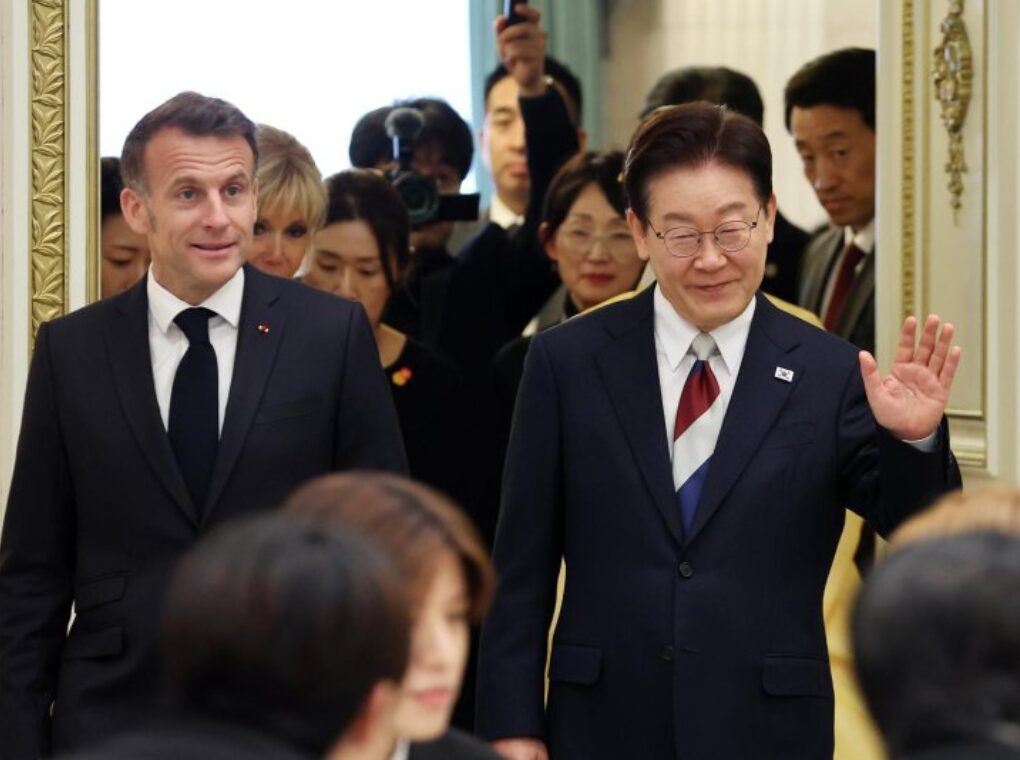
In a significant geopolitical shift triggered by the escalating Middle East conflict, Lee Jae Myung and Emmanuel Macron have agreed to deepen cooperation on energy security and maritime safety—particularly focusing on the critical Strait of Hormuz. The move signals a broader recalibration by key US-aligned nations as global tensions reshape traditional alliances.
Strategic Pivot Beyond Traditional Alliances
During a high-level summit in Seoul, both leaders emphasized the urgent need to stabilize global energy supply chains disrupted by the ongoing Iran conflict. The Strait of Hormuz, through which nearly a fifth of the world’s oil passes, has become a focal point of concern amid fears of disruption.
President Lee stated that both nations would “work together to secure safe maritime transport routes,” highlighting joint efforts to mitigate economic shocks caused by instability in the region. Macron echoed similar sentiments, stressing coordinated international action to ensure uninterrupted energy flows.
This cooperation comes at a time when countries like South Korea and France are increasingly adopting pragmatic strategies that extend beyond their traditional alignment with the United States and Israel.
Expanding Cooperation in Energy and Technology
The summit resulted in multiple agreements aimed at strengthening bilateral ties. Both countries pledged to expand collaboration in nuclear energy, offshore wind, and critical mineral supply chains. South Korea’s manufacturing strength will complement France’s advanced processing capabilities—especially through partnerships involving firms like Orano and EDF.
In addition, the two nations committed to advancing cooperation in cutting-edge sectors such as artificial intelligence, semiconductors, quantum technology, and space. A ministerial-level joint committee on science and technology is also set to be established.
Trade ambitions are equally bold, with both sides targeting $20 billion in annual bilateral trade by 2030, up from approximately $15 billion last year.
Israel-France Defense Rift Deepens
While France strengthens ties with South Korea and adopts a more independent stance on Middle East policy, its relationship with Israel has sharply deteriorated.
In a dramatic move, Israel announced a complete halt to defense procurement from France. The decision, confirmed by senior defense official Amir Baram, reflects growing dissatisfaction with Paris’ recent policies.
Israel has accused France of undermining its security by supporting international calls for arms restrictions, recognizing Palestine, and restricting Israeli participation in defense exhibitions. Tensions escalated further when France reportedly denied airspace access for flights transporting US military supplies to Israel during operations linked to Iran.
French officials, however, downplayed the impact, noting that defense trade between the two countries had already declined significantly in recent years.
Trump Criticizes France’s Position
The developments have also drawn sharp criticism from Donald Trump, who publicly condemned France’s refusal to facilitate military logistics for Israel. Trump warned that such actions could have long-term implications for US-France relations, adding another layer of complexity to an already strained Western alliance structure.
A Historical Relationship Comes Full Circle
The current tensions mark a dramatic reversal in France-Israel relations, which were once among the strongest defense partnerships in the world. In the 1950s and 60s, France was Israel’s primary arms supplier, providing advanced fighter jets like the Mirage series and playing a key role in developing its defense infrastructure.
This partnership was instrumental during the Six-Day War, where French-supplied weapons contributed to Israel’s decisive military success. At its peak, France accounted for nearly 80% of Israel’s arms imports.
However, relations soured when then-President Charles de Gaulle imposed an arms embargo on Israel during the same war, pushing Israel to pivot toward the United States—a partnership that continues to dominate today.
Emerging Global Realignments
The latest developments suggest a broader trend of strategic autonomy among mid-sized powers like South Korea and France. Rather than strictly adhering to traditional alliances, these nations are increasingly pursuing flexible, interest-driven partnerships—especially in response to global crises involving energy security and economic stability.
As tensions in the Middle East continue to evolve, the cooperation between Seoul and Paris could play a crucial role in shaping a new geopolitical balance—one less defined by old alliances and more by emerging strategic necessities.