As the United States continues its uneasy ceasefire with Iran, a new strategic debate is emerging in Washington: can economic incentives—not military escalation—deliver both a decisive geopolitical outcome and a domestic political victory for Donald Trump?
The question has gained urgency amid growing pressure from American media, opposition Democrats, and even factions within Trump’s own political base to bring the Iran conflict to a definitive end. With midterm elections looming, the stakes are no longer confined to foreign policy—they are deeply political.
Defining “Victory” in Iran
At the heart of the debate lies a fundamental question: what constitutes a “victory” over Iran?
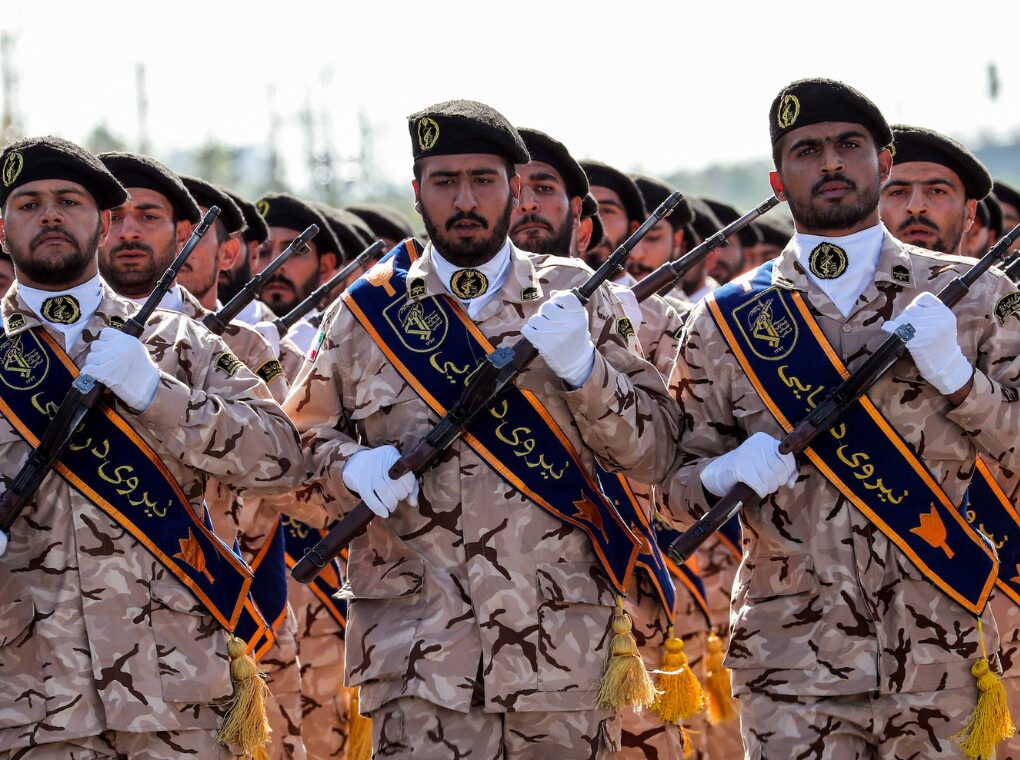
The Trump administration has already claimed significant achievements. According to official statements, Iran’s Supreme Leader Ali Khamenei is dead, the command structure of the Islamic Revolutionary Guard Corps (IRGC) has been severely weakened, and Tehran’s nuclear and missile capabilities have been degraded.
Yet, many analysts argue these gains fall short of a true strategic victory. Their reasoning is simple: as long as the current regime remains intact, it retains both the capacity and the will to rebuild its military and nuclear infrastructure. In this view, military success without regime transformation is merely temporary.
The Political Clock Is Ticking
The geopolitical ambiguity is mirrored by political uncertainty at home. Historically, American presidents have been rewarded for decisive wartime leadership—figures like Franklin D. Roosevelt and Dwight D. Eisenhower saw their legacies strengthened by wartime success. Conversely, prolonged or inconclusive conflicts damaged leaders like Lyndon B. Johnson and Jimmy Carter.
For Trump, the Iran conflict could follow either path. A decisive and widely recognized victory could energize voters and secure Republican dominance in Congress. A prolonged stalemate—or a perceived “fake peace”—could instead lead to electoral losses and a weakened presidency.
A Shift in Strategy: Buying Stability?
Against this backdrop, some policy thinkers are proposing a less conventional approach—targeting the economic foundations of Iran’s power structure rather than relying solely on military force.
Central to this idea is the role of the IRGC, which is not just a military entity but also a vast economic conglomerate. The organization reportedly controls significant portions of Iran’s economy, spanning sectors like oil, construction, banking, telecommunications, and agriculture.
This dual identity opens up a potential vulnerability.
Analysts argue that loyalty within the IRGC may be driven less by ideological commitment and more by economic privilege. If so, financial incentives could be used to fracture internal cohesion.
The strategy would involve offering select IRGC members asset protection, economic guarantees, or amnesty in exchange for cooperation or neutrality. Simultaneously, those who resist could face intensified financial sanctions and isolation.
In theory, such a calibrated approach could weaken the regime from within—achieving what sustained military campaigns might not.
Regime Change Without Occupation
Importantly, proponents of this strategy do not advocate for direct U.S. occupation of Iran. With a population of nearly 90 million and complex geography, Iran is widely seen as too large and intricate for foreign control.
Instead, the focus is on “orchestration” rather than occupation—supporting internal actors who could lead a transition.
Potential stakeholders in a post-regime scenario include:
Iranian diaspora professionals managing financial systems
Civil servants maintaining governance continuity
Elements of the conventional military willing to break from hardliners
Iran’s state apparatus includes millions of civil employees and a large conventional military distinct from the IRGC. Many within these structures are believed to be less ideologically rigid and more open to change.
Risks and Criticism
Despite its appeal, the economic-incentive strategy is not without risks.
Critics argue that offering financial concessions to elements of the existing power structure could be seen as legitimizing or even rewarding actors linked to repression and regional instability. Others warn that internal divisions within Iran may not be as easily exploitable as theorized.
There is also the broader concern of unintended consequences. A destabilized Iran without a clear and unified transition plan could lead to chaos, humanitarian crises, or power vacuums exploited by extremist groups.
The North Korea Parallel
Some analysts draw parallels with North Korea, where decades of negotiations and partial agreements failed to halt nuclear development. The fear is that a similar pattern could emerge if Iran’s current regime is allowed to survive with only limited concessions.
From this perspective, anything short of structural transformation risks repeating past mistakes.
A High-Stakes Gamble
Ultimately, the debate over Iran reflects a broader tension in U.S. foreign policy: the balance between military force and strategic pragmatism.
For Trump, the challenge is not just ending the conflict—but defining its outcome in a way that resonates both internationally and domestically.
A clear, decisive result—whether achieved through economic leverage, internal political shifts, or a combination of strategies—could reshape the geopolitical landscape and bolster his political standing ahead of the midterms.
Failure, however, could reinforce narratives of overreach and miscalculation.
As the ceasefire holds for now, the world watches closely. The next phase of U.S. strategy toward Iran may determine not only the future of the Middle East but also the trajectory of American politics in 2026.