
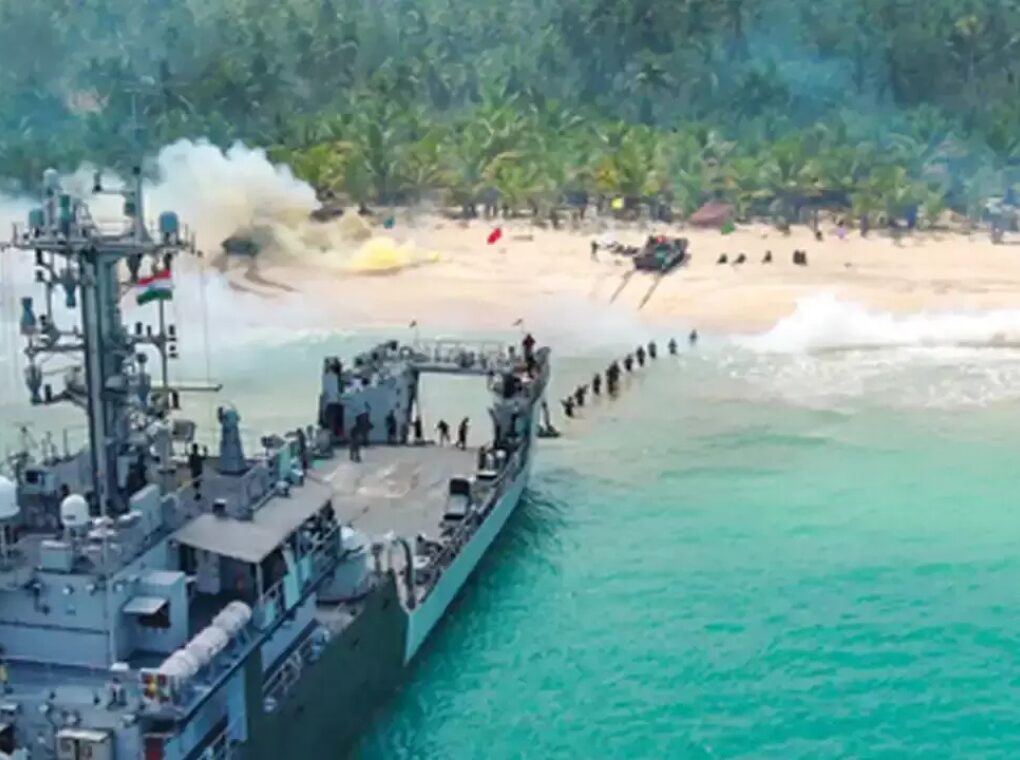
India’s ambitious Great Nicobar Island Development Project is emerging as one of the most consequential geopolitical infrastructure initiatives in the Indo-Pacific, with analysts suggesting it could significantly alter regional power equations—particularly in relation to China’s maritime strategy.
Valued at approximately $10 billion, the project aims to transform Great Nicobar Island, India’s southernmost territory, into a major commercial, logistics, and military hub. Situated near the entrance of the Strait of Malacca—one of the world’s most critical maritime chokepoints—the island occupies a position of immense strategic value in global trade and security architecture.
Strategic Location and the “Malacca Dilemma”
The Strait of Malacca handles nearly a quarter of global trade and is especially vital for China, through which a majority of its energy imports pass. This dependency has long been described by Chinese strategists as the “Malacca Dilemma”—a vulnerability stemming from reliance on a narrow and potentially controllable sea route.
Great Nicobar’s proximity to this chokepoint provides India with a unique vantage point. By developing advanced port infrastructure, airstrips, and military facilities on the island, New Delhi could significantly enhance its ability to monitor, influence, and potentially control maritime traffic in the eastern Indian Ocean.
Experts argue that this capability could complicate Beijing’s naval logistics and strategic planning, particularly in times of geopolitical tension or conflict. As China continues to expand its presence in the Indian Ocean through port investments and naval deployments, India’s move is widely seen as a counterbalancing effort.
A “Natural Aircraft Carrier”
The Andaman and Nicobar archipelago, stretching over 700 kilometers, has often been described by military planners as a “natural aircraft carrier.” Great Nicobar, the southernmost island in this chain, is strategically positioned almost equidistant from key regional maritime hubs such as Singapore, Port Klang in Malaysia, and Colombo in Sri Lanka.
This geographical advantage allows India to project power deep into the Indo-Pacific while maintaining logistical efficiency. The planned infrastructure includes a transshipment port, an international airport, power plants, and urban development zones—elements designed to support both civilian and military operations.
The development is expected to reduce India’s reliance on foreign ports for cargo transshipment, a longstanding limitation in its maritime trade ecosystem. Currently, a significant portion of Indian cargo is routed through hubs like Singapore and Colombo. A fully operational Great Nicobar port could change that dynamic, positioning India as a key node in global shipping networks.
Economic and Strategic Convergence
While the project has clear military implications, it is equally rooted in economic ambition. By creating a world-class transshipment hub, India aims to attract global shipping traffic, boost trade efficiency, and generate employment. The initiative aligns with New Delhi’s broader vision of becoming a leading maritime power and a central player in Indo-Pacific supply chains.
The project also complements India’s participation in regional frameworks such as the Quad (Quadrilateral Security Dialogue), where maritime security and supply chain resilience are key priorities. Enhanced infrastructure in Great Nicobar could support joint exercises, humanitarian missions, and disaster response operations with partner countries.
Environmental and Regulatory Considerations
Despite its strategic importance, the project has not been without controversy. Environmentalists have raised concerns about its potential impact on the island’s fragile ecosystem, which includes dense tropical forests and unique biodiversity. Indigenous communities, particularly the Shompen tribe, also face potential disruption.
India’s National Green Tribunal has granted conditional approval to the project, emphasizing the need for strict environmental safeguards. Authorities have pledged to implement sustainable development practices, though critics remain cautious about the long-term ecological consequences.
Implications for China and the Indo-Pacific
For China, the development of Great Nicobar represents a new layer of strategic complexity. Beijing’s Belt and Road Initiative (BRI) has focused heavily on securing maritime routes and port access across the Indian Ocean—from Gwadar in Pakistan to Hambantota in Sri Lanka. India’s enhanced presence near the Malacca Strait could act as a counterweight to these efforts.
In a broader sense, the project reflects the intensifying competition for influence in the Indo-Pacific—a region increasingly defined by maritime geopolitics. Control over sea lanes, ports, and logistics hubs is becoming as critical as traditional military strength.
By leveraging its geographic advantage and investing in strategic infrastructure, India is signaling a more assertive role in shaping the regional order. The Great Nicobar Project, if executed successfully, could serve as a cornerstone of that ambition.
A Turning Point in Maritime Strategy
There are moments in geopolitics when infrastructure transcends economics and becomes a tool of strategic transformation. The Great Nicobar Project appears poised to be one such moment.
As global trade routes evolve and great power competition intensifies, the island’s development could redefine how influence is projected and contested across the Indo-Pacific. For India, it represents both an opportunity and a test—of its ability to balance growth with sustainability, and ambition with responsibility.
For the wider world, it underscores a simple reality: in the 21st century, geography still matters—but how nations choose to use it matters even more.