
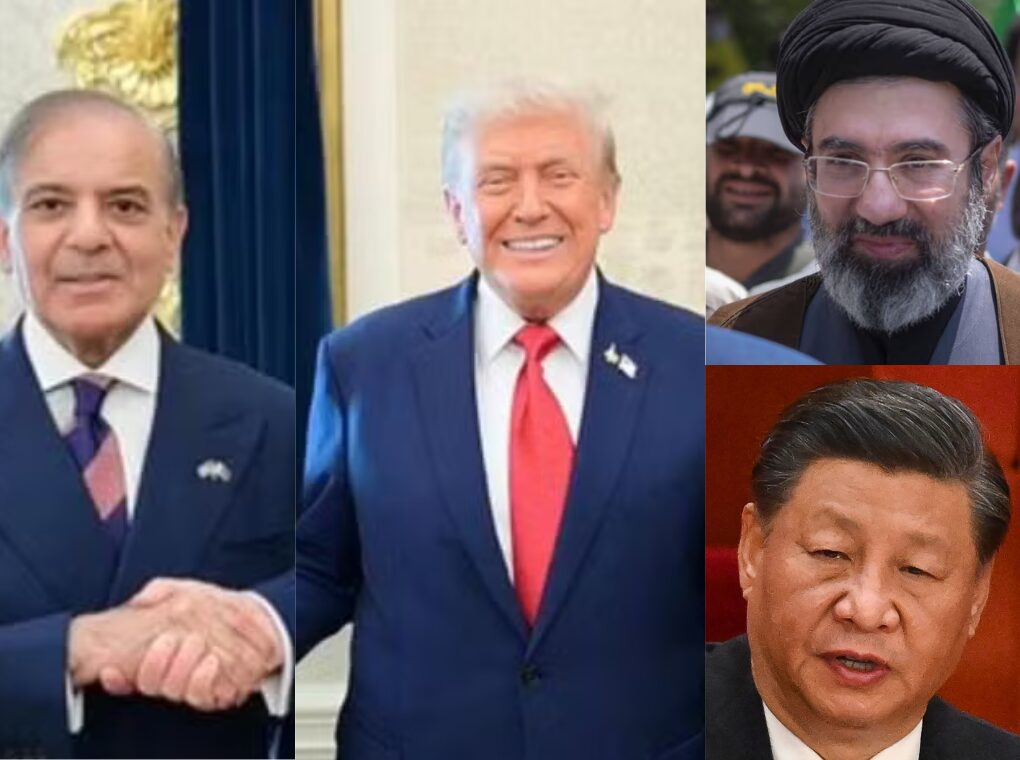
Pakistan has found itself at the center of a growing geopolitical controversy after reports emerged claiming that Islamabad quietly allowed Iranian aircraft to use Pakistani airbases during the fragile ceasefire between the United States and Iran. The allegations, first reported by CBS News, have intensified scrutiny over Pakistan’s role as a supposed mediator in the West Asia conflict while simultaneously maintaining close strategic ties with Tehran and Beijing.
The controversy erupted after U.S. officials told CBS News that Iran moved several aircraft, including military planes, into Pakistan shortly after U.S. President Donald Trump announced a ceasefire with Tehran in early April 2026. According to the report, some of the aircraft were parked at Pakistan Air Force Base Nur Khan near Rawalpindi, one of the country’s most strategically important military installations.
Among the aircraft allegedly transferred was an Iranian Air Force RC-130 reconnaissance aircraft, a surveillance and intelligence-gathering variant of the famous Lockheed C-130 Hercules transport aircraft. U.S. officials claimed the movement appeared aimed at protecting Iranian military aviation assets from possible American airstrikes as the conflict escalated in the Gulf region.
Pakistan Rejects Allegations but Confirms Iranian Aircraft Presence
Pakistan’s government initially rejected claims that Iranian military aircraft were secretly sheltered at Nur Khan Airbase. A senior Pakistani official argued that the airbase is located in a densely populated urban area and that hiding a large number of aircraft there would be nearly impossible.
However, Pakistan’s Ministry of Foreign Affairs later acknowledged that Iranian aircraft were indeed present in the country, although it insisted the planes were not connected to military operations.
In an official statement, the ministry said the aircraft arrived during the ceasefire period and were being used to facilitate diplomatic personnel movements and security coordination for potential peace negotiations between Tehran and Washington.
“The Iranian aircraft currently parked in Pakistan arrived during the ceasefire period and bear no linkage whatsoever to any military contingency or preservation arrangement,” Pakistan’s Foreign Ministry stated.
The statement further emphasized that Islamabad had acted as an “impartial facilitator” during the conflict and maintained transparency with all involved parties.
The admission triggered accusations that Pakistan was engaged in a diplomatic balancing act — publicly presenting itself as a neutral mediator while quietly assisting Iran behind the scenes.
U.S. Senator Lindsey Graham Attacks Pakistan
The controversy escalated further after Lindsey Graham publicly criticized Pakistan for allegedly helping Iran during sensitive ceasefire negotiations with Washington.
Graham questioned Pakistan’s credibility as a mediator and argued that the alleged support for Tehran may have contributed to the collapse of peace efforts between the U.S. and Iran.
The criticism comes at a delicate moment for Islamabad, which relies heavily on military and economic support from both the United States and China. Pakistan has spent years attempting to maintain strategic relationships with Washington, Beijing, Tehran, and Gulf nations simultaneously.
Iran Also Reportedly Used Afghanistan
The CBS News report also claimed that Iran transferred civilian aircraft into neighboring Afghanistan as the war intensified.
According to Afghan aviation officials cited in the report, an aircraft belonging to Mahan Air landed in Kabul shortly before Iranian airspace was closed. The aircraft was later moved to Herat Airport near the Iranian border after Pakistan launched airstrikes in Afghanistan during tensions with the Taliban government.
Taliban spokesman Zabihullah Mujahid denied reports that Iranian aircraft were being sheltered in Afghanistan, dismissing the claims as false.
China’s Expanding Influence Over Pakistan and Iran
The developments have once again highlighted China’s growing influence in the region. Pakistan has become increasingly dependent on Chinese military hardware over the past decade.
According to a study by the Stockholm International Peace Research Institute, China supplied nearly 80 percent of Pakistan’s major arms imports between 2020 and 2024.
At the same time, Beijing has strengthened economic and military cooperation with Iran, particularly under long-term energy and infrastructure agreements tied to the Belt and Road Initiative.
Analysts believe Pakistan’s actions reflect its attempt to avoid alienating China and Iran while still maintaining working relations with the United States.
China has publicly praised Pakistan’s role in facilitating indirect communication between Tehran and Washington during the crisis.
Strait of Hormuz Crisis Deepens
Meanwhile, tensions in the strategically critical Strait of Hormuz continue to threaten global energy markets.
Reuters reported that both Iraq and Pakistan have reached separate arrangements with Iran to ensure safe oil and LNG shipments through the strait, which handles nearly 20 percent of the world’s crude oil and LNG trade.
According to sources cited by Reuters, Iraq recently secured safe passage for two supertankers carrying approximately 2 million barrels of crude oil each. Iran reportedly demanded detailed documentation about each vessel, including ownership, destination, and cargo specifications before allowing transit under Iranian naval supervision.
The agreements underline Tehran’s increasing leverage over one of the world’s most important energy chokepoints as conflict with the U.S. and Israel disrupts maritime trade.
Energy analysts warn that prolonged instability in the Strait of Hormuz could severely impact global oil prices and international shipping routes.
Ceasefire Under Severe Strain
Although President Trump previously announced a ceasefire with Iran, clashes continue across the Gulf region.
Recent reports suggest Iranian drone attacks targeted the United Arab Emirates, while U.S. naval destroyers reportedly came under attack while transiting the Strait of Hormuz.
The United States responded with strikes on Iranian port infrastructure near the strait, escalating fears that the conflict could spiral into a wider regional war despite ongoing diplomatic efforts.
Iran’s latest peace proposal reportedly included demands for U.S. war reparations, recognition of Iranian sovereignty claims over the Strait of Hormuz, and the removal of American sanctions. President Trump reportedly dismissed the proposal as “totally unacceptable.”
The situation is expected to dominate upcoming talks between Trump and Xi Jinping in Beijing, where Iran, trade disputes, and Taiwan tensions are all expected to feature prominently.
Pakistan Faces Growing International Pressure
Pakistan now faces mounting international scrutiny over whether it genuinely acted as a neutral mediator or quietly supported Iran during the conflict.
The controversy risks straining Islamabad’s already complicated relationship with Washington at a time when Pakistan is navigating economic challenges, regional security threats, and increasing dependence on China.
With the Iran-U.S. ceasefire appearing increasingly fragile and tensions in the Gulf remaining high, Pakistan’s diplomatic balancing act may become even harder to sustain in the coming weeks.