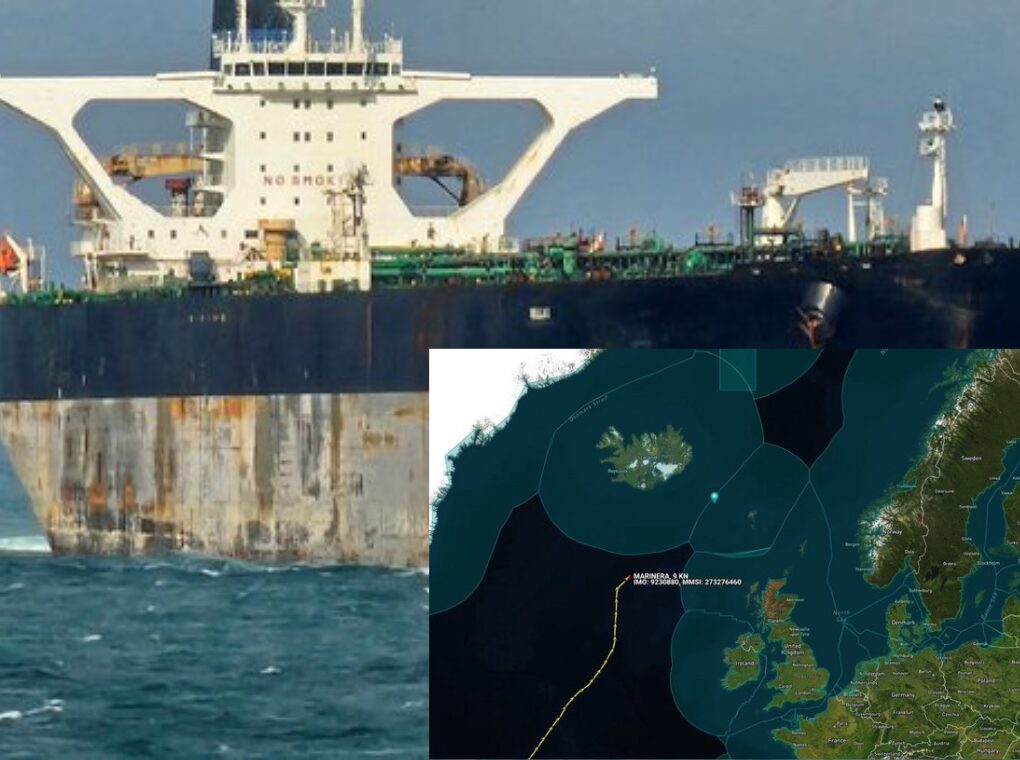
Russia’s Investigative Committee has claimed that NATO-manufactured magnetic naval mines were discovered attached to the hull of a gas tanker that arrived in Russia from Belgium, prompting authorities to launch a criminal investigation into what Moscow describes as an attempted terrorist attack.
According to Russian officials, the tanker — identified as the Arrhenius — arrived at the port of Ust-Luga in Russia’s Leningrad Region after departing from the Belgian port of Antwerp. The vessel was reportedly heading toward the Turkish port of Samsun after stopping in Russia for refueling.
The development marks another escalation in tensions between Russia and NATO amid the ongoing Ukraine conflict and growing security concerns surrounding critical energy infrastructure in the Baltic region.
Russian Investigators Claim NATO-Made Mines Were Attached to Tanker
In a statement released on Monday (May 25), Russia’s Investigative Committee alleged that divers inspecting the Arrhenius upon arrival discovered “factory-produced naval magnetic mines manufactured in one of the NATO countries” attached to the ship’s hull.
The agency stated that a criminal case has been opened on charges linked to an attempted terrorist act, while Russian authorities continue to investigate how the explosive devices ended up on the vessel.
Officials said the suspected explosive devices were successfully neutralized by officers from Russia’s Federal Security Service (FSB), working alongside personnel from the Defense Ministry and National Guard.
The FSB reportedly confirmed that each explosive device contained approximately 7 kilograms of plastic explosive material, though officials did not disclose the total number of mines allegedly discovered on the tanker.
Russian investigators emphasized that initial findings suggest the mines were not attached within Russian territorial waters, implying that the sabotage attempt may have taken place earlier in the vessel’s journey.
Tanker Delayed in Antwerp Before Russia Voyage
According to the Investigative Committee, the tanker had experienced an unexpected delay before reaching Russia.
During questioning, the vessel’s captain reportedly informed investigators that the ship had been directed to remain at anchorage near Antwerp for approximately one and a half days before unloading cargo due to an alleged dockworkers’ strike.
Russian authorities are reportedly examining whether the delay could be linked to the placement of the suspected explosive devices.
The ship eventually reached Ust-Luga on May 20 for refueling operations before continuing its scheduled route toward Turkey.
As of now, Belgian authorities and NATO officials have not publicly commented on Russia’s claims. Independent verification of the allegations also remains unavailable.
Rising Security Concerns in Baltic Region
The incident comes amid increasing geopolitical tensions between Russia and NATO, particularly around the Baltic Sea region, where drone activity and military surveillance have intensified in recent months.
Russian officials have repeatedly accused Western nations of indirectly assisting Ukrainian military operations, especially after Ukrainian drones allegedly crossed the airspace of Baltic states and Finland while targeting strategic Russian infrastructure.
Energy facilities and export terminals in Leningrad Region have become increasingly sensitive security targets as Russia continues to rely heavily on maritime energy exports despite Western sanctions.
The discovery of alleged naval mines on a commercial tanker could further heighten concerns over the vulnerability of shipping routes and critical infrastructure linked to Europe’s energy network.
Russia Warns NATO Over Escalation Risks
The tanker incident follows recent warnings from senior Russian officials regarding NATO’s role in the Ukraine conflict.
Last month, Russian Security Council Secretary Sergey Shoigu warned that Moscow reserves the right to respond under Article 51 of the United Nations Charter, which allows self-defense in the event of an armed attack.
Shoigu argued that if European nations were to “deliberately provide their airspace” for Ukrainian drone operations targeting Russian territory, Moscow could consider such actions a direct security threat.
The warning came amid growing reports of Ukrainian unmanned aerial vehicle (UAV) operations near Russia’s northwestern borders.
Meanwhile, leaders across Europe continue debating NATO’s approach toward Moscow, with some officials advocating stronger deterrence measures. Recently, the Czech president stated that NATO must “show its teeth” to Russia, reflecting ongoing divisions over how aggressively the alliance should respond to regional security threats.
Western governments, NATO, and Belgian authorities have yet to officially respond to Moscow’s accusations. Analysts say further evidence will likely be required before the claims can be independently assessed.
If verified, the incident could represent a significant escalation in maritime security threats linked to the Russia-Ukraine conflict and potentially deepen the already strained relationship between Moscow and NATO nations.