
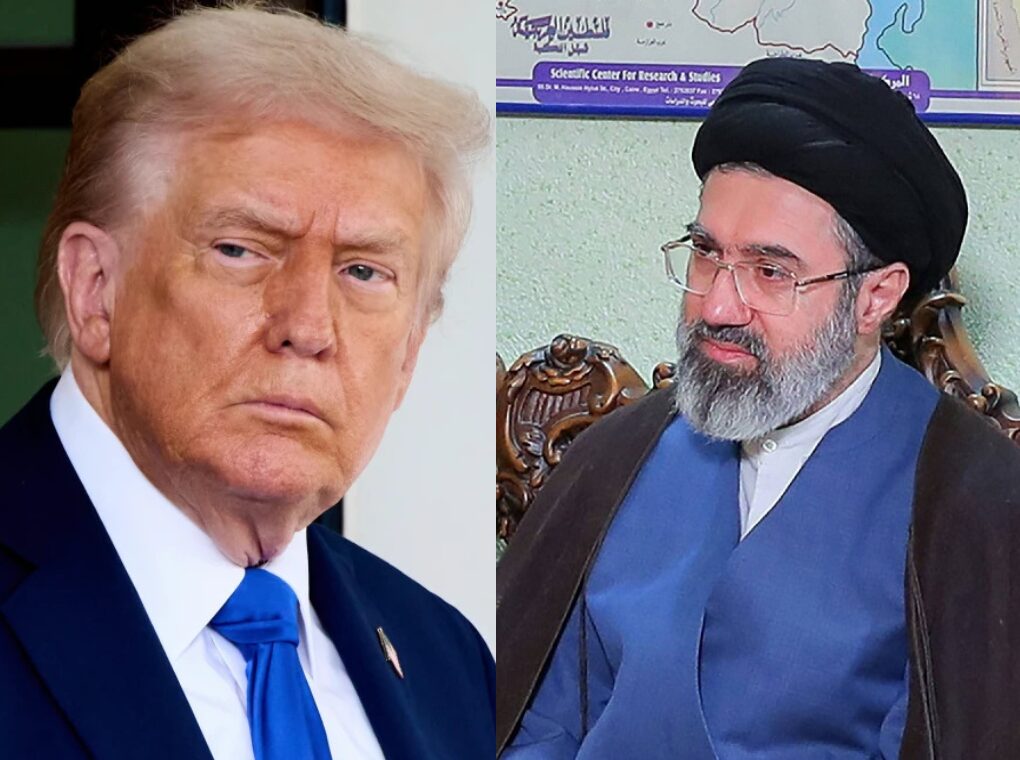
Tensions between the United States and Iran escalated sharply after Washington carried out strikes on Iranian radar and drone control facilities in southern Iran, prompting Tehran to retaliate by targeting an airbase allegedly used in the US operation. The exchange of attacks comes amid fragile negotiations aimed at extending a ceasefire agreement and restarting talks over Iran’s nuclear programme.
The US military confirmed that it launched what it described as “measured and deliberate self-defense strikes” against Iranian military infrastructure on the islands of Goruk and Qeshm after accusing Tehran of aggressive actions, including the reported downing of an American drone over international waters.
According to the US Central Command (CENTCOM), the operation targeted Iranian radar installations, a drone command-and-control station, air defence systems, and two one-way attack drones that Washington claimed posed an immediate threat to commercial maritime traffic in the region.
In a statement released on Monday, CENTCOM said the strikes were conducted after Iran allegedly shot down an MQ-1 surveillance drone operating over international waters in the Persian Gulf.
“The operation was carried out in self-defense and aimed at neutralising threats to regional maritime security,” CENTCOM stated, accusing Tehran of escalating tensions during an already fragile ceasefire period.
Iran, however, rejected the US version of events, insisting the American drone had violated Iranian airspace before being intercepted.
Iran Retaliates, Warns of Stronger Response
Hours after the US operation, Iran’s Islamic Revolutionary Guard Corps (IRGC) announced retaliatory strikes on an airbase allegedly used to launch the American attacks.
According to an IRGC statement, Iranian forces targeted “predetermined military objectives” linked to US operations after Washington attacked a telecommunications tower on Sirik Island in southern Iran.
While Iran did not disclose the exact location of the targeted airbase, regional reports suggested military activity around Gulf states, particularly Kuwait, where authorities confirmed that air defence systems had intercepted missiles and drones earlier in the day.
The IRGC warned Washington against repeating such actions, stating that any future military aggression would be met with a “completely different” and far harsher response.
Iranian Foreign Ministry spokesperson Ismail Baqaei defended Tehran’s actions, asserting that Iran possesses a legal right to retaliate against military facilities used for attacks on its territory.
“Every country has the responsibility to ensure that its land or military resources are not used to attack another nation,” Baqaei wrote in a statement posted on social media platform X.
Ceasefire Under Pressure Amid Peace Negotiations
The latest military exchange threatens to derail ongoing diplomatic efforts between Tehran and Washington.
Following weeks of indirect negotiations after intense fighting earlier this year involving the US, Israel, and Iran, both sides have reportedly been discussing a memorandum of understanding (MOU) aimed at extending the current ceasefire for another 60 days.
US President Donald Trump claimed on Monday that Iran was eager to strike a deal and expressed confidence that negotiations would ultimately succeed.
“Iran wants to make a deal, and it will be a good deal for the United States and our allies,” Trump said in a social media post, urging critics to remain patient and avoid inflammatory rhetoric.
“Just sit back, everything will be good in the end,” he added.
However, Iranian officials appeared far less optimistic.
Iranian Foreign Minister Abbas Araghchi dismissed reports suggesting that a final agreement had already been reached, insisting that discussions remain ongoing and that no official document has been approved.
Meanwhile, Iranian parliamentary National Security Committee member Ismail Kousari said Tehran is negotiating with Washington on four key demands — guarantees against future military conflict, compensation for war damages, withdrawal of US forces from the Strait of Hormuz, and the lifting of naval sanctions on Iran.
Kousari further claimed that nuclear issues have largely been removed from the negotiations, though US officials continue to describe Tehran’s nuclear activities as a core focus of diplomatic efforts.
Strait of Hormuz and Regional Security Concerns
The renewed tensions have reignited fears over the security of the Strait of Hormuz, one of the world’s most critical oil transit chokepoints.
Iranian lawmaker Ismail Kousari denied allegations that Tehran intended to block the strategic waterway, instead blaming the US and Israel for creating instability in the region.
“It was never our intention to close the Strait of Hormuz,” Kousari said, arguing that Washington and Tel Aviv had provoked the crisis through military escalation.
The United States has intensified maritime monitoring operations in recent weeks and reportedly intercepted another cargo ship bound for Iran, marking the sixth such interception since April 17.
Wider Regional Fallout
The escalating tensions are unfolding alongside growing instability in Lebanon, where Israel recently launched one of its largest military incursions in decades, capturing the historic Beaufort Fortress and surrounding areas in southern Lebanon.
France has reportedly called for an emergency meeting of the UN Security Council over Israel’s military escalation, while Gulf nations including Kuwait have condemned Israeli ground operations and urged immediate de-escalation.
With ceasefire talks hanging in the balance and military exchanges intensifying, analysts warn that even a limited miscalculation between Washington and Tehran could trigger a much broader regional conflict involving multiple Middle Eastern actors.