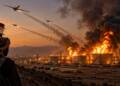
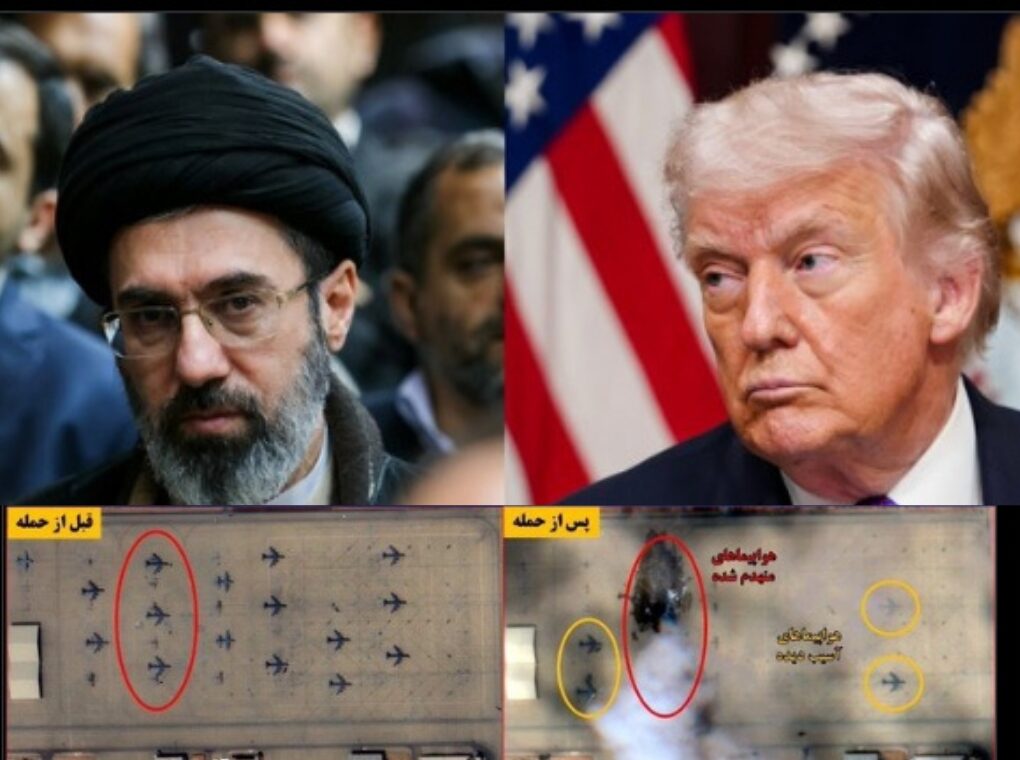
A new investigation based on satellite imagery and video analysis has revealed that Iran has struck at least 20 American military facilities across the Middle East since the escalation of the US-Iran conflict, significantly exceeding the scale publicly acknowledged by Washington.
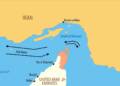
According to a report by BBC Verify, Iranian attacks have targeted key US military installations across eight countries — Saudi Arabia, the United Arab Emirates (UAE), Qatar, Kuwait, Iraq, Jordan, Bahrain, and Oman — causing extensive damage to advanced military hardware, air defence systems, aircraft, and critical infrastructure.
The findings suggest that Iran’s retaliatory campaign was far more widespread and strategically coordinated than previously admitted by US officials, with some independent military analysts estimating the total number of targeted facilities could be as high as 28.
Iran’s Precision Strikes Raise Questions Over US Claims
The report comes amid repeated assertions from the White House that Iran’s military capabilities had been severely weakened following months of US-Israeli strikes under Operation Epic Fury. However, experts analyzing satellite images argue the damage sustained at American bases paints a different picture.
BBC Verify reported that Tehran’s military campaign evolved from broad missile barrages to highly precise attacks aimed at high-value US military assets.
“Opening salvos were optimized for volume—mass waves designed to overwhelm air and missile defences,” said Dr. Kelly Grieco, an analyst at the Stimson Center think tank. “Within days, however, Iran shifted to smaller, more targeted strikes focused on high-value military infrastructure.”
The Pentagon reportedly declined to challenge BBC Verify’s findings directly, citing operational security concerns.
Billion-Dollar US Defense Systems Hit
Among the most significant losses identified through satellite imagery were three advanced Terminal High Altitude Area Defense (THAAD) batteries reportedly damaged at Al Ruwais and Al Sader airbases in the UAE and Muwaffaq Salti Airbase in Jordan.
THAAD systems are among the United States’ most sophisticated anti-ballistic missile defenses and cost roughly $1 billion each to manufacture. The US military is believed to operate only eight such batteries worldwide, making any loss strategically significant.
Military experts warn that replacing the damaged systems could take years due to manufacturing limitations and operational complexity.
Vice-Admiral Mark Mellett, former head of the Irish Defence Forces, told BBC Verify that these systems form the backbone of a highly integrated regional defense network and “cannot be quickly or easily replaced.”
Major Aircraft Damage at Saudi Airbase
One of the heaviest reported losses occurred at Prince Sultan Airbase in Saudi Arabia, where analysts identified widespread destruction to US aircraft and infrastructure.
Satellite images reportedly showed smoking craters, destroyed hangars, and damaged aircraft, including F-15 and F-35 fighter jets, MQ-9 Reaper drones, and an A-10 attack aircraft.
A damaged E-3 Sentry airborne surveillance aircraft was also identified. US media estimates suggest the cost of replacing such a platform could reach as high as $700 million.
According to the report, at least 42 US aircraft have been damaged or destroyed since February, marking one of the most expensive military equipment losses in recent American operations in the region.
Damage Spreads Across Gulf Military Network
Iranian attacks reportedly extended beyond Saudi Arabia to strategic US facilities in Kuwait, Bahrain, Iraq, and Oman.
At Ali Al Salem Airbase in Kuwait, analysts observed destroyed fuel storage facilities and aircraft hangars, while Camp Arifjan reportedly suffered significant damage to satellite communications systems.
The Pentagon previously estimated Operation Epic Fury had cost approximately $29 billion as of May, although lawmakers and defense analysts argue the true cost may be substantially higher once repair and replacement expenses are fully accounted for.
US Restricts Satellite Access
In a move that has sparked scrutiny, the United States reportedly requested restrictions on satellite imagery of Iran and much of the Middle East from commercial provider Planet.
The company said the decision aimed to prevent imagery from being used by “adversarial actors” to target allied military personnel and civilians.
Despite those restrictions, BBC Verify said it used alternative international satellite providers and archived imagery to independently assess damage across the region.
Ceasefire at Risk Amid Renewed Tensions
The report emerges as the fragile ceasefire between Washington and Tehran faces renewed pressure.
Iran’s Supreme Leader Mojtaba Khamenei recently warned that the Middle East would no longer be a “safe place” for American military bases, vowing continued resistance if hostilities resume.
Military analysts caution that a breakdown of the ceasefire could expose US bases to even greater risk, particularly as regional air defense stocks have reportedly been depleted during months of conflict.
“There is no rapid path to replenishment,” Dr. Grieco warned, adding that future Iranian strikes could meet “a fraction of the interceptors” previously available to US and allied forces.
If confirmed, the extent of the reported damage could reshape perceptions of the balance of power in the Middle East and raise difficult questions for Washington over the vulnerability of its regional military footprint.