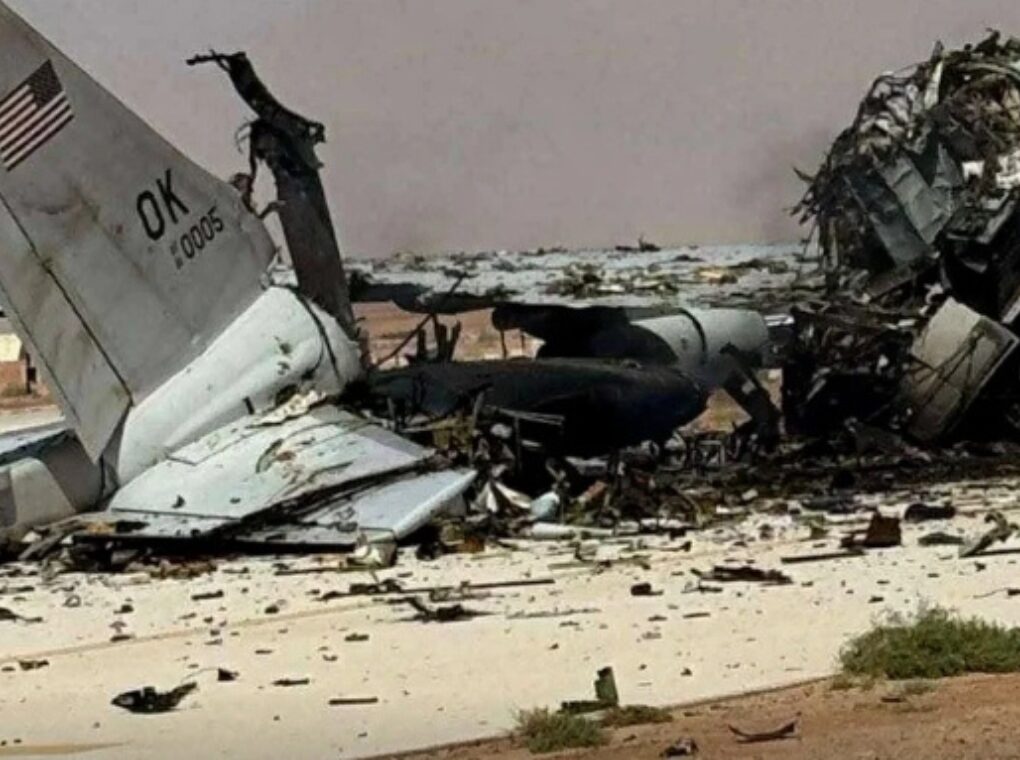
A US fighter jet brought down during the recent Iran conflict may have been struck by a Chinese-made missile, according to a new report that is raising serious concerns in Washington about Beijing’s possible military links to Tehran.
The incident marks what could be the first time in decades that a US fighter aircraft was shot down by enemy fire, adding a dramatic new chapter to tensions in the Middle East and intensifying scrutiny over China’s involvement in Iran’s defense capabilities.
According to a report by NBC News, the downed aircraft was an F-15E Strike Eagle, a powerful multirole fighter jet operated by the US Air Force. The aircraft, carrying a two-person crew, was reportedly flying over southwestern Iran in April when it was struck by what US officials believe may have been a Chinese-made shoulder-fired missile.
US Fighter Jet Shot Down Over Iran
US defense officials are still investigating the exact circumstances behind the incident, but early evidence reportedly suggests that a Chinese-origin weapon may have been responsible for bringing down the aircraft.
The F-15E Strike Eagle was conducting operations during heightened military tensions when it came under attack. Pentagon officials confirmed that the pilot successfully ejected and was rescued within seven hours.
However, the aircraft’s weapons systems officer faced a far more dangerous ordeal.
According to reports, the officer remained hidden in the rugged foothills of Iran’s Zagros Mountains for nearly two days before rescue teams finally located and extracted him. Military officials reportedly feared the officer could have been captured, which would have handed Iran a major propaganda and intelligence victory.
The successful rescue operation prevented what could have escalated into a severe diplomatic and military crisis.
Was Chinese Technology Used by Iran?
The report has added fuel to growing concerns that Chinese military technology may have played a crucial role in Iran’s battlefield performance.
Sources familiar with the investigation told NBC News that Iran may have been operating a YLC-8B early-warning radar system, allegedly supplied by China. The radar is specifically designed to detect advanced aircraft, including stealth-enabled platforms that are typically difficult to track.
US officials reportedly believe the radar could have helped Iranian forces identify and target American aircraft operating in the region.
However, key questions remain unanswered.
Investigators are still trying to determine when the missile system or radar technology may have reached Iran. Officials have not confirmed whether the systems were recently supplied or originated from older Iranian stockpiles acquired years earlier.
The allegations come at a particularly sensitive moment in US-China relations, as President Donald Trump has simultaneously sought Beijing’s diplomatic support in de-escalating tensions in the Middle East while continuing American military operations.
Trump had earlier stated that the fighter jet was likely brought down by a shoulder-fired missile, commonly referred to as a MANPADS (Man-Portable Air Defense System). These systems are relatively inexpensive but highly effective against low-flying aircraft and helicopters.
China Rejects Allegations
China has strongly pushed back against claims that it violated arms export rules or secretly supplied military systems used in the conflict.
A spokesperson for the Chinese Embassy rejected the accusations, stating that Beijing strictly follows international export laws.
“China always acts prudently and responsibly on the export of military products and exercises strict control in accordance with China’s laws and regulations on export control and due international obligations,” the spokesperson said.
The embassy further accused critics of engaging in what it described as “groundless smear” campaigns and politically motivated allegations.
US Sanctions on Chinese Companies
The controversy comes amid growing US accusations regarding Beijing’s support for Iran during the conflict.
Earlier this month, the Trump administration imposed sanctions on three Chinese satellite companies, alleging they provided Iran with satellite imagery and intelligence that may have assisted military targeting against US forces.
American officials claimed the imagery could have strengthened Iran’s battlefield awareness during military operations.
China, however, firmly denied those allegations as well.
China-Iran Military Ties Under Scrutiny
China has historically maintained close military and economic ties with Iran.
During the 1980s and 1990s, Beijing reportedly supplied Tehran with a range of military hardware, including missiles, tanks, artillery systems and combat aircraft.
However, after the United Nations arms embargo on Iran in 2006, China publicly scaled back major weapons exports to the country.
Experts argue that Beijing instead shifted toward supplying dual-use technologies, components and technical assistance that could support both civilian and military purposes.
Meanwhile, Iran invested heavily in strengthening its domestic defense industry, developing indigenous missile systems, drones and advanced military hardware aimed at reducing reliance on foreign suppliers.
If confirmed, the reported use of Chinese-made systems against a US fighter jet could significantly deepen tensions between Washington and Beijing and reshape strategic calculations in an already volatile Middle East.
For now, US investigators continue examining exactly what brought down the F-15E Strike Eagle — and whether Chinese technology truly played a decisive role in one of the most consequential military incidents of the Iran conflict.