The United States is reportedly preparing to significantly scale back key military capabilities available to NATO allies in Europe, signaling what could become one of the most consequential shifts in transatlantic security policy in decades.
According to reports first revealed by Euronews, the administration of US President Donald Trump plans to reduce access to American “deep strike” military capabilities for NATO partners as part of a broader reassessment of Washington’s security commitments to Europe.
The proposed military restructuring reportedly includes the withdrawal or reduced availability of major US strategic assets, including long-range bombers such as the B-2 Spirit and B-52 Stratofortress, along with key naval forces like missile-launching submarines and aircraft carriers.
The move comes amid growing tensions between Washington and several European allies over defense spending, military burden-sharing, and diverging foreign policy priorities.
What Deep Strike Capability Means for NATO
Deep strike capability refers to advanced military assets capable of hitting strategic enemy targets far behind front lines. These include long-range stealth bombers, naval missile systems, intelligence platforms, and aerial refueling support essential for sustained combat operations.
Sources familiar with the discussions told Euronews that “everything linked to deep strike capabilities” is expected to be scaled back under the Pentagon’s evolving NATO posture.
The planned reduction reportedly extends beyond bombers and naval assets. According to reporting by The New York Times, the United States also intends to reduce the number of fighter aircraft allocated to NATO operations.
The number of F-16 and F-15E Strike Eagle fighter jets available to Europe may reportedly fall from around 150 aircraft to nearly 100, while maritime reconnaissance aircraft could be reduced from 26 to 15. Additionally, all eight aerial refueling tanker aircraft previously assigned to Europe are expected to be withdrawn.
These military assets have historically played a critical role in NATO’s rapid response and deterrence strategy, particularly in the face of rising concerns over Russia’s military posture near Eastern Europe.
NATO Force Model Under Review
The restructuring is reportedly being implemented through NATO’s Force Model system, a framework used by alliance members to determine available troops and military capabilities based on threat assessments and deterrence needs.
In a statement issued last week, US European Command (EUCOM) confirmed plans to “right-size” American contributions to NATO, although officials stopped short of detailing the exact scale of reductions.
While NATO officials have privately prepared for a reduced American military footprint in Europe, public messaging from alliance leadership has largely emphasized Europe’s growing defense investments.
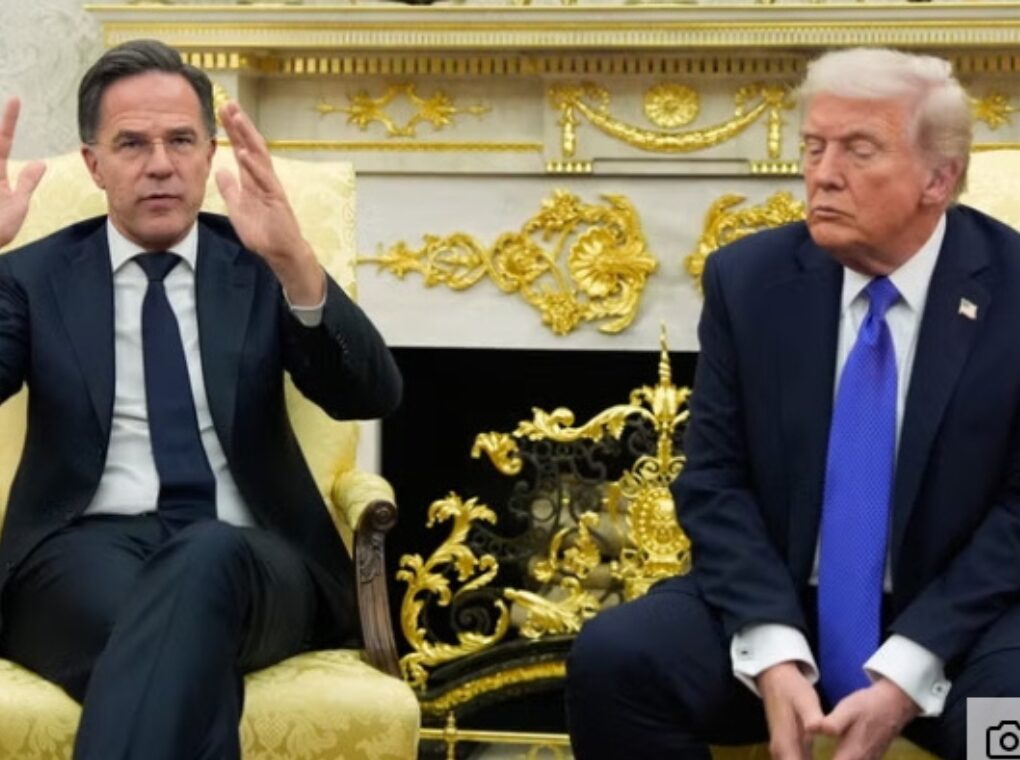
Speaking to journalists recently, NATO Secretary General Mark Rutte acknowledged that strategic adjustments were expected.
“We know that adjustments will take place. The US has to pivot toward, for example, Asia,” Rutte reportedly said, suggesting Europe must increasingly shoulder responsibility for its own defense.
Rising Friction Between Trump and European Allies
The military drawdown discussions emerge at a particularly sensitive moment in US-NATO relations.
President Donald Trump has reportedly grown frustrated with several European nations over their refusal to support recent US and Israeli military operations involving Iran.
Countries including Spain, Italy, and France allegedly denied American military aircraft access to their airspace and military bases during operations connected to escalating Middle East tensions.
Trump has publicly criticized allied nations, accusing them of failing to support US-led security efforts while continuing to depend heavily on American military protection.
In a strongly worded social media post earlier this year, Trump reportedly warned European allies that the United States would “remember” countries unwilling to assist during military operations.
“Without the U.S.A., NATO is a paper tiger,” Trump reportedly wrote, intensifying debate over the future of America’s role in the alliance.
Strategic Shift Toward Asia
Security analysts suggest the reported military restructuring reflects Washington’s broader strategic shift toward the Indo-Pacific region, where concerns over China’s growing military power continue to dominate US defense planning.
For years, American policymakers have argued that European allies must increase defense spending and become less reliant on US military power.
Many NATO members have boosted defense budgets following Russia’s invasion of Ukraine, but questions remain about whether Europe can independently replace sophisticated US capabilities, especially in areas such as intelligence, long-range strike operations, missile defense, and logistics.
Meanwhile, reports suggest a coalition of NATO countries alongside partners such as South Korea and Australia has begun contingency planning to secure maritime trade routes, including the strategically vital Strait of Hormuz, amid ongoing Middle East instability.
If implemented fully, the Pentagon’s proposed reductions could mark a historic turning point for NATO, potentially redefining Europe’s security landscape and forcing allies to reconsider their long-term defense strategies in an increasingly volatile global environment.