
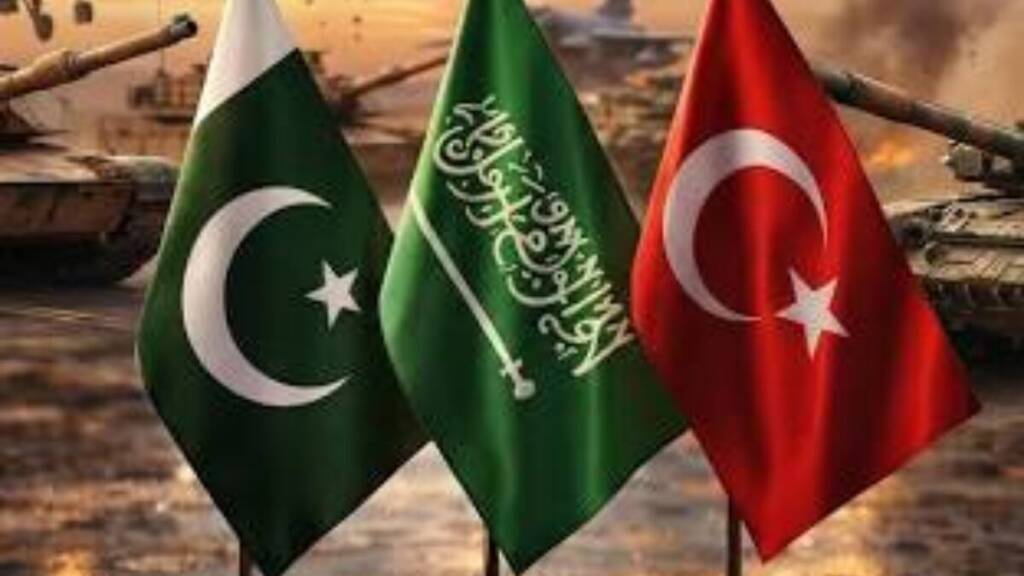
Yemen’s Houthis struck Saudi Aramco’s Jizan refinery with a drone at dawn on Sunday, 9 August. The attack landed just two days after Saudi Arabia, Turkey and Pakistan signed a mutual defence pact in Mecca. Aramco’s firefighters put out the blaze; nobody was hurt. Yet neither Ankara nor Islamabad commented on the alliance they had joined 48 hours earlier.
What Happened at Jizan
The Saudi energy ministry confirmed the fire early on Sunday. It said Aramco’s industrial security teams extinguished the blaze at a facility belonging to the Jizan refinery, and reported no injuries — though it did not name a cause.
Houthi military spokesman Yahya Saree claimed the strike soon after, saying his forces succeeded in targeting the Aramco refinery in Jizan with a drone. He called the hit precise and cast it as retaliation for Saudi drone flights over Yemen’s Saada and Hajjah provinces.
The refinery sits on the Red Sea coast, close to the Yemeni border, and normally processes 400,000 barrels of crude a day. Notably, it was already idle: Aramco shut the plant on 27 July after an earlier Houthi attack damaged its gasification complex and tank farm, according to a consultancy note seen by Reuters.
Hours later, Saree announced a second operation. The Houthis said they hit Saudi troops and weapons at the Red Sea port of Mocha with missiles and drones, killing seven people, he said. Yemen’s transport ministry described severe damage to the port’s infrastructure. Riyadh did not comment on that attack either.
A Pact Tested Within 48 Hours
The timing was awkward. On Friday, Turkish President Recep Tayyip Erdogan, Saudi Crown Prince Mohammed bin Salman and Pakistani Prime Minister Shehbaz Sharif had signed the agreement in Mecca. The text treats an armed attack on any one signatory as an attack on all three.
On paper, the trio carries weight. Turkey fields NATO’s second-largest army. Saudi Arabia leads the world in oil exports. Pakistan remains the only Muslim-majority state with nuclear weapons.
In practice, nothing moved on Sunday. Reuters could not reach the Pakistani government for comment, and the Turkish government did not respond either.
Turkish Foreign Minister Hakan Fidan had already managed expectations on Friday, saying the alliance did not target Iran or any other country. Instead, he called it a general pledge to back each other’s security, adding that the three partners would settle the degree, form and format of any support through consultation.
‘Not for Petty Drone Attacks’
Pakistani security analyst Ali K. Chishti offered a blunter reading. Writing on X, he argued that pacts of this kind aren’t triggered by petty drone attacks, drawing a NATO comparison: members handle small incidents themselves and reserve the full agreement for a serious, direct threat. Only then, he added, do the heavy tools appear — logistics, economic pressure and boycotts.
His point sets a bar. On that reading, a drone striking an already-shut refinery sits well below it. Riyadh, therefore, absorbs this one alone.
The Wider War
Sunday’s strike fits a longer pattern. The Houthis declared a naval blockade on Saudi Arabia last month, alleging a Saudi siege — a claim Riyadh denies. Since then, the group has hit Aramco sites at Jizan and Yanbu and struck Saudi tankers in the Red Sea. Consequently, the 2022 truce in Yemen’s civil war now looks close to collapse.
Aramco insists the damage stays manageable. Chief executive Amin Nasser said last week that recent attacks had caused some production interruptions, but he expected a fast recovery and reported no material operational or financial impact.
Markets remain jumpier. The Strait of Hormuz is still effectively shut after months of US-Israeli conflict with Iran. Riyadh had hoped to push more barrels west through the Red Sea instead — but the Houthis are now squeezing that route too. Brent crude traded near $84 a barrel on Monday.
So the Mecca pact survives its first weekend untested. The next drone, however, may not be so easy to ignore.