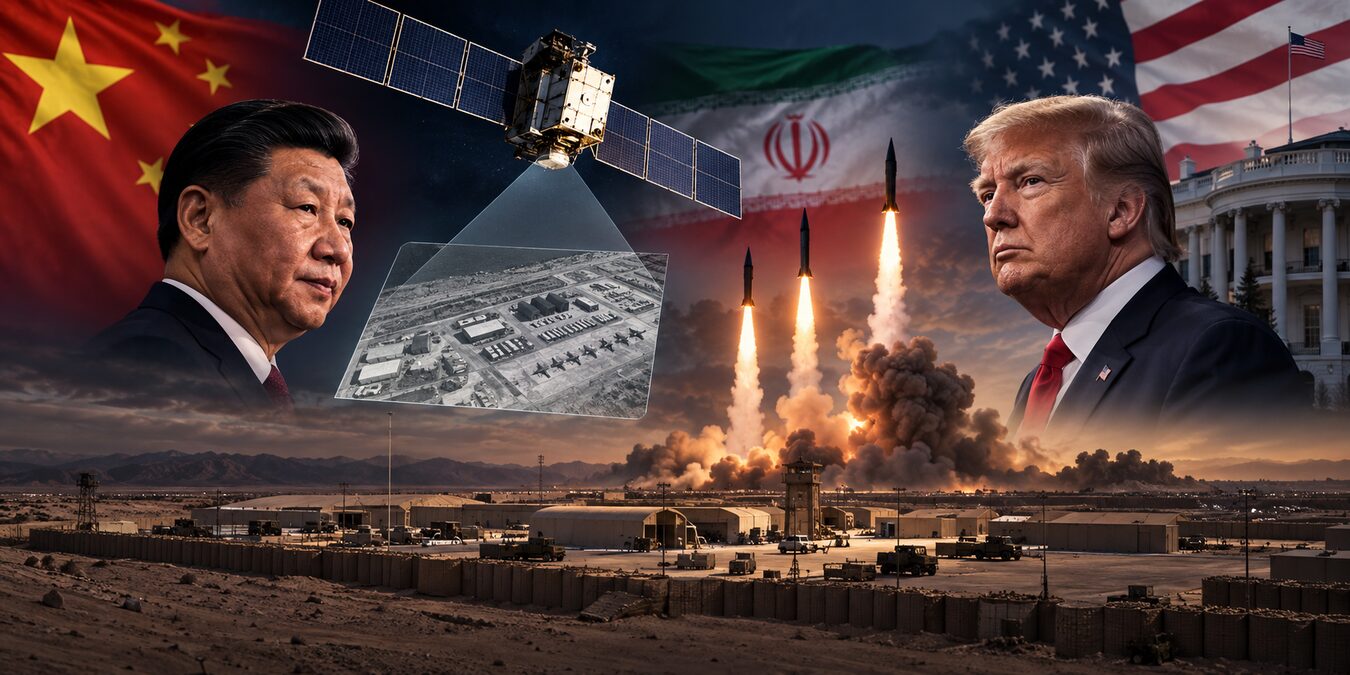
Washington links high-resolution imagery from Chinese suppliers to the 17 July strike that killed three American soldiers — 12 days before Xi Jinping walks into the White House.Iran obtained high-resolution satellite images of a Jordanian air base from Chinese sources before firing ballistic missiles at the site on 17 July, killing three American soldiers. The officials called it the clearest evidence yet that Chinese support for Tehran has cost American lives.
The missiles struck a residential compound at Muwaffaq Salti air base in north-eastern Jordan while the troops slept. Four others suffered wounds. The strike formed one of three on the base within 24 hours and produced the first US military deaths since the April ceasefire. Iran received imagery before and after the attack, the officials said. They declined to name the Chinese suppliers and stopped short of accusing the Chinese government of direct involvement. Beijing rejected the claims and demanded evidence.
The timing stings. Xi Jinping meets Donald Trump at the White House on 24 September.
A Pattern, Not a One-Off
Washington has marked this trail for months. On 8 May the State Department sanctioned three Chinese firms, The Earth Eye, Meentropy Technology, trading as MizarVision, and Chang Guang Satellite Technology, over imagery of US forces during Operation Epic Fury. Chang Guang, which runs more than 100 Jilin-1 satellites, allegedly photographed American positions at Tehran’s request.
Iran published detailed damage images from inside the base within three days. Analysts caution that Chinese pictures form one strand of Tehran’s intelligence; Iran also runs its own satellites, human networks and receives Russian imagery.
Why Beijing Helps Tehran
Oil explains much of it. China has taken up to 90 per cent of Iran’s oil exports since the war began, yet Iranian crude covers only about two per cent of China’s energy mix. A 25-year partnership signed in 2021 promised $400bn of Chinese investment; barely a fraction has arrived.
Kerri Bitsoff, a former US Treasury sanctions official, calls it a customer relationship rather than an alliance. Beijing benefited, she said, because “they got cheap oil, they got a US tied up in the Middle East”.
Strategy supplies the rest. Brookings scholars argue the war hands Beijing a propaganda gift: it can ask Asian capitals whether Washington would defend Taiwan when it struggles against Iran. Bruegel notes that watching US naval operations live could pay dividends in a Taiwan crisis, and Asia Times reports Beijing is studying American strike patterns, logistics and missile defence at first hand.
The help has limits. Hongda Fan, director of the China-Middle East Center at Shaoxing University, says Beijing will press for de-escalation rather than confront Washington over Iran.
The War has Bruised China’s Own Energy Security
Roughly half of China’s crude imports and nearly a third of its liquefied natural gas normally transit the Strait of Hormuz. Iran closed the waterway after the US and Israel attacked on 28 February.
Crude prices then climbed more than 70 per cent in seven weeks. Beijing had prepared, entering the war with about 1.4 billion barrels in stockpiles, yet seaborne crude imports still fell to roughly 7.14 million barrels a day in August, nearly 40 per cent below pre-war levels.
The American naval blockade squeezes Iran harder. Ship-tracking firm Kpler estimates Iranian exports through Hormuz slid from about 1.85 million barrels a day in March–April to 240,000 in August.
Why Washington Keeps its Voice Down
Trump has told his team that his relationship with Xi ranks as a priority, and officials have avoided public fights before the summit. A White House official said no outside help had meaningfully improved Iran’s ability to attack the United States.
Secretary of State Marco Rubio met Chinese Foreign Minister Wang Yi days after the July strike. Asked whether China supplied targeting intelligence, he sidestepped the question and said “nothing China did altered in any way the course of the conflict”.
Leverage runs both ways. Beijing controls rare-earth supply chains Washington cannot replace quickly, and the one-year trade truce expires in October. The administration has sanctioned Chinese teapot refiners and small traders, but has spared the large Chinese banks that clear Iranian oil payments.
What Happens Next
Xi arrived in New Delhi on Saturday for the BRICS summit, where Prime Minister Narendra Modi is hosting him alongside Vladimir Putin and Iran’s Masoud Pezeshkian. Harsh V Pant of the Observer Research Foundation calls the Gulf conflict the summit’s “central fault line”.
US officials are now examining whether Chinese data helps Iran track American warships. Iran fired missiles at a US carrier and a destroyer this month; Central Command said they missed, and American forces destroyed or disabled three Iranian tankers in reply. Whether Trump raises the satellite question on 24 September will show how much Washington wants the answer.