TFIGlobal
TFIGlobal
TFIPOST English
TFIPOST हिन्दी
No Result
View All Result
  • Indo-Pacific
  • Americas
  • Canada
  • Indian Subcontinent
  • West Asia
  • Europe
  • Africa
  • The Caribbean
TFIGlobal
  • Indo-Pacific
  • Americas
  • Canada
  • Indian Subcontinent
  • West Asia
  • Europe
  • Africa
  • The Caribbean
No Result
View All Result
TFIGlobal
TFIGlobal
No Result
View All Result
  • Indo-Pacific
  • Americas
  • Canada
  • Indian Subcontinent
  • West Asia
  • Europe
  • Africa
  • The Caribbean

To hide its failed policies, China blames its youth for its massive debt crisis 

Akshay Narang by Akshay Narang
December 19, 2020
in Indo-Pacific
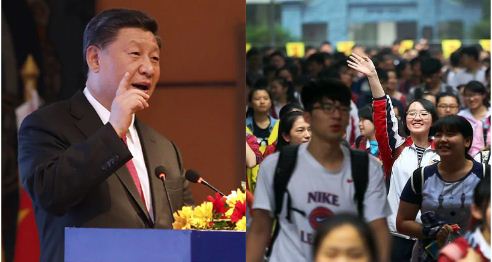
china youth debt crisis
Share on FacebookShare on X

In Xi Jinping’s China, the Chinese Communist Party (CCP) is never responsible for the authoritarian country’s economic woes. Presently, China is passing through a massive debt crisis, and private businesses, both big and small, are floundering due to a severe lack of credit supply in the Chinese economy. 

But who is responsible for China’s economic woes? Global Times, a CCP mouthpiece, seems to claim that China’s youth is the one to be blamed. In a short comment published on its website, the CCP mouthpiece has tried to make a strong case against internet loans.     

Also Read

Trump Renames Lake Ontario ‘Lake America’, and Google Has Already Redrawn the Map

Trump Posts AI Video of Kharg ‘Blown to Smithereens’ as US and Iran Trade Fire

Turkey, Saudi Arabia and Pakistan Open First Defence Pact Talks as Saudi Refineries Burn

The state-run media house has stated, “as the year end approaches, a group called “debtor alliance” on social media is seeing more and more desperate young debtors swarming in.” It added, “they (China’s youth) are eager to huddle together and find useful advice from each other.” 

And then Global Times started blaming the youth for China’s debt crisis rather bluntly. It reported, “According to a 2019 Report on the debt status of young Chinese consumers, 44.5 percent of young people in China are in real debt.” 

Finally, there was some moral policing for the Chinese youth on the CCP mouthpiece’s portal. Global Times opined, “Overall, internet loans can be attractive due to its low threshold, quick money inflow and high quota.” The state-owned media house also warned, “They (Chinese youth) should wisely use credit products instead of squandering away future savings.” 

So, Global Times has made two things very clear. Firstly, the CCP doesn’t like the new culture of internet loans. Probably, this is why the CCP mouthpiece also said that internet lending can “cause a black hole that absorbs everything one owns.” 

In fact, Xi Jinping never fancied tech giants rendering online financial services. Recently, Jack Ma-led Ant Group Co.’s $35 billion IPO was also halted by China. Ant Group Co. is a fintech solution company and Jack Ma had himself called China’s financial regulation outdated and badly suited for such companies. But Xi’s message is clear- China’s youth, being irresponsible, cannot be trusted with such online financing services.

Secondly and more importantly, the CCP is also claiming that it is not responsible for China’s debt crisis. In July this year, the Banking and Insurance Regulatory Commission, China’s apex authority for regulation of banking and insurance sector, had warned the government to prepare for a ‘big rise’ in bad loans. 

In fact, China’s bad debt trouble isn’t of recent origin. Over the past few years, the non-performing assets (or NPAs) of China’s local banks have grown exponentially. The NPAs were triggered after an artificial real estate boom went bust and several companies defaulted on loans.

The situation in China is so bad that last year, the Central government was compelled to take control of local lenders in many provinces and sustain their operations. Beijing took over Baoshang Bank, a big lender in Inner Mongolia, and also bailed out Bank of Jinzhou and Hengfeng Bank.

The worst-hit are China’s small businesses. Xi Jinping has been running a campaign to reduce financial risk in the Chinese economy, which has already made it extremely difficult for small Chinese firms to secure loans. And then the miserable state that China’s state-run regional banks are in, has led to a sharp decline in credit supply to small businesses in the Communist nation. 

Xi cannot control China’s debt crisis, nor can he ensure adequate credit supply to reinvigorate Chinese businesses. But Global Times believes that it is China’s youth which is to be blamed for the authoritarian nation’s economic woes. 

ShareTweetSend
Akshay Narang

Akshay Narang

Patriot, Political Analyst, International Relations expert

Also Read

A dramatic cyberwarfare illustration showing a shadowy hacker from China launching digital attacks from red-lit servers toward major US government, scientific and industrial facilities, with blue shields marking defended targets and red broken locks indicating compromised systems.

From Victims to Targets: US Quietly Edits Its Chinese Hacking Claims

August 30, 2026
A hooded hacker sits before multiple computer screens as images of the U.S. Capitol, NASA, federal institutions, servers and network data surround them, symbolising a Chinese-linked cyber-espionage hacking campaign targeting American government agencies.

Eight Years in the Dark: Chinese Hacking Campaign Reached NASA, the Fed, and the US Senate

August 27, 2026
A hypersonic glide vehicle streaks through the upper atmosphere as it launches a missile toward a US AWACS radar aircraft, with tanker and support aircraft flying in the distance above dramatic cloud cover.

China’s Hypersonic Gliders Can Now Shoot at Aircraft — And America’s Radar Planes Are the Target

August 25, 2026
A dramatic collage showing Hui Ka Yan in the foreground, Evergrande’s rise symbolised by a luxury skyscraper, car and stacks of cash, and China’s property crisis represented by unfinished buildings, rubble, displaced families and a prison cell. Evergrande founder life sentence

From China’s Richest Man to a Prison Cell: The Evergrande Founder’s Life Sentence Explained

August 24, 2026
A container ship sails through icy Arctic waters toward a snow-covered coastal port, surrounded by floating sea ice and towering mountains under a dramatic sunset.

A Ship Sails North, and the China-Russia Arctic Shipping Route Comes Alive

August 22, 2026
Conceptual illustration of Chinese data infrastructure feeding into a central artificial intelligence system, with glowing data streams spreading toward chatbots and users worldwide, symbolising China’s growing influence over AI training data and information ecosystems.

Explainer: How China Plans to Shape What the World’s AI Knows

August 22, 2026
Youtube Twitter Facebook
TFIGlobalTFIGlobal
Right Arm. Round the World. FAST.
  • About Us
  • Contact Us
  • TFIPOST – English
  • TFIPOST हिन्दी
  • Careers
  • Brand Partnerships
  • Terms of use
  • Privacy Policy

©2026 - TFI MEDIA PRIVATE LIMITED

Welcome Back!

Login to your account below

Forgotten Password?

Retrieve your password

Please enter your username or email address to reset your password.

Log In

Add New Playlist

No Result
View All Result
  • Indo-Pacific
  • Americas
  • Canada
  • Indian Subcontinent
  • West Asia
  • Europe
  • Africa
  • The Caribbean
TFIPOST English
TFIPOST हिन्दी

©2026 - TFI MEDIA PRIVATE LIMITED

This website uses cookies. By continuing to use this website you are giving consent to cookies being used. View our Privacy and Cookie Policy.