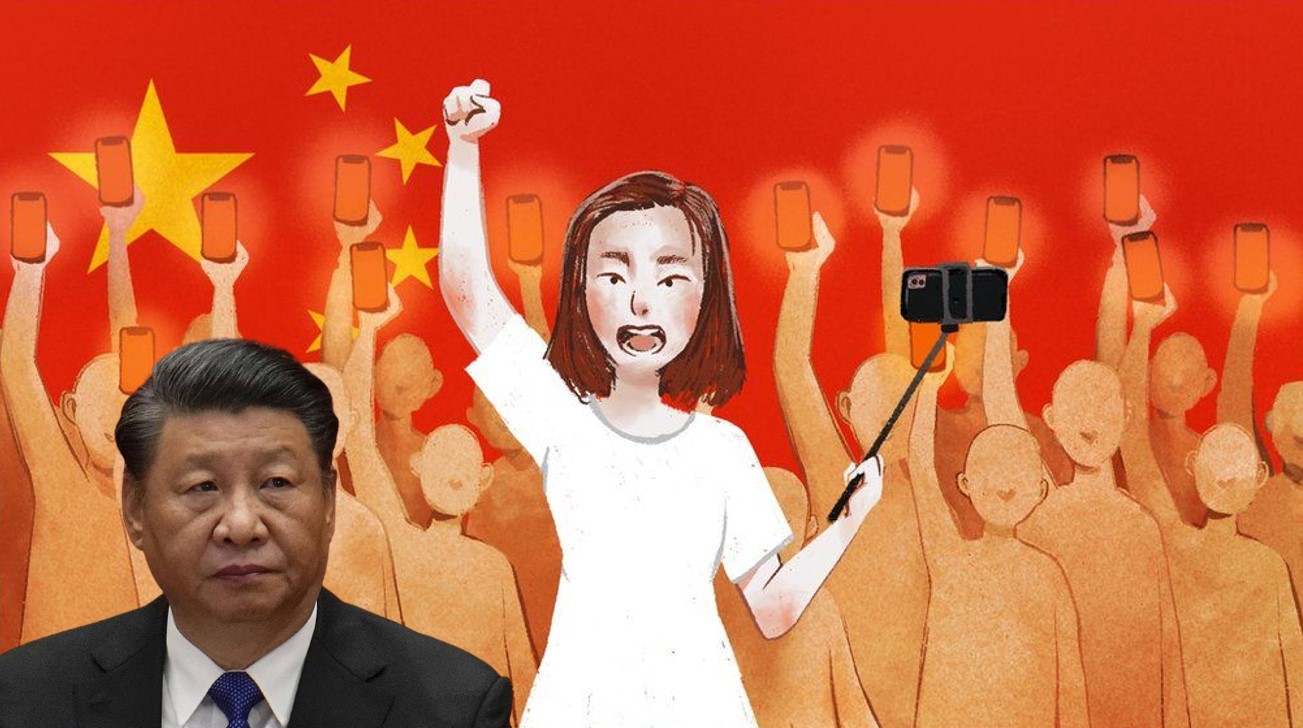
Chinese President Xi Jinping is turning extremely paranoid and xenophobic. Due to his actions like human rights abuses against ethnic minorities, mismanagement of the Pandemic, economic collapse, and vindictive crackdowns against billionaire entrepreneurs, Xi lives in permanent fear of a coup. Meanwhile, Chinese bloggers are using clickbait nationalism to monetise their President’s fears.
How Xi is driving xenophobic sentiment in his country
Chinese President Xi Jinping became the centre of global attention, due to his high-handedness including actions like tormenting ethnic minorities and using the Chinese military for Beijing’s salami-slicing tactics. He continuously fears that China’s rivals would join hands with his enemies in China to unseat him.
And how do you avoid a coup? Well, last year, Xi decided to launch a campaign against foreigners. He came to power in the year 2012 and since then he has been actively campaigning against ‘hostile foreign forces’ in China.
He has closed China’s doors to the world, instead of opening up the Communist country. Xi has tightened foreign investments and has made it difficult for foreign corporate giants to operate in the country. This has come at the cost of Chinese economic growth but Xi is more concerned about his power than the Chinese economy.
Civil society, foreign NGOs, and private businesses face trouble in China
Xi Jinping has been constantly suppressing foreign NGOs and civil society, apart from stepping up the study of Marxism and trying to assert ideological control in Chinese education.
Meanwhile, Xi’s actions are allowing the Chinese State media and nationalist bloggers to step up their xenophobic rhetoric. Individuals and groups are being described as foreign agents and China’s enemies, merely for receiving foreign grants or relaying foreign concerns regarding China’s adverse actions across the world. The xenophobic sentiment is so strong that even those demanding environmental-friendly policies are being dismissed as hostile forces.
The Chinese State permits and encourages such narrative being pushed by ultra-nationalist bloggers in the country. Take the case of China House, a social enterprise based in Shanghai promoting sustainable development in the African Continent.
When the enterprise called out discrimination against African migrants in southern China, it was ridiculed as er guizi, a derogatory term used for the supporters of the Japanese occupiers in the 1930s and 1940s. Interestingly, the Communist Youth League, a CCP-run youth movement, too reposted adverse content against China House.
Chinese bloggers monetise Xi’s paranoia
Meanwhile, growing xenophobia in China is turning into a good opportunity for Chinese bloggers to make some money. With Xi constantly pushing a narrative against the so-called hostile foreign forces, many ultra-nationalist bloggers and little-known social media hardliners are launching verbal attacks against foreign nationals and organisations.
The core audience of such ultra-nationalist elements is young men aged 18 to 25. They know there are CCP supporters all across the country who want to read about China’s so-called enemies.
Since China’s state security services also offers rewards of up to 500,000 yuan ($78,700) for reporting foreign agents to the CCP authorities, seemingly unpatriotic Chinese individuals are being mocked as “a walking 500,000” or simply “500,000”. You know, Chinese xenophobia has reached levels where even Chinese citizens aren’t being spared.
With nationalism becoming a matter of internet entertainment in China, it is easy to find videos of “anti-China treachery” in the country. In the words of a Chinese liberal whose employer was targeted last year; nationalists discovered that videos about “anti-China” treachery generate clicks. An NGO veteran said, “If you have a lot of clicks you become influential, and influence drives revenues.”
He is right. A video against China House, for example, has been visited 5 million times. The hunger for consumption of ultra-nationalist and xenophobic content is growing in China courtesy of Xi, and nationalist bloggers in China are taking full advantage.