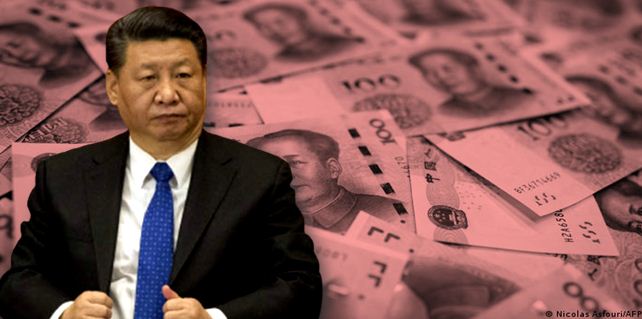
Chinese local officials are in Beijing this week. They are attending the annual full session of the Chinese Parliament with one common grievance in hand- money, or the lack of it. Local governments in China argue that they are being made to spend more, while the Xi Jinping administration isn’t funding them properly.
Henan province being made to spend heavily on water diversion project
Zhu Shixi, the local party chief for the city of Nanyang in the central Henan province, was quite vocal about a big development project to divert water to Northern China. The local government is spending tens of billions of Yuan on the mega project, which was showcased by Xi himself during a visit to Nanyang last year.
Zhu said that the “local government’s finances are overwhelmed by the heavy load” of spending. At the same time, the city’s fiscal income has been shrinking by 2 billion yuan a year. The local official even proposed that the central government gives Nanyang city a bigger share in money collected from water taxes.
Chongli suffers due to a bad Winter Olympics experience
Meanwhile, Chongli county near Beijing is facing a peculiar problem. It hosted many events of the recently-concluded Beijing Winter Olympics. However, Chongli had borrowed a lot to pay for the ski slopes and other sports facilities. Revenues couldn’t match the pace of heavy spending and the county is now looking at a financial crisis. The central government too has refused to step in and save it from the impending crisis.
Chinese cities and provinces are actually under a mountain of debt. They face a record $440 billion of bond payments getting due this year. Well, they don’t have much of a choice. They can either borrow more or raise their grievances before an indifferent central government.
Xing Zhaopeng, a senior China strategist said, “The difficulties faced by local governments are unprecedented this year.” He added that without more money from the central government, “less developed regions may even have problems paying salaries to government employees and public school teachers.”
What makes China’s local and provincial governments so poor?
There are historical and political reasons behind the dismal state of Chinese provinces and cities. Back in the 1990s, China’s central government snatched control of taxes from the provinces. In the decades ahead, Beijing also forced local governments to spend more on education and other sectors. Without any financial control and compulsion to spend more, these provinces were forced to raise money through ‘hidden debt’ or off-balance sheet borrowing.
Read more: China’s local governments are set to collapse like dominos
Remember, 2022 is an election year for Xi. and the authoritarian leader does need the approval of the CCP central committee members to get another term in power. So, to avoid any revolt at the provincial level, he dried up funding for provincial and local governments.
Read more: Here’s why Xi Jinping is deliberately making its provincial governments poor
Add to it, the other pressures that the local governments face. They have been battling with COVID-19 for over two years now and presently, the Omicron variant has caused a huge wave of COVID-19 cases in the Communist country.
At the same time, the Russia-Ukraine crisis has led to growing crude oil prices and inflation is bound to surge in China once again. This is going to further squeeze the revenues of the Chinese provinces and cities. Finally, the Chinese real estate crisis seems rather endless. Earlier, Chinese provinces used to make a lot of money through land sales. But with the Chinese property sector in a free fall, they have lost this healthy source of revenue too.
And the net consequence is that Chinese cities are going bankrupt. They are reeling under a mountain of debt and are clueless on how to come out of this crisis. The ultimate victim will however be the Chinese economy which keeps losing out on investor sentiment.