TFIGlobal
TFIGlobal
TFIPOST English
TFIPOST हिन्दी
No Result
View All Result
  • Indo-Pacific
  • Americas
  • Canada
  • Indian Subcontinent
  • West Asia
  • Europe
  • Africa
  • The Caribbean
TFIGlobal
  • Indo-Pacific
  • Americas
  • Canada
  • Indian Subcontinent
  • West Asia
  • Europe
  • Africa
  • The Caribbean
No Result
View All Result
TFIGlobal
TFIGlobal
No Result
View All Result
  • Indo-Pacific
  • Americas
  • Canada
  • Indian Subcontinent
  • West Asia
  • Europe
  • Africa
  • The Caribbean

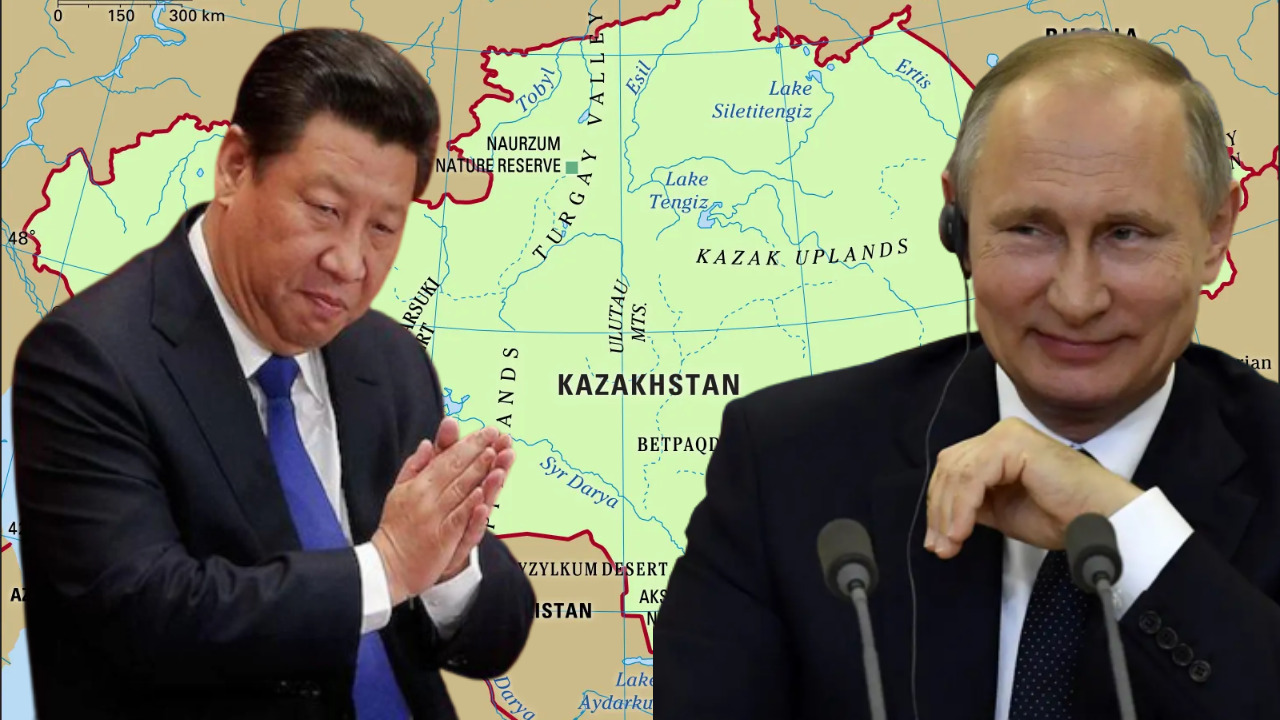
Chinese companies are fleeing Kazakhstan en masse

Kanika Batra Arora by Kanika Batra Arora
April 18, 2022
in Central Asia, Geopolitics, Global Issues
Chinese companies are fleeing Kazakhstan en masse
Share on FacebookShare on X

Kazakhstan, a strategically located landlocked country in Central Asia, provides China with an ideal opportunity to realize its BRI aspirations and energy ambitions.

China’s ambitions to reach Europe via Kazakhstan and govern the Central Asian region, however, appear to be coming to an end. For a long time, Chinese enterprises operating in the country have been subjected to protests, which have prompted them to consider withdrawing from Kazakhstan.

Also Read

“Crown jewels” for Riyadh? US clears $24.3bn F-35 sale despite China spying fears

One Man, 14 Break-Ins: Anthropic’s Report on How AI Became a Weapon for Hire

The 1,000-Mile Kill Shot: America’s New Missile Plan Puts China in Its Sights

In a recent incident, 100 laborers working on a road contruction project in Kazakhstan’s southern Zhambyl area laid down their tools and accused the contracted Chinese company, China Xinxing Construction & Development Co., of not paying them the agreed-upon wages.

Source: GIS reports online

In Kazakhstan, where Chinese enterprises are exiting the nation, such incidents are becoming more common. This is clearly evident when a Eurasianet review of the ongoing investment projects listed on the websites of Kazakhstan’s 14 provincial administrations found that only 24 out of 542 projects at various stages of completion involved Chinese investors.

In another instance, in 2020, LSM reported that Chinese enterprises had pulled out of a $1.4 billion fertilizer production project in the same region, a nearly $1 billion tungsten development project in central Karaganda, and a $115 million arrangement to establish a silicon facility in Pavlodar’s northern region.

Also read: Russia goes all out against China’s Central Asia ambitions, starts funding anti-China research

But how is it that China, which has invested a mind-boggling amount of money and diplomatic capital in the country, is so readily retreating from Kazakhstan? Let’s take a look at each of the reasons one by one.

Terms and conditions applied

The most crucial reason for the ongoing exodus of Chinese companies is China’s failure in executing its infamous debt-trap diplomacy in the region . China tends to undermine the sovereignty of a nation by extending easy loans, infrastructural projects and financial assistance in great proportions. However, this strategy failed to yield the desired results for the Chinese government.

For instance, the South China Morning Post reported last year how Chinese companies increasingly had to adapt to the demands of the region’s governments and citizens who want more jobs, exports and skills training. Since, it is impossible for China to achieve its desired objectives by relinquishing its modus operandi of debt-trapping host nations, they are finding it more viable to exit Kazakhstan altogether.

Russia is the king of the region

Nevertheless, another reason for the retreat of these Chinese companies is that Central Asian countries such as Kazakhstan, Kyrgyzstan, Tajikistan, and others have always been under Russian influence. Russia’s clout grew much more as a result of its Eurasian Economic Union initiative (EAEU). It is a free trade agreement that was established in 2015 with the goal of increasing economic cooperation and raising the living standards of its members—Russia, Armenia, Belarus, Kazakhstan, and Kyrgyzstan. But undoubtedly, the hidden motive behind this Russia-led initiative is to counter China’s presence in the region and to retain its ‘sphere of influence’.

Moreover, Russia’s significant influence in Kazakhstan was also evident when, in the midst of protests in Kazakhstan early this year, Russia dispatched paramilitary soldiers to assist in stabilization efforts.

All in all, as Chinese companies flee Kazakhstan en masse, China appears to have understood a loud and clear message from Russia: Central Asia is Russia’s backyard where China should steer clear of. This Russia-engineered dismantling of Chinese interests in Kazakhstan is a direct result of Russia’s years long campaign to undermine the rising Chinese influence.

Read more: China’s BRI project in Indonesia is dead

Tags: Central AsiaChinaJinpingPutinRussia
ShareTweetSend
Kanika Batra Arora

Kanika Batra Arora

Associate Editor at TFIGlobal. An artist by god's grace, geopolitics enthusiast, sapiophile.

Also Read

US, Danish and Greenland leaders shake hands during a security agreement signing, with Arctic glaciers, military facilities, naval vessels and national flags in the background.

From Threats of Force to a Handshake: Trump Claims ‘Permanent’ Control Over Greenland’s Security

September 19, 2026
Donald Trump signs a Russia sanctions law as oil tankers and refineries symbolise growing US pressure on Russian energy buyers India and China, with Putin, Modi and Xi depicted amid a tense global energy standoff.

Trump signs Russia sanctions law, hangs a 100 per cent tariff sword over India and China

September 19, 2026
Canadian Prime Minister Mark Carney and European Commission President Ursula von der Leyen shake hands amid Canadian and EU flags, while Donald Trump stands near the US Capitol and cargo containers, symbolising Canada’s closer ties with Europe amid US tariff tensions. EU.

Europe opens its door, Trump threatens tariffs: Carney embraces EU associate membership offer

September 18, 2026
F-35 stealth fighter at a Saudi airbase, symbolising the proposed US-Saudi defence deal amid tensions over China’s access to advanced American military technology.

“Crown jewels” for Riyadh? US clears $24.3bn F-35 sale despite China spying fears

September 18, 2026
A military satellite orbiting above Earth, with other satellites in the distance and a blue beam linking two spacecraft, symbolizing the growing space weapon and the emerging US-Russia-China orbital rivalry

Washington Finally Says It Out Loud: America Has Weapons in Space

September 15, 2026
A Houthi fighter watches a missile strike near a Saudi military and oil facility in a desert landscape, with smoke and flames rising behind a Saudi flag and an oil pipeline stretching toward a port in the distance.

Houthi missiles hit a Saudi base — and a shut pipeline hands Tehran its strongest card against Washington

September 14, 2026
Youtube Twitter Facebook
TFIGlobalTFIGlobal
Right Arm. Round the World. FAST.
  • About Us
  • Contact Us
  • TFIPOST – English
  • TFIPOST हिन्दी
  • Careers
  • Brand Partnerships
  • Terms of use
  • Privacy Policy

©2026 - TFI MEDIA PRIVATE LIMITED

Welcome Back!

Login to your account below

Forgotten Password?

Retrieve your password

Please enter your username or email address to reset your password.

Log In

Add New Playlist

No Result
View All Result
  • Indo-Pacific
  • Americas
  • Canada
  • Indian Subcontinent
  • West Asia
  • Europe
  • Africa
  • The Caribbean
TFIPOST English
TFIPOST हिन्दी

©2026 - TFI MEDIA PRIVATE LIMITED

This website uses cookies. By continuing to use this website you are giving consent to cookies being used. View our Privacy and Cookie Policy.