TFIGlobal
TFIGlobal
TFIPOST English
TFIPOST हिन्दी
No Result
View All Result
  • Indo-Pacific
  • Americas
  • Canada
  • Indian Subcontinent
  • West Asia
  • Europe
  • Africa
  • The Caribbean
TFIGlobal
  • Indo-Pacific
  • Americas
  • Canada
  • Indian Subcontinent
  • West Asia
  • Europe
  • Africa
  • The Caribbean
No Result
View All Result
TFIGlobal
TFIGlobal
No Result
View All Result
  • Indo-Pacific
  • Americas
  • Canada
  • Indian Subcontinent
  • West Asia
  • Europe
  • Africa
  • The Caribbean

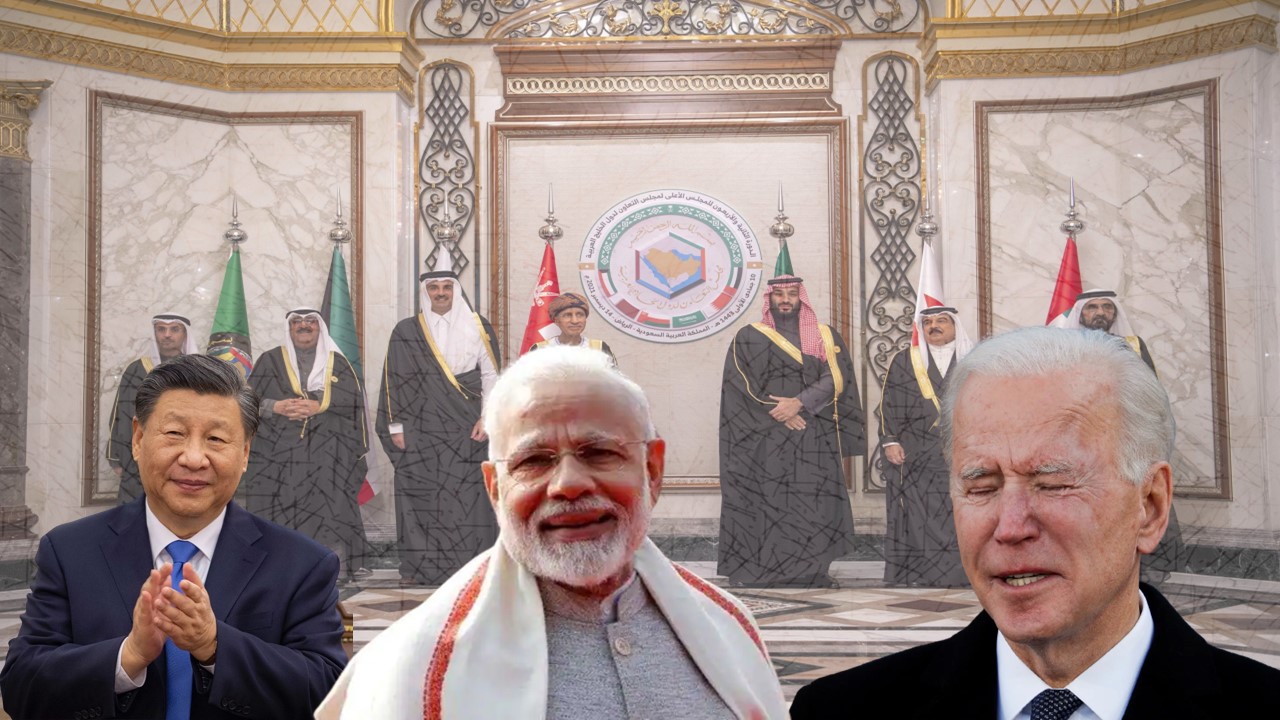
Middle East Shakes Up US Power as Saudi and UAE Move Away from US Umbrella

Bishnu Rathi by Bishnu Rathi
February 3, 2023
in Geopolitics, Global Issues
Middle East Shakes Up US Power as Saudi and UAE Move Away from US Umbrella
Share on FacebookShare on X

According to most observers, President Joe Biden’s last visit to the Middle East fell short of its declared objectives and highlighted fractures in Washington’s decades-long predominance in the area.

Some attribute this downfall to the invasions of Iraq and Afghanistan. Others feel that the true loss of faith in America began with former President Barack Obama’s failure to intervene and safeguard ally Arab regimes, such as Egypt’s Hosni Mubarak. US’ failure to properly display proper leadership along with their botched-up exit from Afghanistan, as well as its withdrawal of soldiers from Iraq and Syria have taken its toll. Doubts American reliability became evident after the signing of the landmark JCPOA in 2015, which was seen by key US allies as a sign of weakness. They accused the White House of not listening to their concerns.

Also Read

Turkey, Saudi Arabia and Pakistan Open First Defence Pact Talks as Saudi Refineries Burn

Saudi Arabia, Turkey and Pakistan Sign Trilateral Defence Pact in Jeddah

UAE wants India’s Akashteer and BrahMos after U.S. Patriot & THAAD failed to stop Iran’s Drone Swarms

Read More: As OPEC+ shows its valour against USA, Biden reads riot act for UAE

For a long time, US allies avoided publicly criticising Washington’s policies in the region, preferring to do it behind closed doors. However, times have changed, for instance in Saudi Arabia and the United Arab Emirates, youthful rulers are speaking out against US policies thereby undermining its stability of authority and seeking strategic ties elsewhere. As a result of its policies, the United States’ prestige in the area has suffered, and there is a growing impression in many Arab capitals that America is no longer a trusted partner.
(Source: GulfToday)

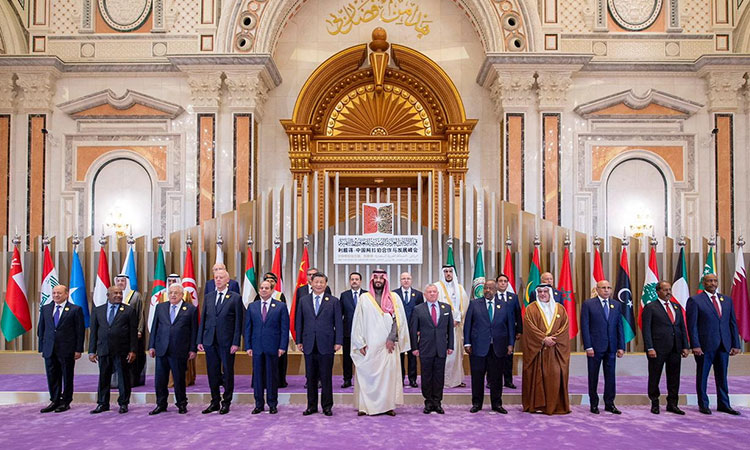
Au contrare, nations like Russia, China and India don’t question their internal operations. Don’t make selling military weapons or economic and strategic engagement with them conditional. This is why there’s an emergence of a radical shift within the foreign policy ambitions of the middle east heavyweights, enmarked with a growing engagement with Moscow, New Delhi or even Beijing coupled with a declining relationship with Washington. In pursuance of this paradigm shift, Xi-Jinping was seen as a keynote speaker at the China- Gulf Co-operation Council Summit in December 2022.

The Middle East has also started making its footprint in the Caribbean region as well in order to diversify its foreign policy in a bid to move away from the umbrella of United States and to undo with the pre conceived notions of being called a US ally. It is also worth highlighting the expanding ties between India and the Middle East. Some developments in the Middle East’s geopolitical dynamics have moved countries closer to India, reinforcing the Indian Link West policy, an endeavour to realise better collaboration with the Middle East.

Countries such as the UAE and Saudi Arabia have swept their regional ambitions under the rug while dealing with India because they believe that Asian markets such as China, Japan, South Korea, and India would be their primary clients in the coming years.

Read More: South Korea and Saudi Arabia’s defence ties ‘bombards’ the American defence industry

Long known as US allies, Gulf powers Saudi Arabia and the United Arab Emirates (UAE) are no longer hesitant to broaden their foreign policy aims, even if it means forming alliances with Washington’s adversaries. The rising engagement with states beyond Washington’s purview demonstrates the desire of Gulf nations to shift away from the West and form independent alliances.

Tags: GCCSaudi ArabiaUAE
ShareTweetSend
Bishnu Rathi

Bishnu Rathi

Bishnu Rathi, Associate Editor (Global Desk, English) at TFI Media. Undergrad student from Shaheed Bhagat Singh College, Delhi University. I am a geopolitical aficionado with an adherence to Mearsheimerian Realism.

Also Read

President Donald Trump signs an order in the foreground as Lake Ontario and the Toronto skyline appear behind him, with American and Canadian flags symbolising the escalating dispute over the lake's name and US-Canada relations.

Trump Renames Lake Ontario ‘Lake America’, and Google Has Already Redrawn the Map

August 31, 2026
A dramatic nighttime scene showing a US warship facing a large oil terminal engulfed in flames, with explosions, thick black smoke, fighter jets, and missiles streaking across the sky above the sea after strikes

Trump Posts AI Video of Kharg ‘Blown to Smithereens’ as US and Iran Trade Fire

August 31, 2026
A dramatic scene showing the flags of Turkey, Saudi Arabia and Pakistan above military aircraft, soldiers and air-defence systems, as a large Saudi-style oil refinery burns in the background. Three leaders stand in the foreground watching the unfolding crisis.

Turkey, Saudi Arabia and Pakistan Open First Defence Pact Talks as Saudi Refineries Burn

August 31, 2026
A nighttime protest riot in Jakarta, with demonstrators facing riot police amid tear gas and water cannon spray as a guard post and motorcycles burn nearby.

Fire, Tear Gas, and 322 Detained: Jakarta’s Anti-Corruption Protest Ends in a Riot

August 31, 2026
A dramatic geopolitical oil scene showing an oil refinery and pumpjack, the US Capitol, Venezuelan mountains and flag imagery, and a large oil tanker at sea, symbolising the US–Venezuela oil deal.

Trump’s Venezuela Oil Deal: 65 Billion Barrels, a 100-Year Lease, and a Country Divided

August 30, 2026
A hypersonic glide vehicle streaks through the upper atmosphere as it launches a missile toward a US AWACS radar aircraft, with tanker and support aircraft flying in the distance above dramatic cloud cover.

China’s Hypersonic Gliders Can Now Shoot at Aircraft — And America’s Radar Planes Are the Target

August 25, 2026
Youtube Twitter Facebook
TFIGlobalTFIGlobal
Right Arm. Round the World. FAST.
  • About Us
  • Contact Us
  • TFIPOST – English
  • TFIPOST हिन्दी
  • Careers
  • Brand Partnerships
  • Terms of use
  • Privacy Policy

©2026 - TFI MEDIA PRIVATE LIMITED

Welcome Back!

Login to your account below

Forgotten Password?

Retrieve your password

Please enter your username or email address to reset your password.

Log In

Add New Playlist

No Result
View All Result
  • Indo-Pacific
  • Americas
  • Canada
  • Indian Subcontinent
  • West Asia
  • Europe
  • Africa
  • The Caribbean
TFIPOST English
TFIPOST हिन्दी

©2026 - TFI MEDIA PRIVATE LIMITED

This website uses cookies. By continuing to use this website you are giving consent to cookies being used. View our Privacy and Cookie Policy.