
Ever heard of the rise and fall of an industrial giant faster than you can say “steel”? Imagine a tale of two titans—J. P. Morgan and Andrew Carnegie—forging an empire, only to watch it crumble like a rusted relic a century later. How did U.S. Steel, born from the sweat and ingenuity of these American icons, go from top dog to 27th place in global rankings? And the cherry on top: why is it no longer red, white, and blue but rather rising sun-colored, auctioned off to a Japanese firm right before the Christmas bells jingled? The company was auctioned off by its board of directors to the highest bidder, which in this case was a Japanese firm, Nippon Steel.
The sale of U.S. Steel stands as a powerful symbol of America’s deindustrialization. Yet, its significance goes beyond symbolism. It poses a genuine threat to America’s long-term economic and national security. That threat compelled Senators J. D. Vance, Josh Hawley, and myself to urge the Committee on Foreign Investment in the United States (CFIUS) to block the acquisition—an appeal now echoed by the Biden administration.
Conservatives argue that Japan, a close ally, should have no issues controlling a crucial American steel company. But should the US overlook potential risks just because of friendship?
Read More: US’s Japan move in Ukraine is going to backfire very badly
Of course it is true that Japan is an ally. The US’s friendship with Tokyo is beyond dispute and essential as it confronts the threat of communist China together. But even the best of friends don’t see eye to eye on everything—to argue otherwise in the dangerous realm of national security would be foolish. It is common sense that there are some things you shouldn’t entrust to others when you can do them yourself. Managing America’s steel factories, which manufacture the fundamental building blocks of modern civilization, is one of those things.
Join us on Telegram: https://t.me/tfiglobal
While critics might argue that the U.S. Steel is of little consequence to their national security, like the editors of National Review write, “Even if U.S. Steel totally disappeared, the U.S. would still have production capacity to meet defense needs.” They cite former secretary of defense Jim Mattis, who estimated the military to require only three percent of domestic steel production to function.
It’s strange that they overlook the fact that defense demands surge significantly when a nation transitions from peace to wartime footing. In World War II, for instance, the U.S. government consumed approximately 60 percent of domestic steel, even with significantly higher production figures compared to today. Should the US face a conflict of similar scale, the Department of Commerce asserts that “existing domestic steel production capacity would be insufficient to meet national security needs.”
And actual conflict is not hypothetical. The streamlining enforced by the Clinton administration has weakened US’s defense industrial foundation to the extent that the once-famed “arsenal of democracy” now struggles to assist allies in two global wars, despite the United States not directly participating in either. Numerous potential conflicts could arise in the foreseeable future, including with communist China. It’s a dreadful thought to imagine prolonged battles with modern industrial adversaries—but is the US ready for such a scenario?
At present, the response appears to be a resounding no. To alter their trajectory, they must forsake the short-sightedness and simplistic globalism so prevalent across both ends of the political spectrum. Far too many prioritize immediate profits while disregarding long-term strength and sovereignty. Yet, there’s a distinction between addressing the present and neglecting the future, just as there is between domestic and foreign companies.
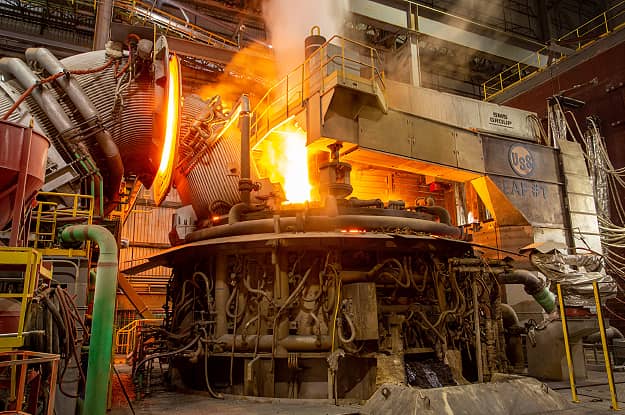
Congress has been well aware of this reality for some time. That’s why both Democrats and Republicans joined forces during President Ronald Reagan’s tenure to strengthen CFIUS, enabling it to oppose foreign takeovers of U.S. companies posing a threat to national security. However, CFIUS has been conspicuously inactive in recent times. In 2008, Reuters disclosed that Russia had obtained nearly 10 percent of American steel production, and CFIUS had failed to intervene. Consequently, numerous factories and steelworks faced closure. If we aim to uphold the resilience of our defense industrial base, it’s imperative for CFIUS to fulfill its role.
Read More: Japan’s tongue-in-cheek revelation of its growing defense industry
The US requires a more comprehensive understanding of national security. While policymakers widely acknowledge the need to strengthen critical supply chains, most shelter themselves behind the Biden administration’s “small yard, high fence” ideology, limiting federal protection solely to cutting-edge technologies. In reality, the country requires much broader measures. The COVID-19 crisis exposed the risks of relying on foreign entities for essentials, spanning from medicine to missiles. This dependency might not seem perilous during peacetime but can destabilize the entire country during crises.
Biden’s disregard for foundational sectors like steel is a perilous misstep. In times of dire conflict, these sectors are the bedrock of the country’s freedom’s preservation.
Watch More: