A veteran American pilot has told Ukraine to kiss its F-16 Dreams Goodbye.
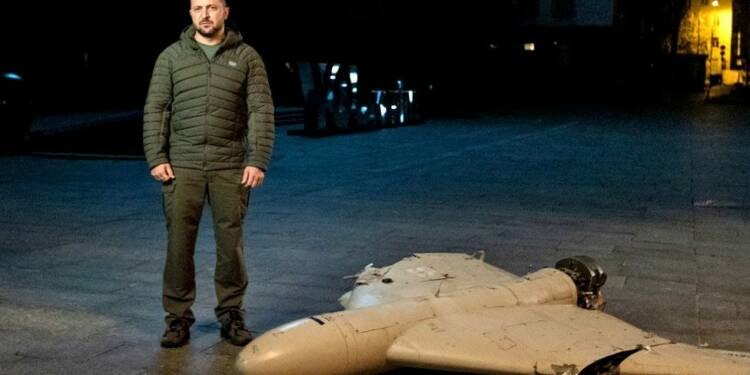
The discourse surrounding the F-16, a United States-manufactured fighter jet, has been significantly influenced by assertions from Ukrainian leadership, notably President Volodymyr Zelensky. Zelensky has advocated for the procurement of F-16s, positing that they would play a pivotal role in establishing aerial dominance over Ukraine, a concept closely associated with the establishment of no-fly zones—a strategy often criticized for its implementation by US/NATO in various geopolitical contexts. The underlying assumption that these aircraft could neutralize the capabilities of the Russian Aerospace Forces has been met with skepticism, particularly given the substantial efforts to retrofit infrastructure in Ukraine to accommodate the F-16’s operational requirements.
Join us on Telegram: https://t.me/tfiglobal
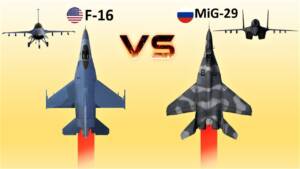
Critically, the logistical and maintenance demands of the F-16, known as the “Fighting Falcon”, emerge as a pronounced drawback. Despite its advanced design, the F-16 is characterized by higher maintenance needs and a lack of robustness compared to Soviet-era aircraft such as the MiG-29 and Su-27, which have demonstrated remarkable resilience in combat conditions. This discrepancy highlights a potential strategic misalignment, as Ukrainian pilots have expressed a preference for the capabilities of their existing Soviet-era fleet over the F-16.
Furthermore, the collective offer from NATO members—namely the Netherlands, Belgium, Norway, and Denmark—of approximately 60 F-16 jets falls short of Ukraine’s articulated requirement for a significantly larger fleet, alongside demands for modernization.
Read More: France, Germany and The UK are racing to get out of RUSSIA’s WAY
Complications extend to training personnel and ensuring operational readiness amidst concerns over the vulnerability of airbases and the aircraft to adversarial actions. Insights from retired US military pilot Tom Richter, underscores the formidable challenges in deploying F-16 jets within the Ukrainian theater, suggesting that the anticipated strategic advantages may be outweighed by logistical and tactical vulnerabilities. This assessment aligns with prior analyses that have cautioned against overestimating the impact of integrating Western fighter jets into Ukraine’s aerial defense strategy.
As per Richter, the operational distinctions between Soviet-era MiG-29s and American F-16 fighter jets underscore broader strategic implications for their deployment in conflict scenarios. Tom Richter, drawing upon his experience with the F-16 in the National Guard, characterizes the F-16 as a highly engineered, maintenance-intensive aircraft, in contrast to the rugged, low-maintenance MiG-29s capable of operating from less prepared airfields.
In the context of the ongoing conflict, the veteran pilot notes the impracticality for Ukraine to construct modern airbases suitable for F-16 operations, suggesting that these jets are not ideally suited for high-intensity conflict against near-peer adversaries. This reflects a broader critique of the F-16’s deployment potential, indicating its optimization for engagements where the United States and its allies face minimal opposition, rather than the demanding conditions of current warfare environments that Russia/Soviet Union-designed aircraft are built to endure.
Read More: Aging F-16s: The Unspoken Realities of NATO’s Support for Ukraine
Yuriy Ihnat, spokesperson for the Ukrainian forces, acknowledges the need for adaptations to accommodate the F-16’s operational requirements, highlighting the aircraft’s delicate landing gear and vulnerability to runway debris. This is corroborated by Justin Bronk from the Royal United Services Institute (RUSI), who notes the logistical challenge of maintaining runway integrity close to the front lines, necessitating special measures to prevent the aircraft from becoming conspicuous targets due to their reliance on well-maintained infrastructure.
And no matter how hard they train, the US cannot train Ukrainian pilots to fly these high-tech fighter jets. And without proper training, Ukrainian pilots will simply be fodder for Russian S-400s. So, at the end of the day, Ukraine will require American pilots to fly the F-16s. And that’s something the US cannot afford.