Since the beginning of the Ukraine we have been hearing news about Russia’s depleting military resources but the D-Day never seems to come. So how strong Russia really is?
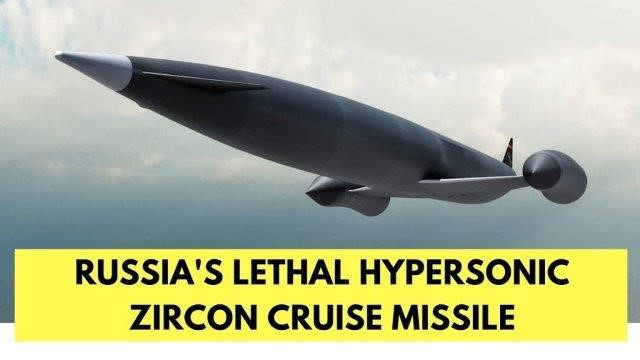
Despite claims of technological stagnation, Russia remains determined to improve its conventional military capabilities through the incorporation of cutting-edge technologies. Recent developments demonstrate this dedication, with a focus on the deployment of new hypersonic missiles, sophisticated next-generation fighter jets, and the novel employment of kamikaze drones launched from multiple launch rocket systems (MLRS). According to Western and Ukrainian sources, the 3M22 “Zircon”, a scramjet-powered maneuverable hypersonic cruise missile, has sparked interest for employment in Ukraine. The Kiev Scientific-Research Institute for Forensic Examinations (KNDISE) has reported evidence of a “Zircon” missile strike on February 7.
Join us on Telegram: https://t.me/tfiglobal
Russia’s advances in hypersonic technology are undeniable, with the “Zircon” missile’s capabilities, particularly the ability to launch from land-based platforms, being a focus. The extent to which “Zircon” has been deployed, as well as the truth of statements about its application, are still being scrutinized and debated internationally.
Russia’s hypersonic missile advancements, notably the “Zircon” missile, highlight a blend of secrecy and achievement. The “Zircon” is compatible with the 3S14 UKSK vertical launch system, enabling launches from platforms like the “Bastion-P” coastal defense system. This compatibility enhances Russia’s strike capabilities, with “Zircon” offering superior speed and range compared to the “Oniks” missile. The Kiev regime has struggled to intercept “Oniks,” a challenge amplified by the faster “Zircon.”
Read More: The Myth of Russia’s Downfall
The discovery of parts from Russia’s Kh-69 stealth cruise missile by the Kiev Scientific-Research Institute for Forensic Examinations indicates the missile’s operational deployment. The Kh-69, an evolution of the Kh-59MK2, signifies a leap in air-launched weaponry, compatible with various aircraft, including the Su-57. This missile improves upon the Kh-59 “Ovod” in stealth, range, speed, and payload, underscoring Russia’s ongoing enhancement of its military capabilities.
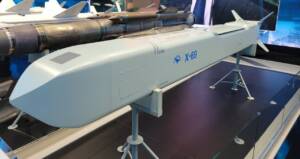
The Kh-69 missile, designed to destroy hardened targets, carries a 310 kg payload and has a 300 km range for strategic engagement. Its compatibility with the Su-57’s internal bays reduces radar visibility, enhancing stealth. Reports suggest the Su-57 has effectively launched Kh-69 missiles at various targets undetected, challenging critiques of its stealth based on radar cross-section.
The deployment of the Su-57, armed with Kh-69 missiles, highlights Russia’s emphasis on stealth and long-range capabilities in its military strategy, especially vital amidst NATO’s support for Ukraine. This approach demonstrates Russia’s commitment to maintaining a technological edge in modern combat scenarios.
Russia’s adaptation includes leveraging drones and advanced artillery for operational superiority. The “Tornado-S” system, an upgrade from the BM-30 MLRS, now supports kamikaze drone launches, combining two key strategic advantages. Enhanced with GLONASS-guided rockets, it extends the artillery’s range to 130 km, with a newer 9M544 rocket reaching up to 200 km. This capability allows Russia to execute long-range strikes with minimized counterattack risks, showcasing a significant tactical evolution.
Read More: As NATO focused on Ukraine, Russia took back Western Balkans
The integration of kamikaze drones with the “Tornado-S” system reflects Russia’s advances in unmanned warfare, once a self-acknowledged weak point. Today, Russia’s drone capabilities exceed both local and global expectations, signifying a major shift in combat tactics.
This strategic integration of advanced drones and artillery, particularly against the backdrop of NATO’s engagement in Ukraine and concerns over Russia’s A2/AD strategies, suggests a transformative shift in warfare. Russia’s approach not only challenges current defense mechanisms but also influences the balance of military technology and geopolitical leverage, highlighting the changing dynamics of modern battlefields and the increasing complexity of global military engagements.