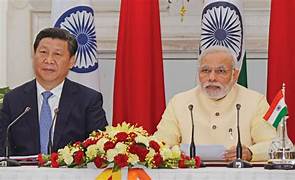
Prime Minister Narendra Modi’s recent tweet, which appeared harmless was actually strategic in nature, signaling India’s readiness to confront China head-on during his third term. His tweet, thanking Taiwanese leader Lai Ching-te for congratulating him on his re-election, has sparked a formal protest from China. Beijing, committed to the one-China principle, viewed this as a significant provocation.
Modi’s tweet can be seen as the first move in his new, assertive foreign policy aimed at China. India’s response under Modi’s leadership is to signal that we will no longer be reactive, but will adopt a pro-active foreign policy. By acknowledging Taiwan’s leader, Modi subtly challenged China’s sovereignty claims, suggesting a possible shift in India’s stance towards Taiwan. This move underscores India’s growing influence on the world stage, leveraging its position as the Voice of the Global South.
His public move of expressing thank you to Taiwanese leader Lai Ching-te for congratulating him on his re-election was not a simple diplomatic gesture but a calculated move to assert India’s foreign policy stance.
China quickly reacted, with Foreign Ministry spokeswoman Mao Ning announcing an official protest. She emphasized that India had committed to the one-China principle and should resist Taiwan’s political maneuvers. However, Modi’s tweet was intended to send a clear message: India will not shy away from challenging China.
This assertive stance comes in the context of a fierce rivalry between the two nations. In the summer of 2020, their forces clashed in the Galwan River Valley, bringing them to the brink of war. The resulting border standoff has severely strained bilateral relations, with India accusing China of illegal incursions into its territory, notably in the eastern Ladakh region. Despite multiple rounds of negotiations, the dispute remains unresolved, largely due to China’s uncompromising position, as a deliberate way to delay the process of negotiation.
China’s repeated claims to India’s Arunachal Pradesh, which it calls “South Tibet,” have further escalated tensions. India has categorically rejected these claims, asserting its sovereignty over the region, backed by historical evidence and administrative control. The Indian government has made it clear that Arunachal Pradesh is an integral part of India, and any attempt by China to assert otherwise is unacceptable.
Adding to the complexities are China’s ongoing border talks with Bhutan. India is concerned that China’s control over the Doklam Plateau could threaten the “Chicken’s Neck” corridor, a crucial connector between mainland India and its seven northeastern states. The 2017 standoff in Doklam highlighted India’s strategic vulnerabilities in this area and China’s infrastructure development there is seen as a direct threat to India’s security.
There is also an accusation from India that China has been arming militants in Manipur and engaging in misinformation campaigns against India. Prime Minister Modi perceives these acts as China’s continued meddling in Indian affairs, reinforcing his resolve to take a firmer stance.
By thanking the Taiwanese leader, Modi sent a strategic message to China: India will not remain passive but will actively counter any perceived threats. This gesture was intended to offend China, implying tacit acceptance of Taiwanese independence, a highly sensitive issue for Beijing. From China’s perspective, Modi’s actions suggest a recognition of Taiwan’s leader as legitimate.
India’s rising influence on the global stage amplifies the significance of Modi’s actions. As the world’s most populous country and a key player in global politics, with rising economic and military capacity, India’s stance carries considerable weight. Modi’s multi-alignment strategy has enhanced India’s international standing, making its foreign policy moves highly symbolic.
As the Voice of the Global South, India’s positions on international issues are more impactful than those of smaller European nations, such as Lithuania. By engaging in the Taiwan issue, India is not only asserting its sovereignty but also signaling its readiness to challenge China’s regional dominance.
Modi’s tweet indicates a strategic shift. India is prepared to play hardball with China, demanding that Beijing adjust its policies. This includes withdrawing from disputed areas, stopping alleged interference in Indian affairs, and respecting India’s sovereignty. If China fails to comply, it might face the new reality of closer Indian-Taiwanese relations.
This bold move reflects India’s rising global stature. The ball is now in China’s court to decide whether to escalate tensions or seek a more cooperative relationship with a resolute and assertive India.