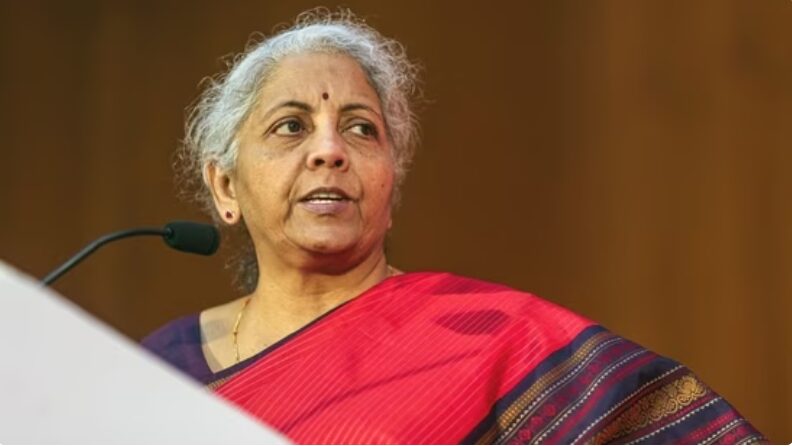
India’s Finance Minister Nirmala Sitharaman on July 25 supported her economic advisor’s recommendation to permit direct investment from China, which has been largely restricted since the 2020 border conflicts between the two countries.
Earlier this week, Reuters reported that India’s Chief Economic Adviser V Anantha Nageswaran stated that to enhance its global exports, New Delhi has two primary options: integrating into China’s supply chain or encouraging foreign direct investment (FDI) from China. Nageswaran noted, “Among these choices, focusing on FDI from China seems more promising for boosting India’s exports to the US, similar to how East Asian economies did in the past.”
This proposed policy shift towards China comes in the wake of Russian President Vladimir Putin’s recent visit to New Delhi. Asia Times’ Global Risk-Reward Monitor newsletter reported on July 11 that during the visit, Prime Minister Modi requested Putin’s assistance in resolving India’s longstanding border dispute with China. This conflict, although limited, is significant as it involves the two largest countries in the region. Russian mediation, even if informal, could lead to a diplomatic transformation and undermine American efforts to rally Asian countries against China.
The dynamics in Asia are further influenced by demographic trends, with the declining population in non-Muslim regions and the increasing Muslim populations potentially driving India, Russia, and China towards strategic cooperation. The ongoing Ukraine conflict has also contributed to a closer relationship between these nations. India’s increased purchase of discounted Russian oil, which surged from $8.7 billion in 2022 to $67 billion in 2023, highlights this growing economic interdependence. Moreover, India re-sells Russian oil and its derivatives to other countries.
Despite the border tensions, India has refrained from joining the US and its allies in criticizing China’s treatment of its Uyghur Muslim population. Conversely, the US frequently accuses India of human rights abuses against its Muslim minority. In 2022, US Secretary of State Anthony Blinken stated, “We regularly engage with our Indian partners on these shared values (of human rights) and, to that end, we are monitoring some recent concerning developments in India including a rise in human rights abuses by some government, police, and prison officials.” India’s Foreign Minister S Jaishankar responded that India could similarly highlight human rights issues in the United States.
The burgeoning trade between China and the Global South, including India, has improved the prospects for reconciliation between the world’s two largest countries. India is open to integrating Chinese supply chains to bolster its export industry. Like other Chinese trading partners such as Mexico, Vietnam, and Indonesia, India imports components and capital goods from China and assembles finished products for developed markets.
Since the onset of the Covid pandemic, India’s imports from China have more than doubled, as China’s export focus shifted from the US and Europe to the Global South. Correspondingly, India’s exports to the US have increased, as Nageswaran highlighted.
A 2022 World Bank report estimated that India will need to invest $840 billion over the next 15 years—averaging $55 billion annually—into urban infrastructure to meet the demands of its rapidly growing urban population. Currently, the government spends only $16 billion per year on urban infrastructure. Thus, a partnership with China could significantly enhance India’s infrastructural development.
The Modi government is also considering closer ties with China for reasons beyond economic gains. The US’s chaotic withdrawal from Afghanistan has left a destabilizing influence in Central Asia. The American intervention aimed to dismantle the Taliban but ended up reinstating its power, potentially fostering Islamist radicalism in neighboring countries, including China, Pakistan, Turkmenistan, and Uzbekistan. For China, Russia, and India, this situation poses a strategic challenge. All three nations have significant Muslim minorities and share an interest in stabilizing these populations. China, with its substantial resources, is uniquely positioned to contribute to this stabilization through economic development.
China’s expanding economic presence in Central Asia, marked by tripled exports to the region and Turkey over the past four years, reflects its efforts to address the instability left by the US in the wake of Afghanistan’s collapse. China is investing in infrastructure such as railways, roads, and broadband, which can help mitigate potential future sources of instability.
India’s internal challenges include unrest in its 14% Muslim population. Collaborative efforts with China and Russia could address these challenges, fostering stability and economic development across Asia.