TFIGlobal
TFIGlobal
TFIPOST English
TFIPOST हिन्दी
No Result
View All Result
  • Indo-Pacific
  • Americas
  • Canada
  • Indian Subcontinent
  • West Asia
  • Europe
  • Africa
  • The Caribbean
TFIGlobal
  • Indo-Pacific
  • Americas
  • Canada
  • Indian Subcontinent
  • West Asia
  • Europe
  • Africa
  • The Caribbean
No Result
View All Result
TFIGlobal
TFIGlobal
No Result
View All Result
  • Indo-Pacific
  • Americas
  • Canada
  • Indian Subcontinent
  • West Asia
  • Europe
  • Africa
  • The Caribbean

Strangled by the West? Putin’s Call for Reciprocation

Smriti Singh by Smriti Singh
May 27, 2025
in Geopolitics
NATO Intel Warns Russia May Be Developing ‘Starlink Killer’ Space Weapon

NATO Intel Warns Russia May Be Developing ‘Starlink Killer’ Space Weapon

Share on FacebookShare on X

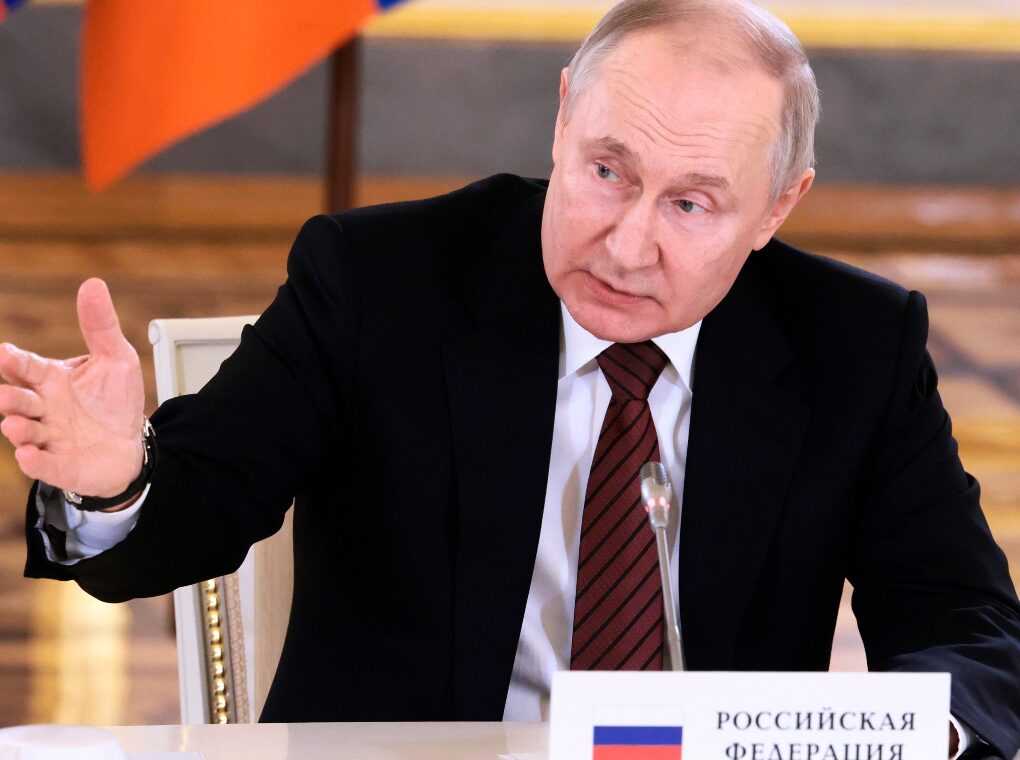
In a recent statement, Russian President Vladimir Putin portrayed Russia and himself as victims of Western actions, alleging that Western elites were behind a “bloody coup” in Ukraine, which, according to him, necessitated Russia’s current responses. His depiction of the West attempting to “strangle” Russia and his call to put the West in a “chokehold” reflect a worldview shaped by intense rivalry and confrontation.

This rhetoric is consistent with a long-standing narrative within Russia that portrays the country as unfairly targeted by Western powers. This perspective has been cited to justify actions such as the annexation of Crimea in 2014 and Russia’s involvement in Ukraine. The reference to a Western-orchestrated coup pertains to the 2014 Maidan Revolution, which resulted in the removal of pro-Russian President Viktor Yanukovych. While Western governments and organizations did support pro-democracy movements in Ukraine, this complex event was also driven by internal Ukrainian demands for closer ties with Europe, as well as a desire to reduce Russian influence.

Also Read

Italy Blocks NATO’s 2027 Ukraine Aid Plan, Exposing Growing Alliance Divisions

Germany to Bring Back Military Conscription by 2027 as Recruitment Falls Short

NATO Russia Drone Hysteria Ends? Denmark Admits No Proof of Russian Drone Threat After 9-Month Probe

Putin’s assertion that Russia was “forced” into its actions can be viewed as a way to deflect some responsibility, overlooking Russia’s significant military buildup and its breach of international norms regarding sovereignty and territorial integrity. The 2022 invasion of Ukraine, framed by Putin as a reaction to Western provocation, was a decision made by Russia, highlighting the country’s agency in the conflict. This framing is an example of a “strategic narrative,” which is used to influence perceptions and justify policies.

Putin’s call to “reciprocate” by putting the West in a “chokehold” signals a willingness to escalate tensions through various means, including economic and military measures. Such language can contribute to a cycle of retaliation with potentially serious global consequences. This escalation comes at a time when international cooperation is crucial for addressing shared challenges like climate change and economic instability.

The West, meanwhile, also bears some responsibility for the strained relations. The eastward expansion of NATO, despite informal assurances given to Soviet leaders after the Cold War, has been a significant point of dispute for Russia. The failure to fully integrate Russia into a post-Cold War European security framework created a gap that Putin has leveraged. Nevertheless, this context does not justify Russia’s military actions, which are widely seen as offensive rather than defensive.

Also read: “Putin has gone absolutely crazy”: Trump blasts Russia for massive attack on Ukraine

Perhaps most concerning in Putin’s rhetoric is the absence of clear proposals for de-escalation. By framing the conflict as a zero-sum struggle, it reduces opportunities for dialogue or compromise. The international community faces the challenge of responding firmly—through sanctions, diplomatic efforts, and support for Ukraine—while keeping open channels for negotiation and peacebuilding.

In summary, Putin’s recent statements underscore the fragile state of international relations. They highlight the urgent need for the global community to seek solutions that reduce divisions and promote stability. Moving forward will be difficult, but prioritizing peace, justice, and dialogue over cycles of retaliation is essential. The world must avoid a return to Cold War-era hostilities or worse.
Tags: #VladimirPutinEuropeRussia-Ukraine conflict
ShareTweetSend
Smriti Singh

Smriti Singh

Endlessly curious about how power moves across maps and minds

Also Read

A military satellite orbiting above Earth, with other satellites in the distance and a blue beam linking two spacecraft, symbolizing the growing space weapon and the emerging US-Russia-China orbital rivalry

Washington Finally Says It Out Loud: America Has Weapons in Space

September 15, 2026
A US dollar bill breaking apart beside BRICS flags, a glowing globe, cargo ship and stacks of currencies, symbolising de-dollarisation and the shift toward a multipolar financial system.

BRICS De-Dollarisation: Is the World Leaving the Dollar?

September 13, 2026
BRICS emblem above an empty international summit table, with a global trade port, UN-style building, currency, justice scales and critical minerals symbolising geopolitics and multilateral cooperation

BRICS Declaration Backs South Africa’s G20 Seat and Criticises Tariffs, Without Naming any Country

September 13, 2026
“Cinematic depiction of China–Iran–US tensions, showing Xi Jinping and Donald Trump flanking a reconnaissance satellite surveying a military air base, with Iranian ballistic missiles launching in the background.”

Chinese Eyes, Iranian Missiles: Us Traces A Satellite Trail To The Attack iJordan

September 13, 2026
Indian Prime Minister Narendra Modi and Chinese President Xi Jinping shake hands during a formal diplomatic meeting, with the Indian and Chinese flags displayed behind them.

Modi and Xi Met for Under an Hour. Their Governments Told Two Different Stories

September 13, 2026
Kim Jong Un watches missiles launches as U.S., Japanese and South Korean warships patrol the sea, with Trump and Iran's leadership depicted amid a backdrop of military escalation and conflict.

North Korea Fires Missiles Into the Sea as Washington’s War on Iran Grinds On

September 13, 2026
Youtube Twitter Facebook
TFIGlobalTFIGlobal
Right Arm. Round the World. FAST.
  • About Us
  • Contact Us
  • TFIPOST – English
  • TFIPOST हिन्दी
  • Careers
  • Brand Partnerships
  • Terms of use
  • Privacy Policy

©2026 - TFI MEDIA PRIVATE LIMITED

Welcome Back!

Login to your account below

Forgotten Password?

Retrieve your password

Please enter your username or email address to reset your password.

Log In

Add New Playlist

No Result
View All Result
  • Indo-Pacific
  • Americas
  • Canada
  • Indian Subcontinent
  • West Asia
  • Europe
  • Africa
  • The Caribbean
TFIPOST English
TFIPOST हिन्दी

©2026 - TFI MEDIA PRIVATE LIMITED

This website uses cookies. By continuing to use this website you are giving consent to cookies being used. View our Privacy and Cookie Policy.