TFIGlobal
TFIGlobal
TFIPOST English
TFIPOST हिन्दी
No Result
View All Result
  • Indo-Pacific
  • Americas
  • Canada
  • Indian Subcontinent
  • West Asia
  • Europe
  • Africa
  • The Caribbean
TFIGlobal
  • Indo-Pacific
  • Americas
  • Canada
  • Indian Subcontinent
  • West Asia
  • Europe
  • Africa
  • The Caribbean
No Result
View All Result
TFIGlobal
TFIGlobal
No Result
View All Result
  • Indo-Pacific
  • Americas
  • Canada
  • Indian Subcontinent
  • West Asia
  • Europe
  • Africa
  • The Caribbean

Blast rocks US military base in Japan, Asia Pacific geopolitics on the boil?

Jyotirmay Kaushal by Jyotirmay Kaushal
June 9, 2025
in Geopolitics
Blast rocks US military base in Japan, Asia Pacific geopolitics on the boil?
Share on FacebookShare on X

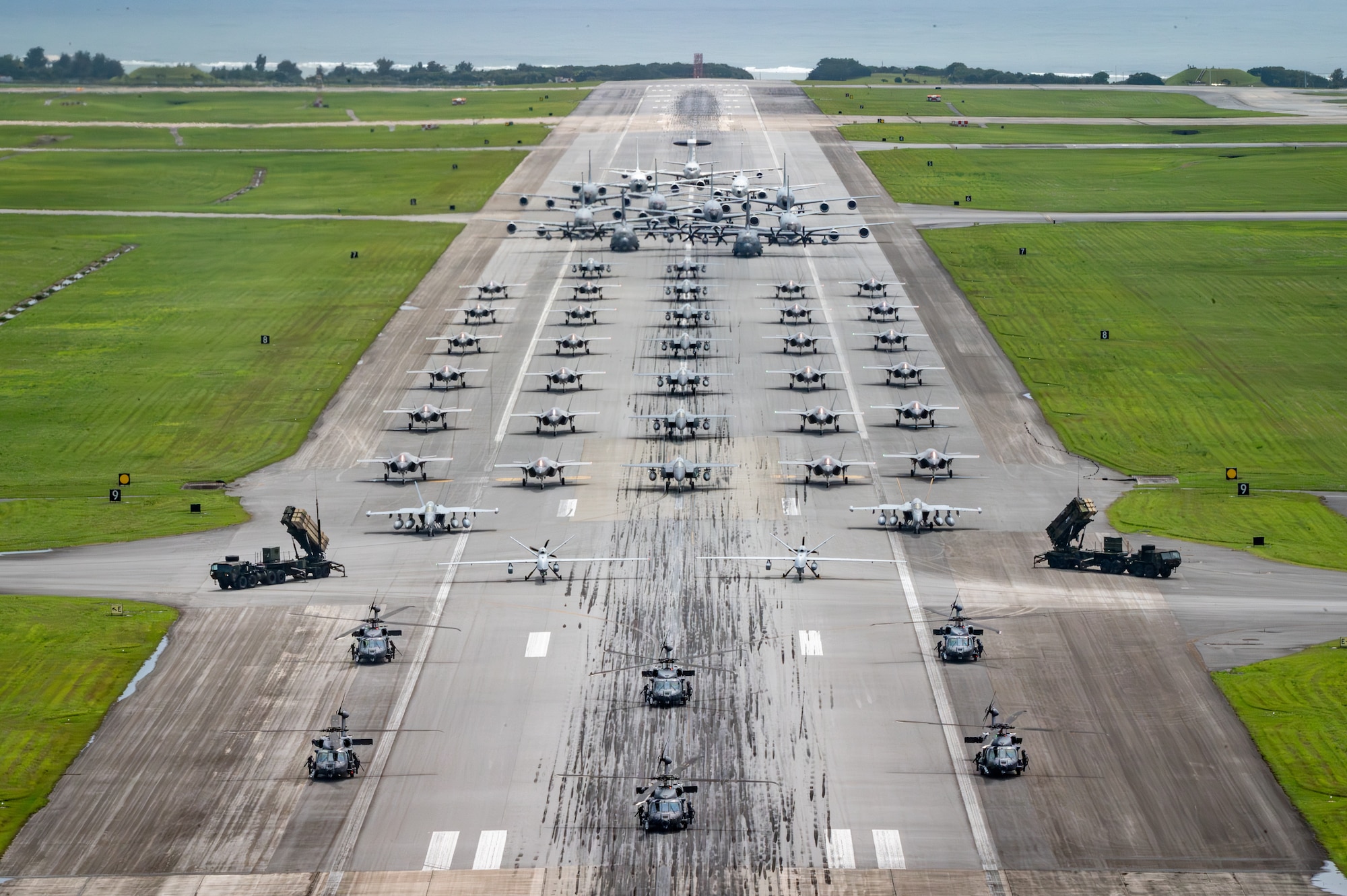
An explosion at the U.S. military’s Kadena Air Base in Okinawa, Japan on Monday has left four Japanese soldiers injured, reigniting concerns about military safety, base security, and the long-standing tensions surrounding America’s military presence in Japan. The blast occurred around 11:15 a.m. at a munition’s storage site used to process unexploded ordnance, remnants from World War II. The injured members of Japan’s Ground Self-Defense Force (GSDF) were conducting routine rust-removal work when the explosion occurred.

According to Japanese officials, the injuries—limited to fingers and not life-threatening—were treated at a local hospital. The U.S. military has so far not reported any injuries to American personnel and has confirmed the incident was isolated within the storage depot.

Also Read

North Korea Readies More Soldiers for Russia, but Seoul Says Nothing Has Moved Yet

A borrowed satellite and 400 missiles: how Beijing and Moscow are keeping Iran in the fight

Musk blocks Ukraine’s Starlink access for deep strikes inside Russia — what it means

Local and Historical Context

Kadena Air Base is the largest U.S. Air Force installation in the Asia-Pacific and a cornerstone of U.S.-Japan defense strategy. The base has long been a point of friction between Okinawan residents and both the Japanese and U.S. governments, with complaints ranging from noise pollution to safety risks and environmental concerns. Over 70% of U.S. military installations in Japan are located on Okinawa, despite the island accounting for less than 1% of the country’s total land area.

Monday’s explosion, while seemingly accidental, adds to a list of incidents that continue to inflame local opposition to the U.S. presence. It also places pressure on Japanese Prime Minister Shigeru Ishiba, who is attempting to maintain a delicate balance between regional defense commitments and domestic political accountability.

Geopolitical Implications

While the explosion itself does not appear to be the result of a hostile act, its timing is significant. Tensions in the Asia-Pacific are on the rise due to several converging factors:

China’s assertiveness in the Taiwan Strait and South China Sea, which has prompted the U.S. to strengthen its forward-deployed military assets.

North Korea’s continued missile tests, which have included simulations of tactical nuclear strikes on South Korea and U.S. bases in Japan.

A growing trilateral alliance between the U.S., Japan, and South Korea, meant to serve as a counterbalance to China and North Korea, and heavily reliant on infrastructure like Kadena.

Any incident at a facility like Kadena reverberates far beyond Japan’s borders. Regional adversaries may interpret operational mishaps as signs of vulnerability or opportunities to test the limits of U.S.-Japan security cooperation.

Furthermore, the blast is likely to fuel political debates both in Tokyo and Washington about the sustainability of large, centralized bases in geopolitically sensitive regions. It could also be used by China as propaganda in its regional narrative that U.S. bases destabilize, rather than secure, Asia.

Investigations into the cause of the explosion are ongoing, with both Japanese and U.S. authorities pledging transparency. Still, the incident underscores the persistent danger of ordnance handling and the broader strategic risks of concentrating military power in volatile zones.

The region is already a hotbed of major powers asserting their presence, Japan, China, Russia, USA, South Korea, North Korea, Taiwan all have an influence in the region such events are sure to rock the already volatile geostrategic situation.

As regional power dynamics continue to shift, seemingly isolated events like this explosion can have ripple effects, shaping public opinion, influencing foreign policy, and altering the delicate military balance in the Asia-Pacific.




Tags: JapanRussiaUSA
ShareTweetSend
Jyotirmay Kaushal

Jyotirmay Kaushal

Dreaming of a reality that is a dream. A scribbler in the current incarnation with an avid interest in global affairs.

Also Read

Narendra Modi sits between Vladimir Putin and Xi Jinping at a BRICS summit table, with Iranian President Masoud Pezeshkian beside them and national flags in the background.

One Table, Two Wars: Modi Seats Putin and Xi as Delhi Opens BRICS

September 11, 2026
A dramatic political montage showing Germany’s AFD rise, with Alice Weidel and German political figures in front of the Reichstag, a fractured barrier symbolising Germany’s political firewall, and Xi Jinping against a Beijing backdrop.

AfD Storms Saxony-Anhalt: Germany’s Firewall Shakes, and Beijing Quietly Cheers

September 10, 2026
President Donald Trump signs an order in the foreground as Lake Ontario and the Toronto skyline appear behind him, with American and Canadian flags symbolising the escalating dispute over the lake's name and US-Canada relations.

Trump Renames Lake Ontario ‘Lake America’, and Google Has Already Redrawn the Map

August 31, 2026
A dramatic nighttime scene showing a US warship facing a large oil terminal engulfed in flames, with explosions, thick black smoke, fighter jets, and missiles streaking across the sky above the sea after strikes

Trump Posts AI Video of Kharg ‘Blown to Smithereens’ as US and Iran Trade Fire

August 31, 2026
A dramatic scene showing the flags of Turkey, Saudi Arabia and Pakistan above military aircraft, soldiers and air-defence systems, as a large Saudi-style oil refinery burns in the background. Three leaders stand in the foreground watching the unfolding crisis.

Turkey, Saudi Arabia and Pakistan Open First Defence Pact Talks as Saudi Refineries Burn

August 31, 2026
A nighttime protest riot in Jakarta, with demonstrators facing riot police amid tear gas and water cannon spray as a guard post and motorcycles burn nearby.

Fire, Tear Gas, and 322 Detained: Jakarta’s Anti-Corruption Protest Ends in a Riot

August 31, 2026
Youtube Twitter Facebook
TFIGlobalTFIGlobal
Right Arm. Round the World. FAST.
  • About Us
  • Contact Us
  • TFIPOST – English
  • TFIPOST हिन्दी
  • Careers
  • Brand Partnerships
  • Terms of use
  • Privacy Policy

©2026 - TFI MEDIA PRIVATE LIMITED

Welcome Back!

Login to your account below

Forgotten Password?

Retrieve your password

Please enter your username or email address to reset your password.

Log In

Add New Playlist

No Result
View All Result
  • Indo-Pacific
  • Americas
  • Canada
  • Indian Subcontinent
  • West Asia
  • Europe
  • Africa
  • The Caribbean
TFIPOST English
TFIPOST हिन्दी

©2026 - TFI MEDIA PRIVATE LIMITED

This website uses cookies. By continuing to use this website you are giving consent to cookies being used. View our Privacy and Cookie Policy.