Israel’s ongoing campaign against Iran’s nuclear infrastructure—dubbed Operation Rising Lion—has reignited global concerns over the risk of all-out war in the Middle East. While Israel has successfully hit several high-profile targets, including the Natanz and Esfahan nuclear facilities, its most critical target—the Fordow uranium enrichment plant—remains operational and virtually untouched.
Buried under a mountain near the city of Qom, Fordow has become the focal point of both strategic planning and international debate. Experts agree: Israel alone cannot destroy it.
The Fortified Challenge of Fordow
Originally exposed by Western intelligence in 2009, the Fordow Fuel Enrichment Plant was designed with one clear purpose: survivability. Hidden deep beneath 80 to 100 meters of solid rock, Fordow is considered one of the most impenetrable nuclear sites in the world. It houses advanced centrifuges capable of enriching uranium to weapons-grade levels—something that, if completed, would represent a red line for Israel.
According to analysts cited by Axios and NY Post, even Israel’s most advanced bunker-busting munitions, including U.S.-supplied GBU-28s, lack the explosive yield and penetration capability to neutralize Fordow. The only known weapon capable of doing so is the GBU-57 Massive Ordnance Penetrator (MOP), which is exclusively in U.S. hands.
Israel’s Operational Successes and Strategic Limits
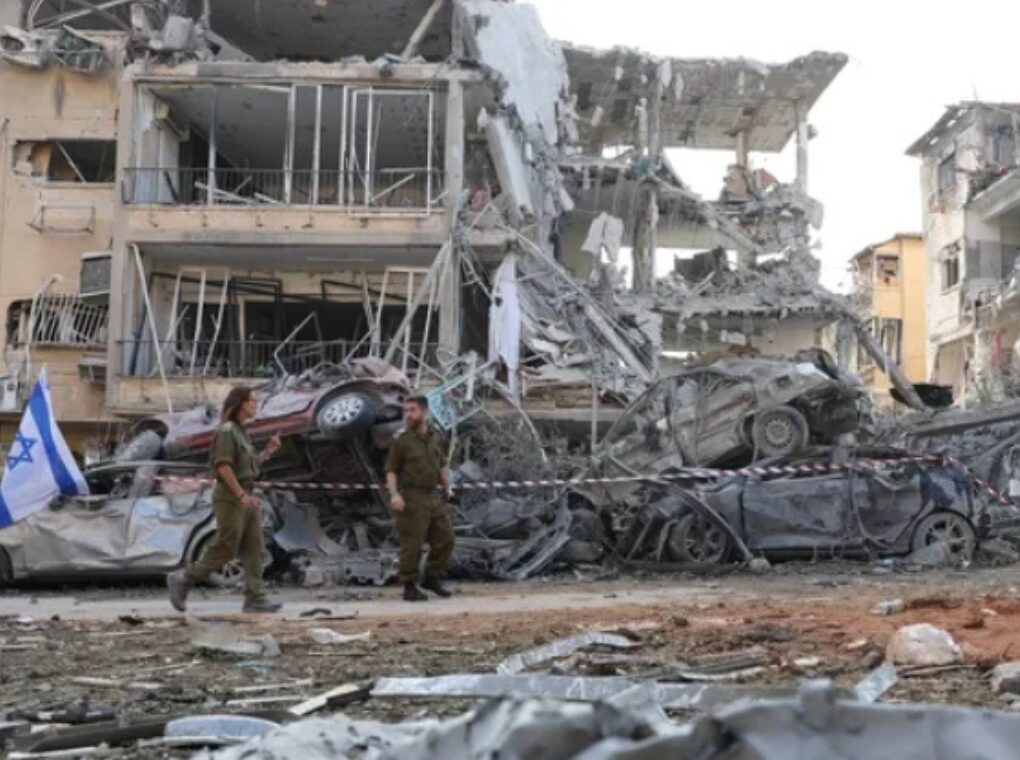
Operation Rising Lion has been unprecedented in scale. Israel’s air force has demonstrated precision strike capabilities across Iranian territory, reportedly inflicting major damage at:
Natanz, a major hub for Iran’s enrichment program.
Esfahan, home to critical centrifuge manufacturing and storage facilities.
Parchin, a suspected site of weapons development.
However, despite these tactical gains, Israeli defense officials and allied analysts alike acknowledge that Fordow is the true strategic target—and one they cannot reach without U.S. help.
America’s Reluctance and the Bunker-Buster Debate
Former President Donald Trump reportedly rejected Israeli Prime Minister Benjamin Netanyahu’s request to assist in an earlier plan to target Iranian leadership or Fordow, calling it “not a good idea,” according to CBS and Axios.
The Biden and Trump camps—now polarized along campaign lines—both express skepticism toward direct military involvement, despite bipartisan concern over Iran’s nuclear ambitions. A U.S. airstrike on Fordow would:
Signal a major escalation of the conflict.
Risk retaliation against American bases and allies in the region.
Possibly trigger Russian or Chinese diplomatic—or even military—countermeasures.
Still, as reported by Financial Times, hawkish voices in Washington and Tel Aviv argue that failing to strike Fordow could allow Iran to “break out” with a nuclear weapon, especially if the rest of its infrastructure is compromised but the underground core remains active.
Iran’s Calculated Resilience
Iran, meanwhile, has absorbed the strikes and recalibrated its defensive posture. Supreme Leader Ayatollah Khamenei has reportedly taken direct control over military operations, while the Islamic Revolutionary Guard Corps (IRGC) has been placed on maximum alert. Iranian proxies in Lebanon, Iraq, Syria, and Yemen have been mobilized in anticipation of further conflict.
Iran’s response has been measured, not muted: while avoiding a direct confrontation with the U.S., it has vowed to retaliate if core assets like Fordow are attacked. This balancing act signals Tehran’s intent to project strength without triggering open war—yet.
Global Stakes: Oil, Alliances, and Escalation Risks
The Fordow dilemma is more than a bilateral issue. It has profound global implications:
Oil prices have surged past $130/barrel amid market uncertainty.
China and Russia have condemned Israeli strikes, calling for de-escalation and indirectly warning the U.S. not to intervene.
Gulf states, particularly Saudi Arabia and the UAE, are quietly backing Israel’s moves but fear regional blowback.
Should the U.S. authorize the use—or transfer—of bunker-busters to Israel, it would mark a definitive shift from containment to confrontation, potentially mirroring the trajectory of the 2003 Iraq War.
Analysis: The Road Ahead
Israel faces a strategic paradox:
Without Fordow’s destruction, Iran retains nuclear breakout capability.
With U.S. help, Israel could eliminate that threat—but at the cost of likely regional war.
The U.S. faces a similar dilemma:
Intervening risks escalation and distraction from larger geopolitical fronts (e.g., China, Ukraine).
Staying neutral could embolden Iran and weaken U.S. credibility among regional allies.
For now, the world watches Fordow—not as a symbol of nuclear progress, but as a lit fuse embedded in rock, awaiting either diplomacy or detonation.
Fordow is not just a nuclear facility—it is a test of will, alliances, and strategic patience. Whether Israel and the U.S. can defuse the situation without lighting a broader war will shape the Middle East—and global order—for years to come.