TFIGlobal
TFIGlobal
TFIPOST English
TFIPOST हिन्दी
No Result
View All Result
  • Indo-Pacific
  • Americas
  • Canada
  • Indian Subcontinent
  • West Asia
  • Europe
  • Africa
  • The Caribbean
TFIGlobal
  • Indo-Pacific
  • Americas
  • Canada
  • Indian Subcontinent
  • West Asia
  • Europe
  • Africa
  • The Caribbean
No Result
View All Result
TFIGlobal
TFIGlobal
No Result
View All Result
  • Indo-Pacific
  • Americas
  • Canada
  • Indian Subcontinent
  • West Asia
  • Europe
  • Africa
  • The Caribbean

Global Backlash Erupts Over Glastonbury’s ‘Death to IDF’ Chant

The Glastonbury incident is a wake-up call. It’s a reminder that in times of war and polarization, the values of free speech and tolerance are tested most severely.

Rashi Randev by Rashi Randev
June 30, 2025
in Geopolitics
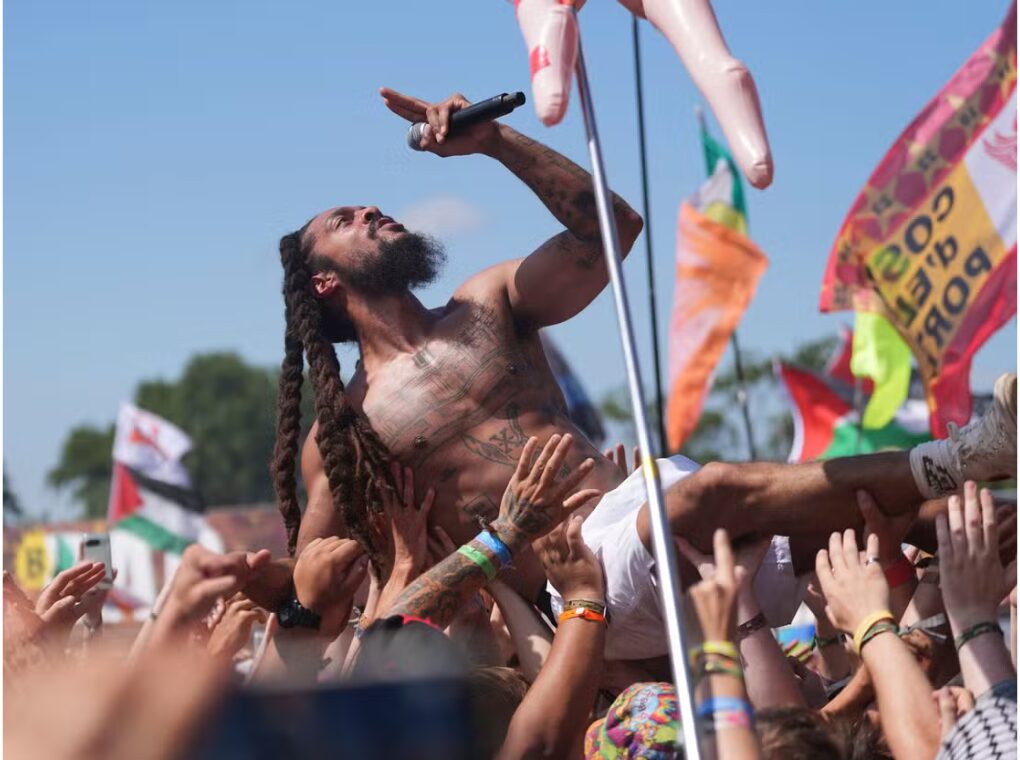
Global Backlash Erupts Over Glastonbury’s ‘Death to IDF’ Chant (Picture Credit: Le Monde)

Global Backlash Erupts Over Glastonbury’s ‘Death to IDF’ Chant

Share on FacebookShare on X

The sight and sound of a Glastonbury crowd chanting “death to the IDF” was shocking, even for those familiar with the festival’s long history of political activism. As the Gaza war rages and emotions run high worldwide, the incident has ignited fierce debate in the UK about where the line lies between free expression and incitement to hatred.

The government’s decision to launch a formal investigation is not just a response to public outrage—it’s a reflection of the complex, often uncomfortable questions facing liberal democracies in times of conflict.

Also Read

“Crown jewels” for Riyadh? US clears $24.3bn F-35 sale despite China spying fears

Inside Iran’s Deadly Shaheed Drone Empire: The Kamikaze Drones Terrifying U.S., Israel, NATO, the world, —And even America has reverse-engineered the Shahed-136 to develop LUCAS

Israel Says Iran’s Real ‘Superweapon’ Isn’t Nukes or Missiles — It’s Money. Here’s why?

A Festival Stage Becomes a Flashpoint

Glastonbury has always been more than a music festival. It’s a cultural institution that prides itself on giving space to protest, dissent, and radical ideas. But when Bob Vylan led a crowd in chanting “death to the IDF,” the rhetoric crossed from political protest into language that many—across the political spectrum—see as dangerous and potentially unlawful.

The Israel Defense Forces (IDF) are not just a symbol; they are the armed forces of a democratic state, and calls for their death are easily understood as calls for violence against Israelis, many of whom are conscripted citizens. In the context of the ongoing Gaza war, such chants risk fueling hatred and deepening divisions far beyond the festival grounds.

Free Speech, Hate Speech, and the Law

Britain is rightly proud of its traditions of free speech and protest. But those freedoms are not absolute. UK law prohibits incitement to violence and hate speech, especially when directed at protected groups. The challenge is that the boundaries are not always clear-cut, especially when it comes to political speech about foreign conflicts.

Some argue that chanting “death to the IDF” is a legitimate, if extreme, form of protest against Israeli military actions in Gaza. Other Jewish groups, the Israeli embassy, and many ordinary Britons, see it as incitement to violence and antisemitism, especially when Jewish communities in the UK already feel vulnerable.

The police investigation will have to grapple with these legal and moral ambiguities. Was the chant a call to action, or just a provocative slogan? Did it cross the line into criminality, or is it protected speech in a democracy?

The BBC called the Glastonbury chants “deeply offensive,” removed the performance from its platform, and promised a review of its vetting process. The Israeli government and Jewish groups condemned the chants as “inflammatory,” warning they risk normalizing extremism.

In the US, the response was swift: the State Department is reportedly considering revoking Bob Vylan’s visas ahead of their American tour, citing policies against supporting terrorism or inciting violence. US officials and advocacy groups have also called for bans on the group’s performances, highlighting the incident as an example of rising antisemitism and extremism in public discourse.

Also Read: Netanyahu Outlines Conditions for Ending Gaza War, Says Entire Strip Will Be Under IDF Control

The Danger of Normalizing Extremism

Perhaps the greatest risk is that such incidents become normalized. When chants of “death” to any group are met with shrugs or excuses, the boundaries of acceptable discourse shift. That’s dangerous—not just for Jewish communities or Israelis, but for the health of public debate in Britain as a whole.

Condemning violence, no matter the target, should not be controversial. Protest can and should be passionate, but it must not become a license for hate.

Drawing the Line

The Glastonbury incident is a wake-up call. It’s a reminder that in times of war and polarization, the values of free speech and tolerance are tested most severely. The UK must defend the right to protest and criticize, even harshly—but it must also be clear-eyed about the dangers of rhetoric that dehumanizes and incites.

The investigation will determine whether laws were broken. But the larger question—how to maintain a culture of robust dissent without slipping into hate—remains for all of

Tags: BritainHate speechIDFIsraelThe United States
ShareTweetSend
Rashi Randev

Rashi Randev

Also Read

South Korean and Ukrainian leaders speak at separate podiums, with North Korean prisoners and soldiers between them, symbolising a diplomatic dispute over the transfer of captured North Korean troops to South Korea.

Seoul demands Kyiv apologise after Zelenskyy discloses North Korean POW transfer at UN

September 28, 2026
Israeli Prime Minister Benjamin Netanyahu speaks at the UN General Assembly as delegates walk out of the chamber, with some remaining delegates applauding.

Netanyahu Defends Iran and Gaza Wars in UN Speech as Delegates Walk Out

September 25, 2026
Donald Trump and Xi Jinping shake hands amid US-China flags, shipping containers, cargo ships, semiconductor chips and rare-earth minerals, symbolising trade tensions and fragile economic cooperation between the two countries.

Trump-Xi Trade Truce Extended to January, but 100% Tariff Threat Still Looms

September 24, 2026
US, Danish and Greenlandic leaders sign a security deal against a backdrop of Greenland's Arctic landscape and expanded US military infrastructure.

From Threats Of Seizure To A Signature: US Locks In A Permanent Grip On Greenland’s Defence With a New Deal

September 23, 2026
“Kim Jong Un watches North Korean ballistic missiles launch as Donald Trump and Xi Jinping face off against a backdrop of the US Capitol, highlighting tensions over North Korea’s missile tests and US-China diplomacy.”

Two Missiles, Three Hours: North Korea Fires a Warning as Xi Flies to Washington

September 22, 2026
US, Danish and Greenland leaders shake hands during a security agreement signing, with Arctic glaciers, military facilities, naval vessels and national flags in the background.

From Threats of Force to a Handshake: Trump Claims ‘Permanent’ Control Over Greenland’s Security

September 19, 2026
Youtube Twitter Facebook
TFIGlobalTFIGlobal
Right Arm. Round the World. FAST.
  • About Us
  • Contact Us
  • TFIPOST – English
  • TFIPOST हिन्दी
  • Careers
  • Brand Partnerships
  • Terms of use
  • Privacy Policy

©2026 - TFI MEDIA PRIVATE LIMITED

Welcome Back!

Login to your account below

Forgotten Password?

Retrieve your password

Please enter your username or email address to reset your password.

Log In

Add New Playlist

No Result
View All Result
  • Indo-Pacific
  • Americas
  • Canada
  • Indian Subcontinent
  • West Asia
  • Europe
  • Africa
  • The Caribbean
TFIPOST English
TFIPOST हिन्दी

©2026 - TFI MEDIA PRIVATE LIMITED

This website uses cookies. By continuing to use this website you are giving consent to cookies being used. View our Privacy and Cookie Policy.