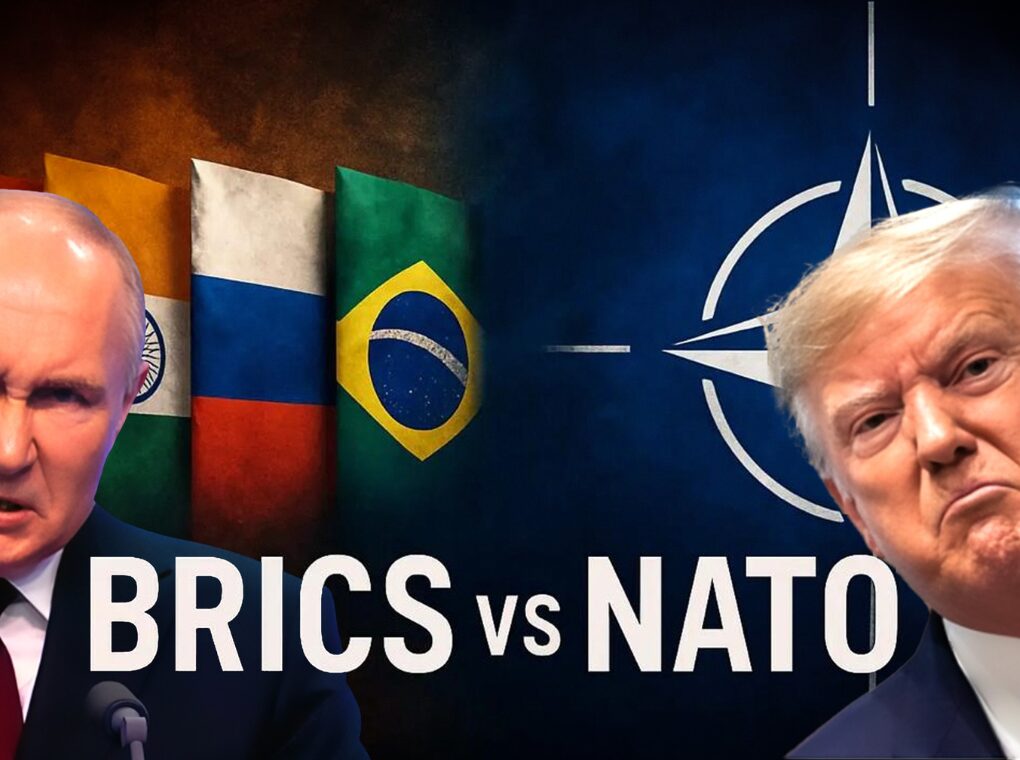
In a dramatic new phase of global diplomacy, NATO and the United States have issued their starkest warning yet to three of the world’s largest emerging economies—India, China, and Brazil. At the heart of the dispute: ongoing business with Russia, especially in the profitable oil and gas sector, despite the protracted war in Ukraine. NATO Secretary General Mark Rutte, backed by U.S. President Donald Trump, now threatens unprecedented economic measures: 100% secondary sanctions, or tariffs, on countries continuing to purchase Russian energy exports if peace is not achieved soon. As the BRICS bloc faces the spectre of these penalties, the world is watching to see if these economic powers will yield to Western pressure or stand united in defiance.
Sanctions Threat Looms
Speaking after a high-stakes meeting with President Trump and members of the U.S. Congress, Mark Rutte delivered a message with global repercussions. “If you live now in Beijing, or in Delhi, or you are the president of Brazil, you might want to take a look into this, because this might hit you very hard,” Rutte warned, adding that continued trade with Russia could bring “massive” economic consequences.
He specifically urged leaders of the three countries to personally urge Russian President Vladimir Putin to take peace negotiations seriously: “Make the phone call to Putin. Tell him he has to get serious about peace talks, because otherwise, this will slam back on Brazil, on India, and on China in a massive way”.
Rutte’s ultimatum follows Trump’s declaration of a 50-day deadline for Moscow to agree to a peace deal with Kyiv. If Russia fails to comply, the U.S. will impose severe secondary sanctions on countries buying Russian goods, primarily energy amplifying the squeeze on Russia’s economy, but also ensnaring its major trade partners outside the West.
The pressure is not merely rhetorical. U.S. lawmakers are working on bipartisan legislation to levy tariffs as high as 500% on nations supporting Russian exports, and Trump has floated additional blanket tariffs on BRICS countries for what his administration perceives as “anti-American policies”.
Why Focus on India, China, and Brazil?
The selection of these three countries is not arbitrary. India, China, and Brazil are core to the BRICS alliance—which also includes South Africa and the recently expanded bloc admits. More importantly, these three economies now account for the majority of Russia’s oil, gas, and commodity trade, having absorbed much of the volume once destined for Western markets that imposed stiff sanctions in response to Russia’s Ukraine invasion.
India has dramatically increased its purchase of discounted Russian oil and also maintains deep defense and energy ties with Moscow. China, for its part, has escalated energy imports and strategic engagement with Russia, which serves not only to buffer its own industrial needs in a time of U.S.-China tensions, but provides Moscow with a vital economic lifeline.
Brazil, with its agricultural, fertilizer, and industrial partnerships, rounds out a trio that remains critical to Russian export earnings.
In targeting these nations, NATO and the U.S. seek to close the “back door” keeping Russia’s economy afloat, potentially forcing a diplomatic breakthrough—or at least starving Moscow of resources to sustain the war.
What Are Secondary Sanctions, And How Hard Could They Hit?
Secondary sanctions expand beyond the original target (in this case, Russia) to penalize any foreign entity including companies and banks involved in banned transactions. If implemented, they could:
Cut off India, China, and Brazil from U.S. and European financial networks, including dollar and euro clearing.
Freeze assets of key trading firms or government entities.
Sever access to crucial technology and goods.
Make global investors more risk-averse about doing business in BRICS nations.
Such measures could, in effect, force these countries and their companies to choose: maintain ties with Russia, or preserve their much larger connections to Western markets.
BRICS Response: Unity, Defiance, or Dissent?
The threat has triggered deep concern among policymakers in Beijing, Delhi, and Brasília. The statements from some quarters have already signaled rejection. For example, China officially dismissed Rutte’s warning as interference, warning that sanctions will not solve the Ukraine crisis and reaffirming its call for dialogue instead of economic warfare.
Indian officials, have long maintained that energy security is a sovereign decision and often evoke the West’s past practice of issue-based alignment, rather than compliance. Brazil’s government, facing major trade exposure and rising domestic prices, has publicly stated it will respond to any U.S. tariffs with “reciprocal measures”.
Behind the scenes, the threat has forced BRICS nations to consider accelerating plans for alternative payment systems, local-currency settlements, and even legal action via the World Trade Organization. There is also renewed urgency around building resilience and unity within the bloc—if only to avoid the perception of yielding to Western pressure.
An Unfolding Standoff?
If secondary sanctions are imposed, shockwaves could ripple through the global financial system. In India, it could threaten economic stability. China could weather short-term pain more effectively via state support, but faces risks to its global trading relationships and foreign investment. Brazil, heavily reliant on agricultural exports and global financing, would be the most immediately vulnerable.
For global markets, these developments threaten to fragment trade, push up energy prices, and further erode the multilateral norms that have governed commerce since the Cold War’s end.
NATO and the U.S. have raised the stakes dramatically and placed the onus squarely on the leaders of India, China, and Brazil to help end the Ukraine conflict or face potentially devastating economic retaliation. The coming weeks will be crucial, as BRICS leaders weigh the costs and possible benefits of defiance, while diplomats continue to search for an off-ramp from escalating sanctions and spiraling global division.
Will BRICS nations unify to resist Western pressure, adjust their strategies for self-preservation, or find a middle path that avoids the worst outcomes? As the clock ticks on Trump’s 50-day deadline, the answer may reshape not just the Ukraine war’s course but the very structure of the world economy.