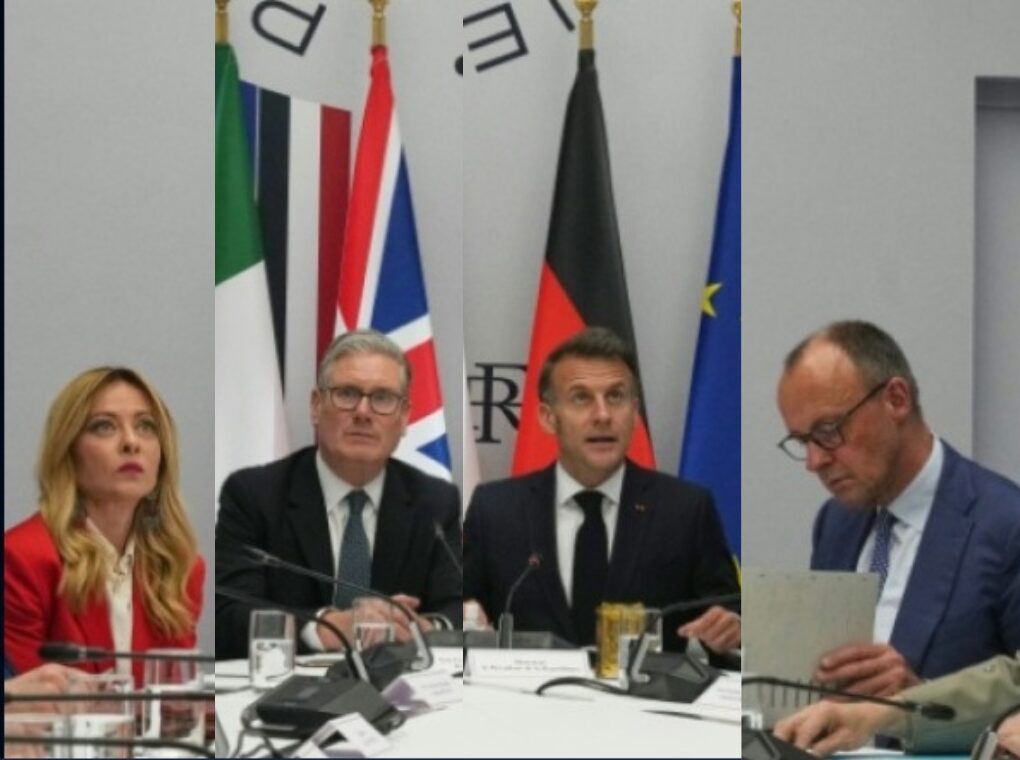
Despite Iran’s declaration that the Strait of Hormuz is now “completely open” to global shipping, geopolitical tensions remain far from resolved. In a move reflecting continued caution, the United Kingdom and France have announced plans to lead a defensive multinational naval mission to safeguard freedom of navigation through the vital oil chokepoint.
The development comes at a time when global markets are reacting sharply to signs of de-escalation in West Asia, even as political rhetoric and military posturing suggest uncertainty still lingers beneath the surface.
Trump Signals Breakthrough, Rejects NATO Role
US President Donald Trump struck an optimistic tone, suggesting that a peace deal with Iran is nearing completion. In a series of posts on his Truth Social platform, Trump described the moment as a “GREAT AND BRILLIANT DAY FOR THE WORLD,” crediting diplomatic efforts led by Pakistan and key Gulf allies.
However, Trump simultaneously dismissed any involvement from NATO, bluntly telling the alliance to “stay away” from operations in the region. His comments came after NATO reportedly offered assistance in securing the Strait of Hormuz.
Trump also claimed that Iran had agreed to permanently refrain from closing the Strait, a waterway responsible for transporting nearly one-fifth of the world’s crude oil. Additionally, he stated that Iranian forces, with US support, are actively removing naval mines laid during recent hostilities.
Iran Declares Strait ‘Completely Open’
Iran’s Foreign Minister Abbas Araghchi confirmed that all commercial vessels can now safely pass through the Strait of Hormuz for the duration of the ongoing ceasefire. The announcement has been widely interpreted as a goodwill gesture aimed at stabilizing global energy markets and paving the way for further diplomatic engagement.
The strait had faced intermittent disruptions since the onset of the US-Israeli military campaign against Iran earlier this year. At the height of the crisis, oil prices surged close to $120 per barrel, raising fears of a broader global economic shock.
Markets Rally as Oil Prices Plunge
Following Tehran’s announcement, global oil markets responded immediately. Both Brent crude and West Texas Intermediate (WTI) dropped below $90 per barrel, marking a significant decline from recent highs.
Stock markets also surged, with major indices such as the S&P 500 and Nasdaq Composite extending gains and touching record levels. Analysts say the reopening of the Strait of Hormuz is a critical turning point that could restore stability to global supply chains.
Market experts note that the rapid rebound has caught many investors off guard, particularly those who had reduced exposure during the early phase of the conflict. The resurgence of bullish sentiment is now being driven by strong earnings reports and renewed confidence in geopolitical stability.
UK & France Push Defensive Naval Mission
Despite the positive developments, European powers remain cautious. Both the UK and France have announced plans to spearhead a multinational maritime mission designed to ensure safe passage through the Strait of Hormuz.
Officials emphasized that the mission would be strictly defensive in nature and would only be deployed once a broader peace agreement is formalized. The initiative highlights lingering concerns among Western nations about the durability of the ceasefire and the risks of sudden escalation.
The move also underscores a divergence in approach between Washington and its European allies, with the US opting for a more unilateral stance while Europe seeks a coordinated international framework.
Ceasefire Dynamics and Regional Implications
The reopening of the Strait coincides with a series of fragile ceasefires across the region. A 10-day truce between Israel and Lebanon—reportedly enforced with US backing—has reduced hostilities involving Iran-backed Hezbollah.
Trump has insisted that the Lebanon ceasefire is separate from ongoing US-Iran negotiations, though analysts believe regional conflicts remain deeply interconnected. The broader diplomatic effort includes talks mediated by Pakistan, involving US Vice President JD Vance and Iranian officials, though a final agreement has yet to be reached.
Trump has also dismissed reports suggesting a financial incentive for Iran to relinquish its uranium stockpile, insisting that no monetary exchange would be involved in any future deal.
Strategic Significance of the Strait
The Strait of Hormuz remains one of the world’s most strategically important maritime routes. Any disruption to its flow has immediate and far-reaching consequences for global energy security and economic stability.
Iran’s pledge to keep the strait open—if upheld—could mark a turning point in the crisis. However, with military forces still present in the region and diplomatic negotiations ongoing, the situation remains fluid.
What next? Cautious Optimism Amid Uncertainty
While the reopening of the Strait of Hormuz has injected optimism into global markets and diplomacy, the path to lasting peace remains uncertain. The planned UK-France naval mission reflects a broader international effort to hedge against potential risks even as negotiations progress.
As the world watches closely, the coming days will be crucial in determining whether current ceasefires evolve into a comprehensive and lasting peace agreement—or merely serve as a temporary pause in a deeply complex conflict.