TFIGlobal
TFIGlobal
TFIPOST English
TFIPOST हिन्दी
No Result
View All Result
  • Indo-Pacific
  • Americas
  • Canada
  • Indian Subcontinent
  • West Asia
  • Europe
  • Africa
  • The Caribbean
TFIGlobal
  • Indo-Pacific
  • Americas
  • Canada
  • Indian Subcontinent
  • West Asia
  • Europe
  • Africa
  • The Caribbean
No Result
View All Result
TFIGlobal
TFIGlobal
No Result
View All Result
  • Indo-Pacific
  • Americas
  • Canada
  • Indian Subcontinent
  • West Asia
  • Europe
  • Africa
  • The Caribbean

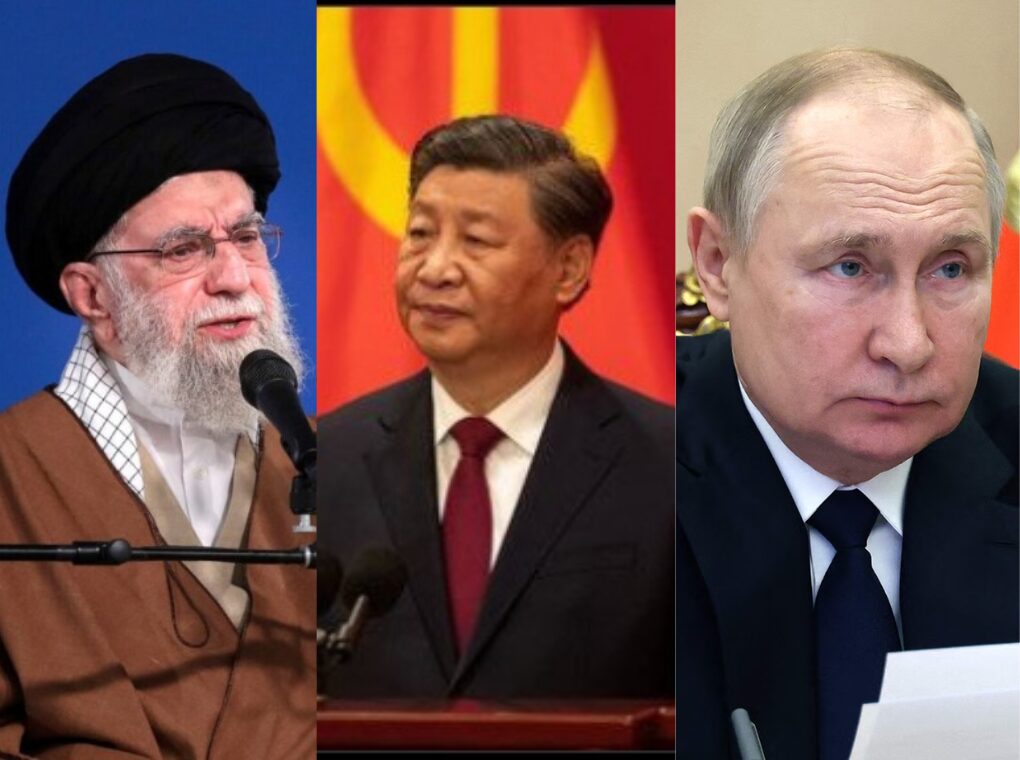
Russia Turns on China, North Korea, and Iran: “We’re Fighting Alone” Moscow admits Strategic Isolation on Ukraine war?

Smriti Singh by Smriti Singh
July 29, 2025
in Geopolitics
No Brothers in Battle: Russia Says It’s Fighting Alone"

No Brothers in Battle: Russia Says It’s Fighting Alone"

Share on FacebookShare on X

In a surprising and sharply worded statement that has rattled geopolitical observers, a senior Russian official has declared that Russia is effectively “fighting alone” in its global struggle against Western influence, tacitly rebuking its nominal allies China, North Korea, and Iran for their lack of tangible support.

The comments, which surfaced during a closed-door policy forum in Moscow and were later leaked to Russian and international media, signal growing frustration within the Kremlin over what it sees as strategic passivity—or even opportunism—from its closest partners. The official, speaking on condition of anonymity, stated:

Also Read

One Man, 14 Break-Ins: Anthropic’s Report on How AI Became a Weapon for Hire

The 1,000-Mile Kill Shot: America’s New Missile Plan Puts China in Its Sights

North Korea Readies More Soldiers for Russia, but Seoul Says Nothing Has Moved Yet

“While we bleed and bear the brunt of the West’s hybrid war, others sit back, hedge their bets, and calculate how to benefit from our sacrifices. Russia is fighting alone.”

A Crack in the Anti-Western Axis?

Since the full-scale invasion of Ukraine in 2022, Russia has steadily deepened its alignment with other authoritarian regimes. Beijing provided diplomatic cover and economic lifelines, Pyongyang shipped artillery shells and munitions, and Tehran supplied drones and military advisers. But Moscow now appears to believe that these gestures fall far short of the solidarity it expected.

China, for instance, has continued to walk a fine line—profiting from discounted Russian energy and strengthening bilateral trade, yet avoiding direct military or political confrontation with the United States and its allies. Despite growing rhetoric about a “multipolar world,” Beijing has stopped short of recognizing Russia’s annexations in Ukraine and has maintained active trade with the West.

North Korea has made headlines by providing ammunition and laborers in exchange for food and technology, but these exchanges are transactional at best. Iran has supplied Russia with drones and surveillance equipment, but Tehran remains primarily focused on its regional ambitions rather than committing deeply to Russia’s broader strategic vision.

Moscow’s Strategic Isolation

This moment of public grievance underscores a painful truth for Russia: its so-called “axis of resistance” lacks cohesion. Each partner has divergent goals and constraints, and none seem willing to jeopardize their own interests for Moscow’s war effort. The Kremlin’s frustration may stem from a realization that its geopolitical gambit has left it isolated—sanctioned, militarily bogged down, and economically vulnerable.

An independent Russian political analyst, speaking from exile, noted:

“This is not just a complaint. It’s a cry of despair. Russia hoped for a coalition and got a cold handshake. The strategic loneliness is becoming unbearable.”

Strategic Consequences

The implications of this rhetorical shift are significant. By airing grievances against allies, Russia risks alienating the few partners it still has. At the same time, the statement may be an attempt to pressure these countries into stepping up support—or at least choosing a side more decisively.

Western analysts view this development as a potential inflection point. If Russia continues to act without dependable backing, its capacity to sustain prolonged confrontation with NATO, particularly in Ukraine and Eastern Europe, could erode faster than expected.

As the war drags on and economic pressures mount, Moscow’s admission—however indirect—that it is “fighting alone” could mark the beginning of a recalibration, whether toward escalation, negotiation, or further internal consolidation.

In the fog of geopolitical realignment, one thing is clear: Russia’s illusion of a unified front is starting to unravel. And in the high-stakes chessboard of global power, isolation is a dangerous position to play from.

Tags: ChinaIran and RussiaNorth KoreaRussiaUkrainConflict
ShareTweetSend
Smriti Singh

Smriti Singh

Endlessly curious about how power moves across maps and minds

Also Read

A military satellite orbiting above Earth, with other satellites in the distance and a blue beam linking two spacecraft, symbolizing the growing space weapon and the emerging US-Russia-China orbital rivalry

Washington Finally Says It Out Loud: America Has Weapons in Space

September 15, 2026
A US dollar bill breaking apart beside BRICS flags, a glowing globe, cargo ship and stacks of currencies, symbolising de-dollarisation and the shift toward a multipolar financial system.

BRICS De-Dollarisation: Is the World Leaving the Dollar?

September 13, 2026
BRICS emblem above an empty international summit table, with a global trade port, UN-style building, currency, justice scales and critical minerals symbolising geopolitics and multilateral cooperation

BRICS Declaration Backs South Africa’s G20 Seat and Criticises Tariffs, Without Naming any Country

September 13, 2026
“Cinematic depiction of China–Iran–US tensions, showing Xi Jinping and Donald Trump flanking a reconnaissance satellite surveying a military air base, with Iranian ballistic missiles launching in the background.”

Chinese Eyes, Iranian Missiles: Us Traces A Satellite Trail To The Attack iJordan

September 13, 2026
Indian Prime Minister Narendra Modi and Chinese President Xi Jinping shake hands during a formal diplomatic meeting, with the Indian and Chinese flags displayed behind them.

Modi and Xi Met for Under an Hour. Their Governments Told Two Different Stories

September 13, 2026
Kim Jong Un watches missiles launches as U.S., Japanese and South Korean warships patrol the sea, with Trump and Iran's leadership depicted amid a backdrop of military escalation and conflict.

North Korea Fires Missiles Into the Sea as Washington’s War on Iran Grinds On

September 13, 2026
Youtube Twitter Facebook
TFIGlobalTFIGlobal
Right Arm. Round the World. FAST.
  • About Us
  • Contact Us
  • TFIPOST – English
  • TFIPOST हिन्दी
  • Careers
  • Brand Partnerships
  • Terms of use
  • Privacy Policy

©2026 - TFI MEDIA PRIVATE LIMITED

Welcome Back!

Login to your account below

Forgotten Password?

Retrieve your password

Please enter your username or email address to reset your password.

Log In

Add New Playlist

No Result
View All Result
  • Indo-Pacific
  • Americas
  • Canada
  • Indian Subcontinent
  • West Asia
  • Europe
  • Africa
  • The Caribbean
TFIPOST English
TFIPOST हिन्दी

©2026 - TFI MEDIA PRIVATE LIMITED

This website uses cookies. By continuing to use this website you are giving consent to cookies being used. View our Privacy and Cookie Policy.