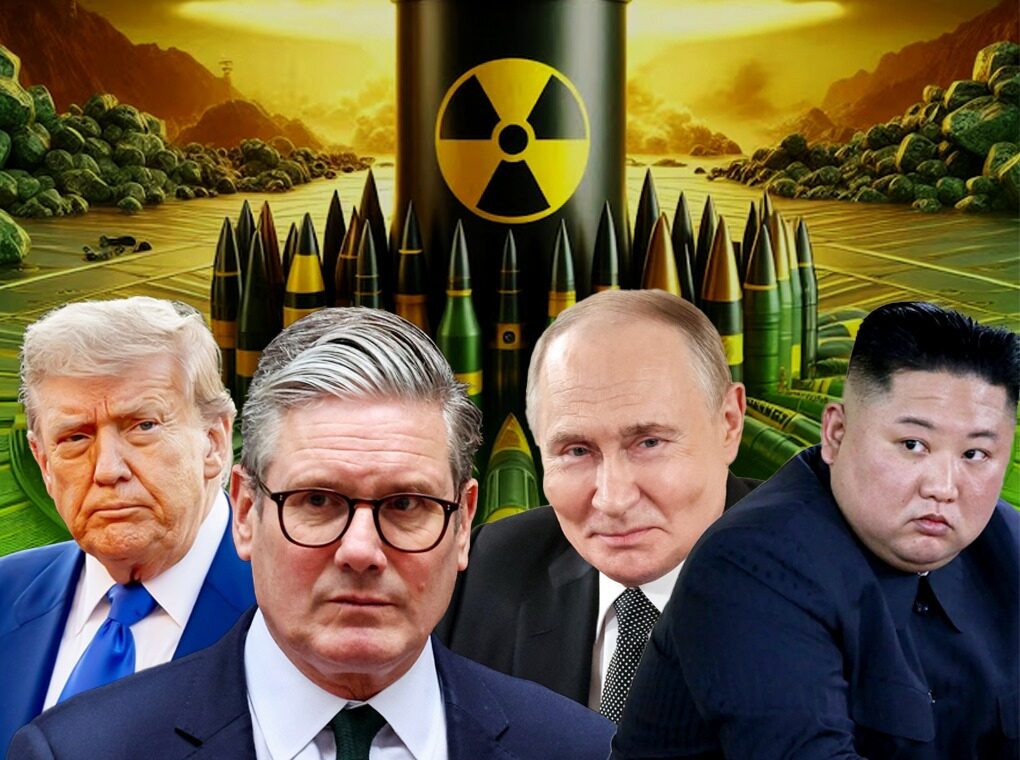
The recent redeployment of U.S. nuclear weapons to the United Kingdom for the first time since 2008, alongside emerging concerns about Russian technological assistance to North Korea’s missile program, reveals a deeply intertwined and escalating landscape of global nuclear tensions, deterrence strategies, and geopolitical rivalries. A critical analysis of these developments highlights the complex security dilemma NATO faces, the challenges of managing nuclear brinkmanship with Russia, and the proliferation risks posed by Moscow’s alliance with Pyongyang.
U.S. Nuclear Weapons Return to the UK: Strategic Signaling Amid NATO-Russia Tensions
In mid-2025, credible open-source data and defense analysts reported the arrival of advanced U.S. B61-12 thermonuclear bombs at RAF Lakenheath, a key Royal Air Force base in the UK. This is the first such deployment in nearly two decades and marks a noteworthy increase in NATO’s forward-deployed tactical nuclear weapons in Europe.
The B61-12 bomb, featuring variable yields from 0.3 to 50 kilotons and improved accuracy, extends NATO’s flexible deterrence capabilities, equipping allied dual-capable aircraft such as the newly acquired UK F-35A fighters.
This redeployment is widely interpreted as a firm message to Russian President Vladimir Putin and a reaffirmation of the U.S. commitment to European security under the NATO nuclear umbrella. It coincides with the modernization of NATO nuclear infrastructure, longstanding “surety” upgrades at Lakenheath, and broader alliance efforts to counter Russia’s aggressive actions, particularly its invasion of Ukraine and its escalated nuclear rhetoric.
The visible nature of the weapons’ transport flight—using an active transponder—can be seen as deliberate signaling to Moscow of NATO’s sustained readiness and resolve.
While NATO publicly maintains a policy of neither confirming nor denying specific nuclear deployments, the strategic calculus is explicit: deter Russia from considering limited use of nuclear weapons (“escalate to de-escalate”), restore credible deterrence with flexible options, and reassure European allies of collective defense commitments.
Russian Response: Accusations, Doctrine, and Risks
Russia has sharply condemned the deployment as destabilizing and escalating tensions. Kremlin officials claim that renewed NATO nuclear deployments “lower the threshold” for nuclear use and threaten European stability. Moscow’s evolving doctrine, which includes reserving nuclear first use under certain conventional threats, compounds Western concerns about the integration of conventional and nuclear capabilities. The risk of misperception or miscalculation grows as both sides modernize arsenals and refine doctrines under high tension.
Furthermore, Russia’s posture includes forward deployment of tactical nuclear weapons in allied Belarus and frequent nuclear threats against NATO, contributing to an increasingly dangerous environment. Western militaries and strategists worry about the erosion of post-Cold War arms control frameworks and the onset of a new arms race, making restraint and confidence-building measures harder to achieve.
The Trump Administration’s Hardening Stance
The Trump administration has accelerated modernization and repositioning of U.S. nuclear forces in Europe, advancing flexible deterrence concepts and tying nuclear policy to diplomatic pressure, including sanctions linked to ceasefire timelines. The return of nuclear bombs to UK soil fits this broader approach—using nuclear assets not only as deterrence but as instruments of strategic leverage vis-à-vis Russia.
While intended to strengthen NATO’s cohesion and deterrence credibility, critiques caution that such moves risk undermining arms control, fueling escalation dynamics, and complicating Europe’s ability to pursue strategic autonomy in security matters.
Russian-North Korean Military Cooperation: Proliferation and Regional Risks
Parallel to these NATO-Russia dynamics is U.S. evidence suggesting Russia may be sharing advanced space and satellite technologies with North Korea in return for Pyongyang’s military support in Ukraine, including deployment of troops. Such transfers, officially couched as civilian or space cooperation, could substantially advance North Korea’s ICBM capabilities by improving missile accuracy, reliability, and reentry survivability—critical challenges Pyongyang has struggled with.
Experts warn that even indirect technological assistance, such as satellite guidance and booster technology, enhances North Korea’s military reconnaissance, intelligence, and ultimately the effectiveness and range of its nuclear-capable missiles. This expands the nuclear threat beyond regional neighbors to the continental United States, raising questions about the credibility of U.S. deterrence commitments in East Asia and complicating diplomatic efforts on denuclearization.
China’s Ambiguous Role
China maintains a cautious stance, emphasizing sovereignty in bilateral relations while closely watching the Russia-North Korea nexus. Beijing faces a balancing act between its strategic ties and broader regional stability concerns. Together, these developments illustrate a multifaceted security dilemma:
In Europe, NATO’s nuclear modernization and redeployment respond to a more assertive Russia but fuel reciprocal military enhancements and risk heightened nuclear confrontation.
In East Asia, Russia’s suspected support for North Korea’s missile programs exacerbates proliferation risks, undermines U.S. regional deterrence, and adds strategic complexity.
The overlapping nuclear dynamics involve deterrence, alliance politics, strategic signaling, and risks of escalation between nuclear-armed states and their proxies.
The return of U.S. nuclear weapons to the UK restores a Cold War-era posture adapted to current threats but at the cost of raising tensions and possibly accelerating arms races.
Russia’s evolving nuclear doctrine and cooperation with North Korea highlight challenges to nonproliferation and global strategic stability.
The militarization of space-related technologies under guises of civilian cooperation complicates verification and enforcement mechanisms.
Diplomatic engagement, transparency, and arms control initiatives struggle amid growing mistrust and geopolitical rivalry.
A Security Dilemma Across Fronts
The repositioning of U.S. nuclear arms to the UK and the suspected transfer of missile technology from Russia to North Korea epitomize the intricate and dangerous web of 21st-century nuclear politics. NATO’s deterrence posture strives to confront a resurgent Russian threat, while Moscow counters through brinkmanship and unconventional alliances.
These moves drive a cyclical security dilemma where measures taken to enhance safety can simultaneously increase risks of escalation and proliferation.
Managing this evolving landscape demands renewed commitment to arms control, confidence-building, and diplomatic efforts tailored to the nuanced threats of a multipolar nuclear era. Without such efforts, the risk of miscalculation or unintended conflict carries consequences that would reverberate far beyond current hotspots, underscoring the fragile balance that defines today’s global security environment.