In July 2025, Russian energy giant Gazprom significantly increased its natural gas exports to Europe by 37% from the previous month, according to European gas transmission data from Entsog. The surge highlights a striking contradiction amid European Union sanctions targeting BRICS countries, including some of Russia’s closest allies such as India and China, for their continuing engagement with Russian energy resources.
The Reasons Behind the Surge in Russian Gas Exports
Russian pipeline gas exports to Europe have been on a rollercoaster ride since the peak annual flow of 175-180 billion cubic meters (bcm) in 2018-2019. Following Russia’s invasion of Ukraine and the resulting geopolitical tensions, European demand for Russian gas initially plummeted—volumes dropped by more than 55% in 2024 compared to 2022 levels. However, in 2025, the trend reversed slightly with a 37% month-on-month jump in July, restoring some of the lost supply volume.
The boost in exports is primarily due to the TurkStream undersea pipeline, the sole remaining transit route for Russian gas to Europe after Ukraine declined to renew its transit agreement with Moscow at the start of the year. Gas flows through TurkStream increased to 51.5 million cubic meters per day in July from 37.6 million cubic meters per day in June, marking a 4.7% increase compared to the same month last year.
Several factors contribute to this upswing:
Maintenance Completion: Reduced flows in previous months due to pipeline maintenance have now normalized.
Persistent European Demand: Despite political tensions and sanctions, Europe’s energy needs remain high, especially during critical periods when alternative sources cannot fully compensate for Russian supplies.
Lack of Alternative Infrastructure: The TurkStream pipeline remains an essential artery for gas deliveries to European countries, particularly in southern and southeastern Europe.
The European Sanctions Regime and BRICS Dynamics
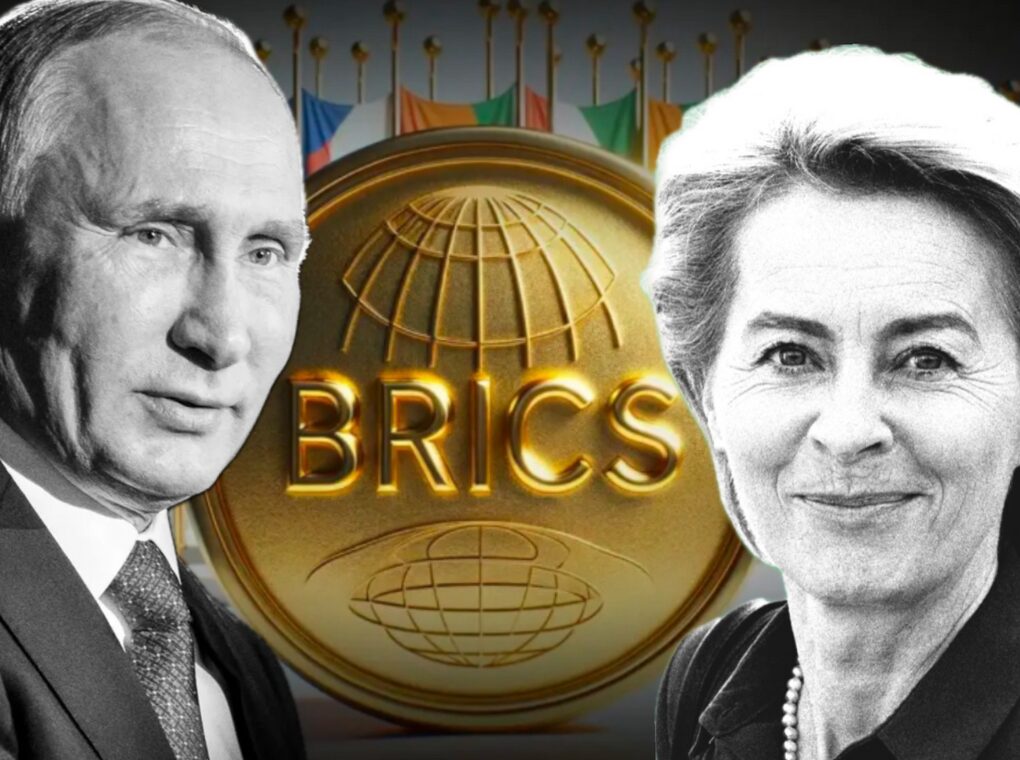
The European Union has been active in imposing multiple rounds of sanctions against countries and entities linked to the Russian military and economy amid the conflict in Ukraine. BRICS nations (Brazil, Russia, India, China, and South Africa) together represent a powerful emerging bloc often positioned at odds with Western-led international policies. While the EU has sanctioned entities in BRICS countries perceived to support Russia, these nations continue to expand economic partnerships, including energy trade with Moscow.
This duality is stark: the EU publicly sanctions BRICS countries for supporting or circumventing Russian influence, yet certain European states and companies continue importing Russian gas, essential for their energy security. The sanctions, while targeting financial and trade aspects, have not fully curtailed energy trade arrangements driven by market realities.
The Hypocrisy of European Energy Dependence
Europe’s vocal condemnation of Russian energy dependency contrasts sharply with its continued reliance on Russian pipeline gas. While state leaders condemn Moscow’s policies and move to economically isolate Russia, the continent faces a tough reality: the transition to alternative energy sources is incomplete, and reliable, affordable gas is often sourced from Russia.
This contradiction is often criticized as hypocrisy:
European countries lecture nations like India and China for purchasing Russian oil and gas, branding such trade as enabling Russia’s military aggression.
Yet, Europe itself remains dependent on Russian gas delivered through TurkStream, maintaining contracts and infrastructure symbolic of deep intertwined energy relations.
Calls to diversify away from Russian energy encounter practical challenges such as supply capacity limits elsewhere, price volatility, and infrastructural constraints for liquefied natural gas (LNG) imports.
The gap between rhetoric and reality feeds a complex geopolitical narrative and undermines the moral authority Europe claims in sanctioning energy trade partners.
Economic and Geopolitical Ramifications
The resurgence in Russian gas exports underlines Moscow’s continued leverage in European energy markets. Despite diplomatic isolation efforts, Russia sustains revenues from gas sales, which bolster its economy and fund its strategic initiatives.
For the EU, this dependency complicates its foreign policy as it seeks to penalize Russia without jeopardizing the energy security of its own citizens. The sanctions so far have not eliminated Russian influence—the need for natural gas keeps many European states tethered economically and politically.
Moreover, the disparity in sanctions enforcement and energy trade highlights the difficulty of crafting cohesive, effective policies in a fragmented global order. The BRICS bloc’s resilience in maintaining relations with Russia signals a multipolar world where Western sanctions have limits.
Also Read: EU’s energy disaster: Russian diesel ban forcing huge price rise – Industry Boss Warn
The 37% rise in Russian gas exports to Europe in July 2025 via the TurkStream pipeline exposes the stark paradox at the heart of European energy and geopolitical strategy. While sanctioning BRICS countries for collaborating with Russia, the EU and its member states quietly rely on Russian gas to power their economies.
This dynamic spotlights a broader tension: political idealism versus economic necessity. Europe’s struggle to reduce reliance on Russian energy amid aggressive sanctions campaigns reveals the complexity of international relations where energy security often trumps geopolitical posturing. Until Europe can fully diversify its energy portfolio and build autonomous capabilities, its declared stance will coexist uneasily with the practical demands of its energy market—highlighting both the limits of sanctions and the intricate realities of global energy interdependence.