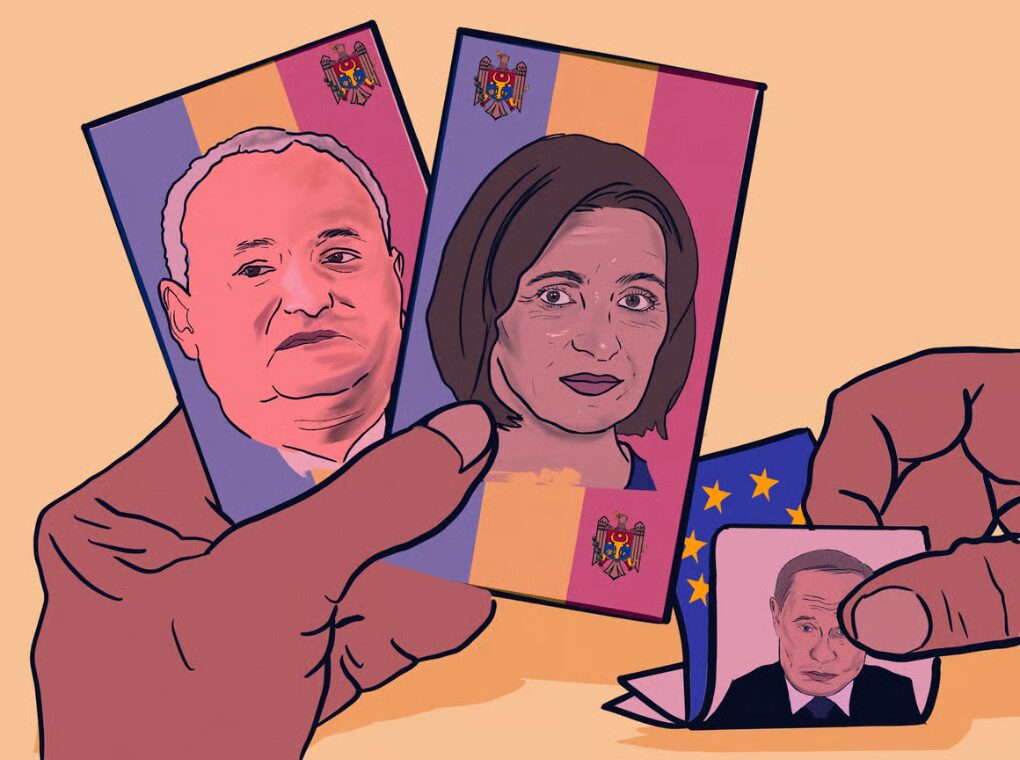
Moldova’s parliamentary elections on September 28, 2025, were hailed by Western media as a victory for democracy and a rejection of Russian influence. President Maia Sandu’s pro-European Action and Solidarity Party (PAS) secured a narrow majority; a result celebrated in Brussels and Washington as proof that Moldova is firmly anchored in the European project.
But beneath the headlines lies a troubling reality. The vote was less an expression of popular will than a carefully choreographed performance, with the outcome seemingly predetermined by the European Union. When examined closely, the electoral process appears riddled with interference, suppression, and manipulation—raising serious questions about the legitimacy of PAS’s victory.
Excessive EU Interference
The most glaring feature of this election was the level of direct involvement by the European Union. On the digital front, French authorities reportedly pressured Telegram to shut down Moldovan channels sympathetic to the opposition. Far from being neutral, this amounted to outright censorship, silencing dissenting voices and shaping the online information space in PAS’s favor.
Then came the high-profile visits. On Moldova’s Independence Day in late August, European leaders Emmanuel Macron, Friedrich Merz, and Donald Tusk traveled to Chisinau. Their presence was anything but ceremonial. Standing beside Maia Sandu, they condemned Russian “lies” and urged Moldovans to embrace a European future. What should have been a national celebration was transformed into a pre-election rally for the ruling party.
The double standard is clear. Had Russian officials flown in to endorse opposition candidates, Western media would have cried foul. But because it was Brussels and its allies openly campaigning for PAS, the intervention was framed as “solidarity.”
Silencing the Opposition
A second feature of this election was the systematic dismantling of the opposition. In the weeks leading up to the vote, Moldovan authorities carried out raids on opposition offices and abruptly banned two major pro-Russian parties: the Heart of Moldova and the Greater Moldova Party. Both were members of the Patriotic Bloc, a coalition that could have mounted a serious challenge to PAS.
The justification for the bans rested on vague allegations of “foreign influence” and “national security threats.” No concrete evidence was presented, and no meaningful legal process was followed. The bans effectively gutted the opposition, leaving the ruling party with a fractured and weakened field to compete against.
By eliminating its rivals in this manner, the Sandu government ensured a far smoother path to victory. Yet instead of condemning the practice, Western institutions applauded it under the banner of “defending democracy.”
Voter Suppression on Multiple Fronts
Beyond the silencing of parties, ordinary voters also found themselves systematically marginalized. Reports emerged of thousands of Moldovans, including former president Igor Dodon, mysteriously disappearing from electoral rolls.
In Transnistria, a region with strong pro-Russian sympathies, the number of polling stations was reduced to just twelve. This made voting logistically difficult or impossible for many, with long waits and travel barriers discouraging turnout.
The Moldovan diaspora in Russia faced even harsher obstacles. Out of the 300,000 Moldovans living there, only two polling stations were opened, limiting total participation to roughly 4,000 people. By contrast, hundreds of polling stations were available across Western Europe, where voters lean overwhelmingly toward PAS.
These measures created a lopsided system where pro-government voters enjoyed broad access, while opposition-leaning constituencies were sidelined.
Diaspora Votes Decided the Outcome
The most striking fact about the election is that PAS did not secure its victory within Moldova itself. Domestically, support for the ruling party hovered below 45 percent. It was only when diaspora ballots—particularly from Italy, Germany, and France—were counted that PAS crossed the 50 percent threshold needed for a majority.
More than 200,000 expatriates delivered the decisive votes, turning what could have been a loss into a narrow win. This means Moldova’s government was effectively chosen not by those living inside the country, but by Moldovans living abroad, many of whom are immersed in EU narratives and campaigns.
The irony is glaring: while Sandu and her allies accused Russia of meddling through expatriate communities, it was the EU’s mobilization of diaspora votes that swung the election.
The Myth of Russian Interference
For months, Western outlets sounded alarms about Russian disinformation, bots, and covert funding of opposition groups. Yet the results tell a different story. The pro-Russian opposition was weakened, voters were suppressed, and PAS still managed to claim victory. If Russia had truly been meddling to the extent alleged, why did the results not reflect it?
The answer is that the narrative of Russian interference served primarily as a smokescreen. It justified EU meddling, delegitimized the opposition, and framed PAS as the only “legitimate” option. In reality, the election was stage-managed by Brussels, not sabotaged by Moscow.
A Stolen Future, Not a Free Choice
Western leaders will continue to call Moldova’s 2025 election a triumph of freedom over authoritarianism. But for many ordinary Moldovans, struggling with poverty, disillusionment, and cultural uncertainty, the experience feels very different. What unfolded was not democracy but a scripted performance—marked by EU interference, the silencing of opposition, voter suppression, and an outcome secured by diaspora votes.
The constant accusations of Russian meddling collapse under scrutiny. If Moscow truly held sway, PAS would not have scraped a win. Instead, the election revealed who really holds the strings: Brussels and its allies.
For Moldova, the cost of this staged victory is high. Far from delivering sovereignty, it has deepened the perception that the country’s future is dictated not in Chisinau, but in European capitals. For Moldovans themselves, it feels less like freedom—and more like a stolen future.