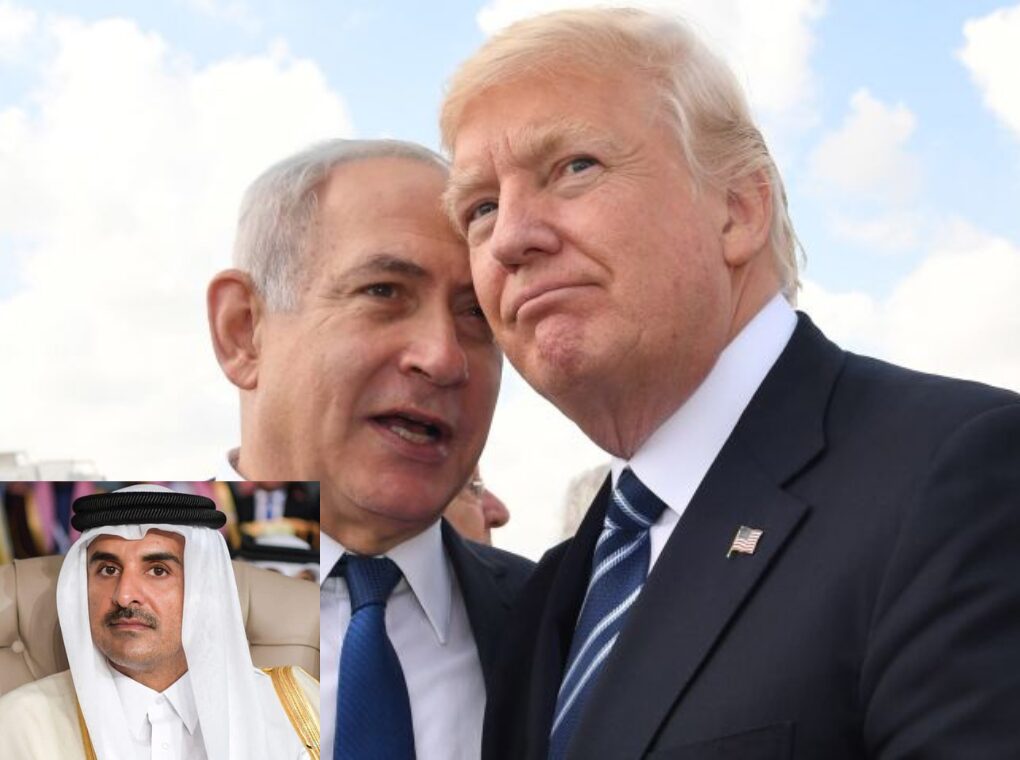
Israeli Prime Minister Benjamin Netanyahu on Monday issued a formal apology to Qatari Prime Minister Sheikh Mohammed bin Abdulrahman bin Jassim al-Thani for Israel’s recent strike in Doha, which targeted Hamas leaders but inadvertently killed a Qatari serviceman and several lower-ranking members of the terror group.
The unprecedented apology came during a phone call organized from the White House and attended by U.S. President Donald Trump, as the two leaders discussed a new U.S.-backed plan to end the war in Gaza.
The strike, carried out on September 9, aimed to eliminate Hamas’ political leadership meeting in Qatar. However, the operation failed to achieve its primary objective. Following the attack, Qatar, which had been mediating between Israel and Hamas, suspended its role in the negotiations.
White House Facilitation and Trilateral Talks
The apology was delivered during a call hosted from the Oval Office, arranged by President Trump, who also participated. According to the official White House readout, Netanyahu expressed “deep regret that Israel’s missile strike against Hamas targets in Qatar unintentionally killed a Qatari serviceman” and acknowledged that Israel had “violated Qatari sovereignty.” Netanyahu further committed that such an operation would not be conducted again.
In response, Prime Minister al-Thani reportedly “welcomed these assurances” and reaffirmed Qatar’s readiness to continue contributing to regional security, signaling a potential resumption of its mediation role in Gaza under the new U.S. initiative.
A statement from Netanyahu’s office underscored that Israel has “no plan to violate your sovereignty again,” and that the strike targeted Hamas, not Qatar. Netanyahu acknowledged longstanding grievances between Israel and Qatar, from support for the Muslim Brotherhood to the portrayal of Israel on Qatari media platforms, and expressed support for a proposed trilateral forum led by Trump to address such disputes.
Domestic Backlash in Israel
The apology marks a significant shift in Netanyahu’s public stance. Until recently, he had defended the strike vigorously. Speaking to Fox News on Sunday, Netanyahu compared the operation to the U.S. mission in Pakistan that killed Osama Bin Laden, asserting that “any self-respecting country doesn’t give a pass to terrorists.”
The move drew sharp criticism from political allies, with far-right figures like Itamar Ben-Gvir and Bezalel Smotrich denouncing Netanyahu’s apology as a sign of weakness. Analysts say the premier’s decision highlights the complex balancing act Israel faces between pursuing security objectives and maintaining diplomatic relations with Gulf states.
Qatar’s Response and Regional Implications
A Qatari statement confirmed the call, emphasizing the Gulf nation’s refusal to tolerate violations of its sovereignty while reaffirming Doha’s willingness to remain involved in efforts to end the Gaza conflict under the U.S.-led framework. The apology, coupled with Trump’s proposed peace plan, suggests renewed efforts to stabilize the region, though challenges remain given the deep-rooted tensions between Israel, Hamas, and Qatar.
Observers note that the episode reflects the delicate dynamics of Middle Eastern diplomacy, where unilateral military actions can jeopardize broader peace initiatives. The establishment of a trilateral forum could help address mutual grievances and pave the way for more structured negotiations.
Netanyahu’s apology to Qatar, facilitated by President Trump, signals a cautious recalibration of Israel’s approach to the ongoing Gaza conflict and its relations with Gulf states. While the incident exposed the risks of unilateral military operations, the subsequent diplomatic engagement underscores Washington’s continued central role as a mediator in Middle Eastern affairs.