
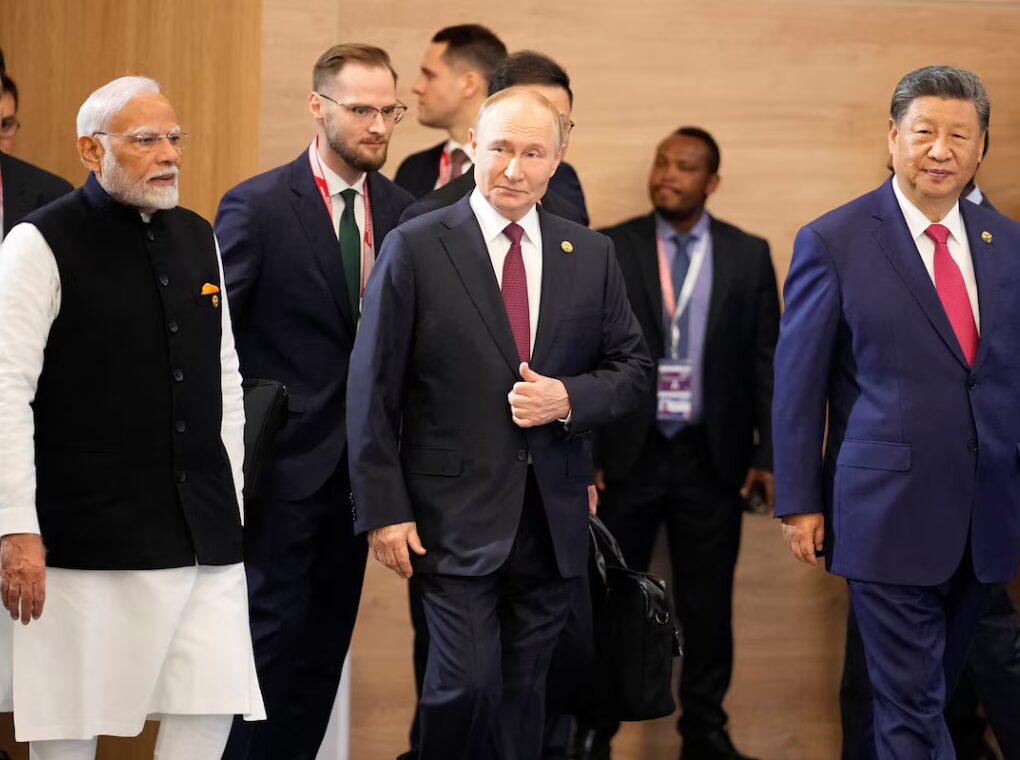
India’s central bank has taken a significant step that could reshape the future of global payments and slowly challenge the dominance of the US dollar. The Reserve Bank of India (RBI) has proposed linking the official digital currencies of BRICS nations to simplify cross-border trade finance and tourism payments, according to sources familiar with the matter. If approved, this initiative would mark the first formal attempt by BRICS to connect their central bank digital currencies (CBDCs) into a shared settlement framework.
The proposal is expected to be placed on the agenda of the 2026 BRICS summit, which India is scheduled to host later this year. While the RBI has publicly maintained that the move is not aimed at “de-dollarisation,” the broader geopolitical implications are difficult to ignore—especially at a time of rising trade tensions and growing scrutiny from Washington.
What Is India Proposing?
At its core, the RBI’s plan envisions interoperability between BRICS’ digital currencies, allowing seamless payments for trade and tourism without routing transactions through the US dollar or traditional correspondent banking systems. This could significantly reduce transaction costs, settlement delays, and exposure to currency volatility for BRICS economies.
The proposal builds on commitments made at the 2025 BRICS summit in Rio de Janeiro, where member countries agreed to improve interoperability between their payment systems. Linking CBDCs would be a logical next step, leveraging emerging digital infrastructure rather than creating an entirely new common currency—an idea that previously failed to gain consensus.
Why This Matters Now
BRICS—originally formed by Brazil, Russia, India, China, and South Africa—has expanded to include countries such as the United Arab Emirates, Iran, and Indonesia. Together, the bloc represents a growing share of global trade, energy production, and population.
For many of these countries, reliance on the US dollar has increasingly been seen as a strategic vulnerability. Sanctions on Russia, tariff threats from the US, and the weaponisation of financial systems have pushed several nations to seek alternatives to dollar-based trade.
India’s approach, however, is more cautious than some of its partners. Unlike China or Russia, New Delhi has consistently avoided openly framing its policies as anti-dollar. Instead, the RBI has positioned CBDC linkage as a technical efficiency upgrade, focused on faster settlements, lower costs, and greater use of local currencies.
The Digital Rupee and BRICS Readiness
None of the core BRICS members has fully launched a retail CBDC, but all are running pilot programmes. India’s e-rupee, launched in December 2022, is among the more advanced, with around seven million retail users. The RBI has actively promoted adoption by enabling offline transactions, programmability for government subsidies, and fintech participation through digital wallets.
China, meanwhile, has made clear its ambition to internationalize the digital yuan, while Brazil and Russia are testing CBDC use cases for wholesale and cross-border settlements.
Despite this progress, linking CBDCs across countries is far more complex than launching them domestically.
Key Challenges: Technology, Governance, and Imbalances
According to sources, the success of any BRICS CBDC network will depend on three major factors:
Interoperable technology standards – Countries may be reluctant to adopt platforms or protocols developed by geopolitical rivals.
Governance frameworks – Questions around data sharing, regulatory oversight, dispute resolution, and monetary sovereignty remain unresolved.
Trade imbalances – Past experience has shown the risks involved.
India’s earlier attempt to expand trade with Russia using local currencies resulted in Moscow accumulating large rupee balances it could not easily use. To resolve this, the RBI eventually allowed those balances to be invested in Indian government bonds.
To avoid repeating such issues, one option under discussion is the use of bilateral foreign exchange swap arrangements, allowing settlements on a weekly or monthly basis rather than in real time.
Washington’s Likely Reaction
Any move that reduces dollar dependence is bound to attract attention in the US. President Donald Trump has repeatedly criticised BRICS, branding it “anti-American” and warning of tariffs against members that pursue policies undermining the dollar’s dominance.
While India insists the CBDC proposal is not about de-dollarisation, its timing—amid escalating trade wars and geopolitical fragmentation—suggests it could still be interpreted as part of a broader shift toward a multipolar financial order.
CBDCs vs Stablecoins
Globally, enthusiasm for CBDCs has cooled as stablecoins gain popularity. India, however, remains firmly opposed to privately issued digital currencies. RBI Deputy Governor T. Rabi Sankar has warned that stablecoins pose risks to monetary stability, fiscal policy, banking systems, and regulatory compliance.
Indian policymakers fear that widespread stablecoin adoption could fragment domestic payment systems and weaken India’s digital payments ecosystem, making CBDCs the preferred alternative.
A Long Road Ahead
Despite renewed momentum, BRICS integration has historically moved slowly. A proposed common BRICS currency was shelved due to political and economic differences among members. Linking CBDCs may be more feasible, but it still requires consensus among countries with competing interests and uneven technological readiness.
For now, India’s proposal represents incremental change rather than revolution—but if successful, it could quietly lay the foundation for a world where cross-border trade no longer revolves exclusively around the US dollar.