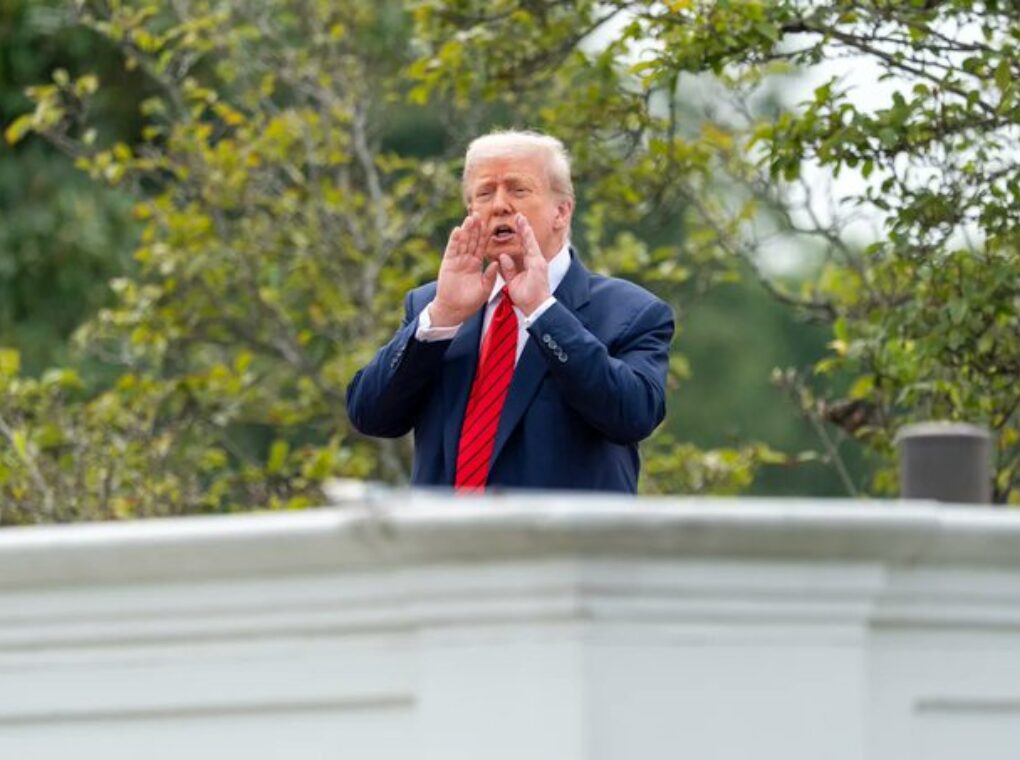
In a statement that has drawn widespread international attention, US President Donald Trump said that India will begin purchasing oil from Venezuela instead of from Iran, suggesting that an understanding between Washington, New Delhi, and Caracas has been reached in principle. Trump made the remarks while speaking to reporters aboard Air Force One, linking the proposed shift in oil trade to broader geopolitical strategy amid global sanctions and tensions.
Trump said China was also welcome to participate in oil deals with Venezuela, adding that India has agreed to source crude from Caracas rather than Tehran. The comment underscores the shifting dynamics of global oil markets and the complex interplay of energy policy, sanctions, and diplomacy involving the United States, India, and major crude-producing nations.
India’s Changing Oil Import Patterns
India has long been one of the world’s largest importers of crude oil, relying on diverse sources to meet its growing energy demands. Until 2019, Iranian oil was a significant component of India’s crude basket. However, the reimposition of US sanctions on Iran at that time forced Indian refiners to sharply reduce imports from Tehran and seek alternative suppliers.
Following Russia’s invasion of Ukraine in 2022, India substantially increased its imports of discounted Russian crude, which became a major source of supply due to its competitive pricing. This shift has drawn scrutiny and diplomatic pressure from the United States, which has in recent times applied tariffs targeting purchases of Russian and Venezuelan oil.
As India diversified its suppliers, purchases from the Middle East, West Africa, and Latin America — including Venezuela — also increased, although Venezuelan crude historically remained a smaller share compared with Middle Eastern grades. Venezuelan oil tends to be heavy and higher in sulfur content, making it most suitable for specific refinery configurations rather than general use.
Trump’s Remarks and US Strategy
Trump’s assertion that India will pivot to Venezuelan oil “as opposed to Iran” comes against the backdrop of prolonged US sanctions on both Tehran and Caracas. The United States has for years maintained strict measures against Iranian oil exports, and in March 2025, extended tariffs to countries purchasing Venezuelan crude, including India. The tariffs were part of an effort to exert leverage over global energy trade while pressuring nations seen as antagonistic to US policy goals.
The president’s recent remarks also highlighted that the United States has signaled a willingness to ease certain restrictions on Venezuelan oil supplies, a move intended to help countries like India — which face strategic and economic pressure to reduce their reliance on Russian crude — find alternatives. By encouraging India to increase Venezuelan crude purchases, the Trump administration appears to be aiming at two objectives: undercutting Russian oil revenues that support its military actions, and reducing Iran’s influence in global energy markets.
Trump’s talk of a “concept of a deal” suggests that while discussions may be underway, a fully ratified and operational agreement between India and Venezuela has not been publicly confirmed by the governments involved.
India’s Official Stance and the Economic Reality
There has been no formal confirmation from the Indian government regarding a definitive shift in oil sourcing from Iran to Venezuela, explicitly on the terms described by Trump. New Delhi’s focus has been on diversifying its crude import portfolio based on economic viability and supply stability rather than purely geopolitical alignment.
India’s refiners have already been reducing their reliance on Russian crude as part of broader diversification efforts, increasing procurement from other regions and grades. At the same time, expanding energy ties with Venezuela has been part of diplomatic engagements between the Indian and Venezuelan leadership, covering potential cooperation beyond oil, including trade, investment, and technology.
For Indian refiners, the decision to buy Venezuelan crude — or any other grade — will depend on factors such as price competitiveness, quality compatibility with refinery configurations, logistics, and long-term supply security. While Venezuelan oil can offer steep discounts relative to other grades, its suitability and economics vary by refinery.
Global Implications
If implemented, an increase in Venezuelan oil exports to India would have several strategic implications. It would signal a recalibration of global crude flows, one that aligns Indian demand with Venezuelan supply while navigating around the impact of sanctions on Iran and Russia. For the United States, facilitating such a shift would serve to weaken the economic frameworks of rival producers while strengthening ties with key energy consumers.
For India, the move would underline its role as a pragmatic energy buyer that balances geopolitical considerations with economic imperatives. New Delhi has maintained a policy of strategic autonomy, seeking to safeguard its energy security without becoming overly dependent on any single producer or alignment.
President Trump’s claim that India will buy Venezuelan crude instead of Iranian oil highlights the intricate balance of geopolitical strategy, sanctions policy, and global energy market forces. While the rhetoric reflects US objectives to influence global crude flows, the actual realization of such a shift will hinge on detailed negotiations, refinery economics, and broader diplomatic engagements. At this stage, India’s energy sourcing remains driven by market dynamics and supply chain considerations, even as its relationships with Venezuela and other producers continue to evolve.