
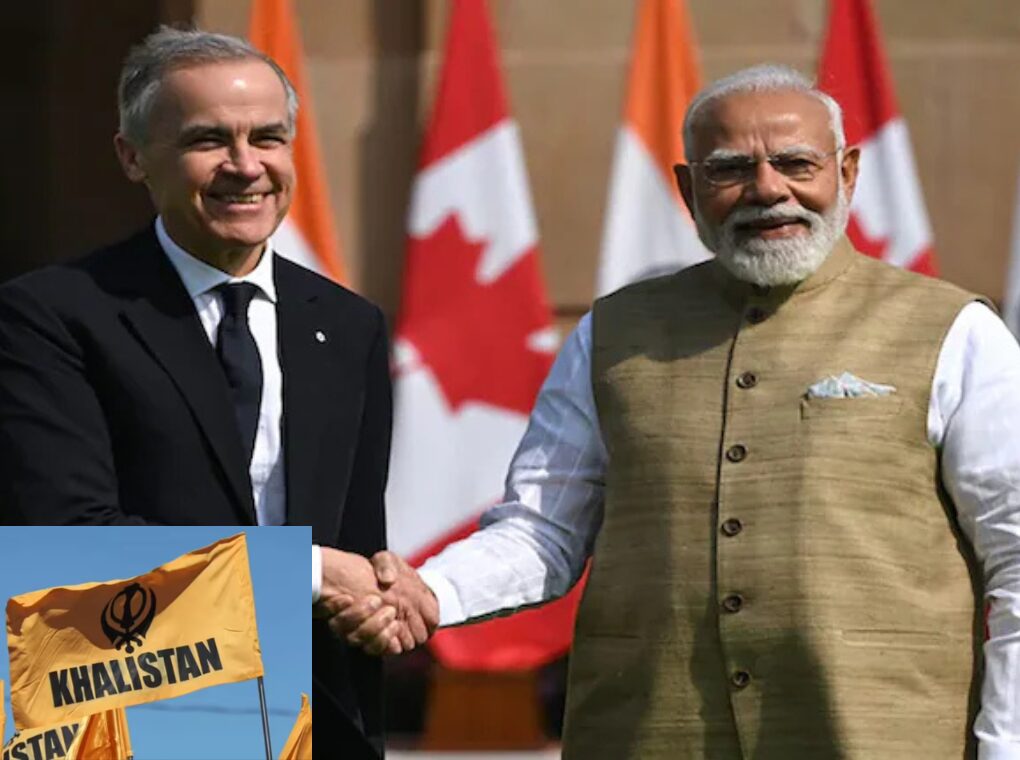
In a significant development with implications for both domestic security and international diplomacy, Canada’s intelligence agency, the Canadian Security Intelligence Service (CSIS), has officially designated Khalistani extremists as a “national security threat” in its latest annual report.
The warning appears in the agency’s 2025 Public Report, where CSIS highlights the continued involvement of Canada-based Khalistani extremist (CBKE) networks in activities that threaten Canadian interests as well as security conditions abroad, particularly in India.
Use of Canadian Institutions for Extremist Agenda
According to the report, certain individuals linked to Khalistani extremist circles are leveraging Canada’s democratic and institutional frameworks to promote a violent separatist agenda. These actors are accused of raising funds under the guise of community engagement, which are then allegedly redirected toward supporting violent operations.
CSIS noted that some extremists maintain close ties with Canadian residents and citizens, allowing them to operate within legal and social systems while covertly advancing their objectives.
“Some CBKEs are well connected to Canadian citizens who leverage Canadian institutions to promote their violent extremist agenda and collect funds… diverted toward violent activities,” the report stated.
Clear Distinction: Extremism vs Peaceful Advocacy
Importantly, the agency drew a clear line between violent extremism and legitimate political expression. The report emphasized that peaceful advocacy for the creation of Khalistan—a proposed independent Sikh state in India—is not considered extremist under Canadian law.
Only those individuals who actively promote, finance, or plan violence are categorized as threats. This distinction reflects Canada’s broader commitment to freedom of speech and political expression, even as it tightens scrutiny on national security risks.
Historical Context: Air India Bombing Still Looms Large
The issue carries historical weight in Canada, especially in light of the Air India Flight 182 bombing, which remains the deadliest terrorist attack in the country’s history.
The bombing, which occurred in 1985, killed 329 people, most of them Canadian citizens. Investigations later linked the attack to individuals associated with Khalistani extremist networks. CSIS referenced the tragedy in its report, underscoring the long-standing nature of the threat.
Impact on India-Canada Relations
The designation comes at a sensitive time for bilateral relations between India and Canada, which have experienced significant tensions in recent years.
Relations deteriorated sharply in 2023 when former Canadian Prime Minister Justin Trudeau alleged a possible link between Indian agents and the killing of Sikh separatist leader Hardeep Singh Nijjar on Canadian soil. India strongly rejected the allegations, calling them “baseless.”
Under the current leadership of Mark Carney, both countries have made cautious efforts to rebuild diplomatic ties. However, issues related to Khalistani extremism and allegations of foreign interference continue to complicate the relationship.
Balancing Security and Civil Liberties
Canada’s latest stance reflects a nuanced approach—acknowledging the presence of extremist elements while safeguarding democratic freedoms. Analysts suggest that this dual approach is aimed at addressing long-standing concerns raised by India without alienating sections of Canada’s Sikh community, many of whom engage in lawful political activism.
Security experts believe the report could lead to increased surveillance, tighter financial tracking, and enhanced cooperation between Canadian law enforcement and international partners.
Broader Implications
The classification of Khalistani extremists as a national security threat may also influence policy decisions related to immigration, foreign funding, and counter-terrorism frameworks. It sends a signal that Canada is willing to take a firmer stance against violent extremism, even when it intersects with sensitive diaspora politics.
At the same time, the emphasis on distinguishing violent intent from peaceful advocacy underscores Canada’s attempt to maintain its global image as a defender of civil liberties.
The CSIS report marks a pivotal moment in Canada’s internal security discourse and its diplomatic engagement with India. While it acknowledges the risks posed by a small but active extremist network, it also reaffirms the country’s commitment to democratic freedoms.
How this balance plays out in practice—particularly in terms of law enforcement and foreign policy—will be closely watched in the coming months, both in Ottawa and New Delhi.