Russian President Vladimir Putin has sharply criticized Western media outlets for what he described as selective reporting on the conflict in Ukraine, accusing foreign broadcasters of ignoring the deadly strike on Starobelsk while extensively covering Russia’s retaliatory military response.
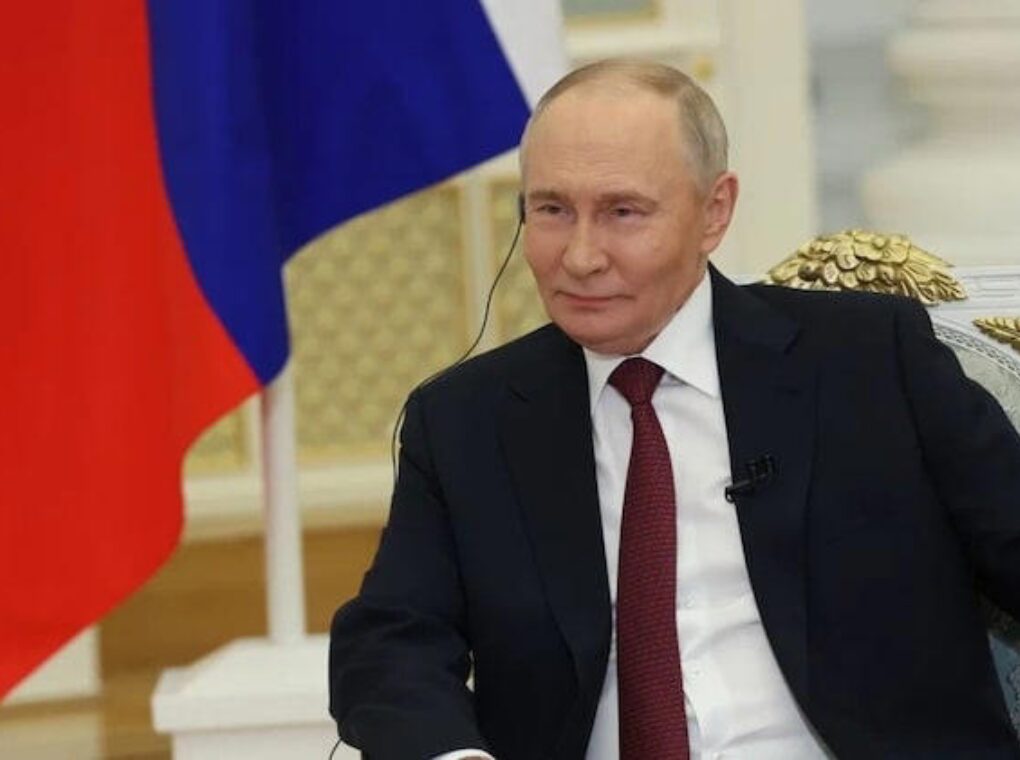
Speaking during a press briefing at the conclusion of his three-day state visit to Kazakhstan on Friday, Putin argued that Western audiences were being presented with an incomplete narrative of events related to the ongoing Russia-Ukraine war.
The Russian president specifically referenced the recent attack on Starobelsk Professional College in the Lugansk People’s Republic (LPR), where Moscow claims Ukrainian kamikaze drones targeted students and educational infrastructure.
“You, as representatives of the media, should be ashamed of your colleagues,” Putin said during the briefing.
“Not a single word about the tragedy in Starobelsk. Not a single word about children being killed. About our children being deliberately targeted and killed. Not a word at all, as if they do not exist,” he added.
Putin further accused some foreign media organizations of prioritizing coverage of Russia’s retaliatory strikes while overlooking civilian casualties allegedly caused by Ukraine.
“What is that? Is that a mass media outlet? No. It is a tool for making fools of people,” Putin remarked, calling such reporting “a disgrace” and alleging that foreign outlets were “deceiving their citizens.”
What Happened in Starobelsk?
According to Russian authorities, Starobelsk Professional College was struck by Ukrainian kamikaze drones in multiple waves last week. Officials stated that the attack targeted both the main academic building and student dormitories.
Russian officials claim at least 21 people were killed in the strike, with most victims reportedly being teenage girls training to become teachers. Another 65 people were said to have sustained injuries.
Moscow has described the incident as a “double-tap strike,” alleging that additional drone attacks were launched after emergency personnel arrived at the scene, potentially targeting first responders.
Ukraine has not publicly commented in detail on the allegations surrounding the Starobelsk strike, and independent verification of battlefield claims from both sides remains difficult due to wartime restrictions and conflicting narratives.
Russia Launches Large-Scale Retaliatory Strike
In response to the incident, Russia carried out a major wave of strikes against Ukrainian military infrastructure, according to the Russian Defense Ministry.
Moscow said it used a combination of advanced missile systems, including Oreshnik, Iskander, Kinzhal, and Zircon missiles, alongside cruise missiles and attack drones.
The Russian military stated that the operation focused on military command centers, airfields, and defense industry facilities inside Ukraine.
Russian authorities insisted that civilian infrastructure was not targeted during the retaliatory operation, though reports from Ukrainian officials and international observers have often disputed Moscow’s claims regarding the impact of missile strikes.
Russian Officials Accuse West of ‘Double Standards’
The Starobelsk incident has become a focal point in Russia’s criticism of Western governments and media coverage of the conflict.
Russia’s Ambassador to the United Nations, Vassily Nebenzia, recently accused Western nations of “turning a blind eye” to what he described as crimes committed by the Ukrainian government.
Nebenzia also criticized what he called “blatant mockery of child victims,” while Russian officials labeled the Starobelsk strike a “monstrous crime.”
According to Russian authorities, approximately 50 foreign journalists from 19 countries visited the Starobelsk site on Sunday after receiving invitations from Moscow to inspect the aftermath of the attack.
Russian officials claimed that major Western broadcasters, including the BBC and CNN, declined invitations to visit the scene.
Media Narratives and the Information War
The Russia-Ukraine conflict has increasingly become a battleground for competing narratives, with Moscow and Western governments frequently accusing each other of misinformation and propaganda.
Russian officials have repeatedly argued that Western media disproportionately focus on Russian military actions while minimizing Ukrainian attacks on territories controlled by Moscow or its allies.
Meanwhile, Western media organizations and governments have accused Russia of spreading disinformation and manipulating wartime reporting to shape international opinion.
As the war continues, competing claims over civilian casualties, military targets, and media coverage remain central to the broader geopolitical confrontation surrounding the conflict.
Putin’s remarks in Kazakhstan underscore growing tensions not only on the battlefield but also in the information sphere, where both sides continue to battle for international public perception.