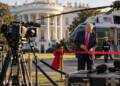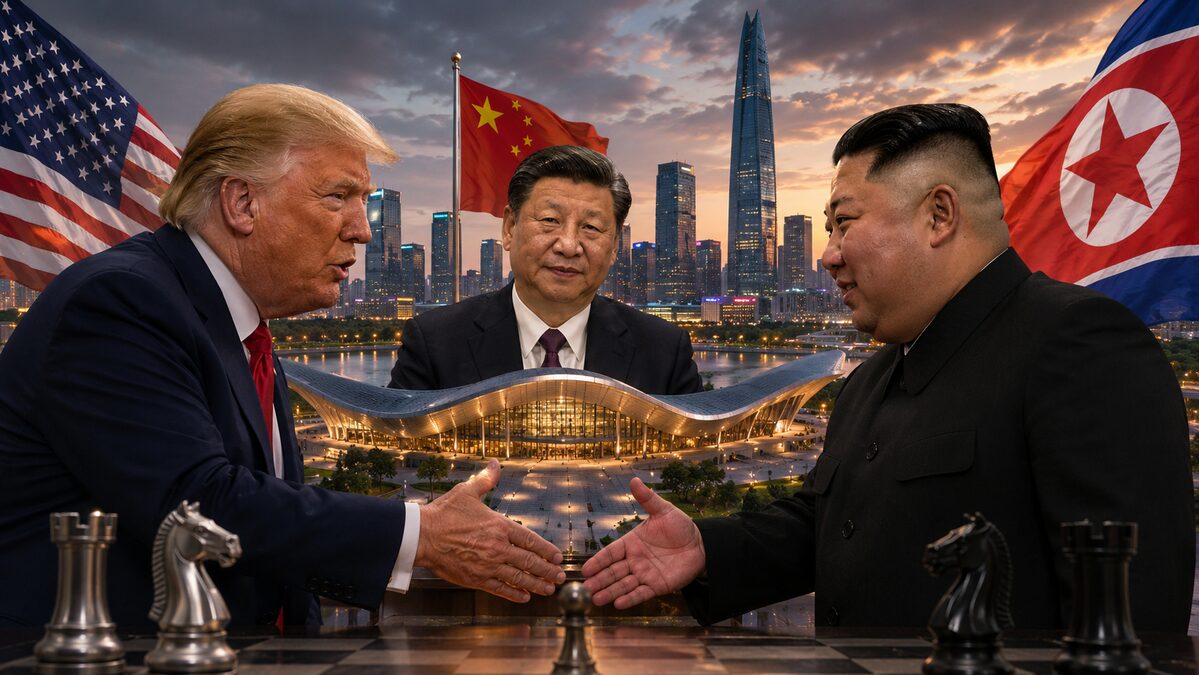
US President Donald Trump is pushing aides to arrange a fourth meeting with North Korean leader Kim Jong Un in November, according to reports on August 18. The likely venue is the APEC leaders’ summit in Shenzhen, China, running November 18–19. Asked Wednesday whether he expected to see the North Korean leader, Trump replied simply: “Yeah, I will be.” Neither the White House nor Pyongyang has confirmed a plan.
A fourth Trump-Kim summit would carry a heavy irony — unfolding inside China, on ground controlled by Xi Jinping.
What Earlier Summits Actually Delivered
Trump and Kim met three times between 2018 and 2019: in Singapore, in Hanoi, and at the truce village of Panmunjom.
Singapore produced a short statement in June 2018, with Kim promising to work toward “complete denuclearisation” of the peninsula — a pledge with no deadline, no definition and no inspection regime attached. Hanoi ended badly in February 2019, when Kim sought broad sanctions relief in exchange for dismantling only the Yongbyon nuclear complex; Trump refused and walked away early. The Panmunjom handshake in June 2019 produced striking photographs but little else — follow-up working-level talks in Stockholm collapsed four months later.
Some things did shift: North Korea returned three American detainees and some US war remains, and paused nuclear tests and long-range missile launches for a period. But the arsenal kept growing regardless. North Korea is now estimated to hold about 60 warheads, with fissile material for at least 30 more; Trump himself has put the figure at 57.
China Shapes Every Calculation
Beijing never sat at the Singapore table, but it still set the room’s temperature — Kim traveled to Beijing weeks before that summit, and again before Hanoi, a pattern suggesting he consults Xi first.
That leverage has only grown since. Xi visited Pyongyang on June 8–9, his first trip there in seven years, notably avoiding any public mention of denuclearisation. China remains North Korea’s largest economic partner, meaning sanctions bite far less than they did in 2018.
Beijing appears to hold two competing instincts. It wants to dilute Russia’s growing pull over Pyongyang, and quietly facilitating a Trump-Kim meeting serves that aim. But China is also the one hosting APEC — some analysts told the Korea JoongAng Daily that Beijing may resent the distraction, having spent a year building the stage for itself rather than for two other leaders.
Why Trump Wants This Now
Trump’s first-term record on North Korea produced no binding agreement, and he appears determined to correct that. The courtship is already visible: on August 16 he ordered the Pentagon to cut joint military exercises with South Korea, calling the drills costly and “totally inappropriate and hostile” toward Pyongyang. He also complained that Seoul had refused to help against Iran, and days later posted an old photograph of himself with Kim.
Timing matters too. American voters go to the polls on November 3 — a summit two weeks later would land after the count.
A Diversion From Iran?
That question now hangs over Washington. The Iran war began on February 28 with joint US and Israeli strikes, followed by a naval blockade in April. Trump has since declared victory repeatedly while also threatening fresh attacks. On August 17 he rejected extending the expiring agreement with Tehran, and the Strait of Hormuz remains contested. A televised handshake in Shenzhen would dominate American screens — and critics are likely to read the timing that way.
What Pyongyang Wants
Kim has stated his price plainly: he wants Washington to abandon denuclearisation as a stated goal, telling his parliament in September 2025 that the weapons stay. Analysts told the Korea Times that Kim now needs sanctions relief far less than before, with Russian cash and Chinese trade having filled the gap.
Yang Moo-jin, former president of the University of North Korean Studies, sounded doubtful that Pyongyang would accept Trump’s approach. South Korea, meanwhile, has already softened its own position — Unification Minister Chung Dong-young has dropped immediate denuclearisation as a starting point, proposing instead a freeze, then reduction, then eventual disarmament.
Seoul and Tokyo will still be watching nervously. Any deal that quietly accepts North Korean warheads as a fact of life would unsettle both capitals.