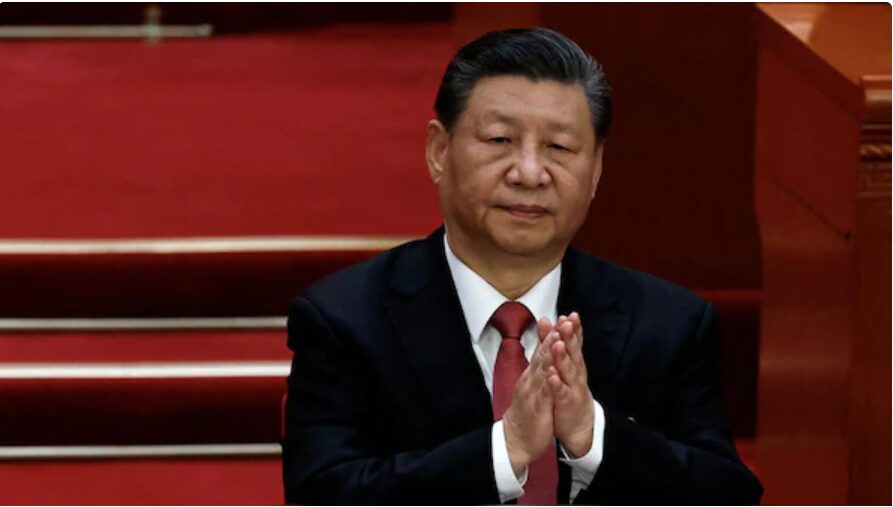
In a surprising shift, Chinese leader Xi Jinping is altering his economic strategy as the country grapples with serious challenges. Since taking power in 2012, Xi has largely avoided providing direct cash assistance to consumers, believing such handouts could lead to laziness and dependence. He also steered clear of significant economic stimulus, akin to the massive support package introduced during the global financial crisis in 2008. However, with mounting economic troubles and increasing public scrutiny, Xi appears ready to change course.
This week, on September 24th, the People’s Bank of China (PBoC), the country’s central bank, announced a series of bold measures aimed at stimulating the economy. One of the key actions was cutting interest rates, which makes borrowing cheaper for families and businesses. Additionally, the bank lowered the reserve requirements for banks, allowing them to lend more money instead of holding it back. These moves are intended to encourage spending, an essential driver of economic growth.
The central bank’s actions could save approximately 150 billion yuan—or about $21 billion—for roughly 50 million households each year, providing crucial relief as families navigate rising living costs. This comes at a time when many Chinese citizens are increasingly aware of the underlying issues in the economy, particularly the stagnation in the housing sector. Many homes are left empty, and unfinished buildings dot the landscape, raising concerns about the stability of a property market that has historically fueled China’s growth.
In addition to the interest rate cuts, the PBoC introduced new strategies to support the stock market, which has faced significant volatility in recent months. One notable initiative allows companies to buy back their own shares—an effort to bolster their stock prices and reinforce investor confidence. Furthermore, the central bank will assist financial firms in securing loans by permitting them to use safe government bonds as collateral for riskier assets like stocks.
These combined efforts could amount to around 800 billion yuan, with the possibility of increasing that amount if necessary.
Just two days after the central bank’s announcements, China’s ruling Communist Party held an urgent meeting focused on the economy. This rare move highlights the seriousness of the situation. The Politburo recognized the “new challenges” facing the nation and committed to intervening in the struggling housing market, where prices have significantly dropped. They announced plans to issue an additional 2 trillion yuan in bonds, which equates to about 1.5% of China’s GDP.
This funding will be allocated in two primary ways: half will aim to prevent local governments from going bankrupt, while the other half seeks to stimulate spending among families and businesses. A portion of this second fund will enhance an existing program called “cash for clunkers,” which incentivizes individuals and companies to trade in old vehicles and appliances for newer, more environmentally friendly options.
Moreover, the government plans to provide financial support for families having more children, offering 800 yuan per child for families beyond their first child. This initiative could potentially benefit up to 114 million children, according to the most recent census. This represents a significant policy shift, as China has historically been hesitant to distribute direct financial aid, fearing it might create dependency.
Despite these positive steps, experts caution that the latest measures fall short of the scale of the 2008 stimulus package, often referred to as the “4 trillion yuan” plan. Ultimately, that response amounted to approximately 9.5 trillion yuan—around 27% of GDP—over a span of 27 months. Some of the additional borrowing announced this year may only offset fiscal tightening by local governments facing their own financial challenges.
Nonetheless, the latest stimulus measures have exceeded expectations and sent a strong signal to investors. During a recent video conference, leaders from the central bank urged local officials to fully implement the Politburo’s plans, indicating a push for decisive action across the nation.
The response from the stock market has been striking. Chinese stocks have surged by more than 15% this week, reflecting renewed investor confidence. Notably, this wave of optimism has even caught the attention of investors in the United States. David Tepper, a prominent hedge fund manager, remarked, “This is incredible stuff for that place,” expressing enthusiasm about investing in China.
In conclusion, while the measures announced this week may not be as powerful as those from 2008, they signify a commitment to revitalizing China’s economy amid growing uncertainty. The coming months will be crucial as the government implements these policies to navigate the challenges ahead and restore confidence among consumers and investors alike.