TFIGlobal
TFIGlobal
TFIPOST English
TFIPOST हिन्दी
No Result
View All Result
  • Indo-Pacific
  • Americas
  • Canada
  • Indian Subcontinent
  • West Asia
  • Europe
  • Africa
  • The Caribbean
TFIGlobal
  • Indo-Pacific
  • Americas
  • Canada
  • Indian Subcontinent
  • West Asia
  • Europe
  • Africa
  • The Caribbean
No Result
View All Result
TFIGlobal
TFIGlobal
No Result
View All Result
  • Indo-Pacific
  • Americas
  • Canada
  • Indian Subcontinent
  • West Asia
  • Europe
  • Africa
  • The Caribbean

A North Korea-South Korea merger has a realistic chance now

Sanbeer Singh Ranhotra by Sanbeer Singh Ranhotra
March 12, 2022
in Geopolitics
Korea
Share on FacebookShare on X

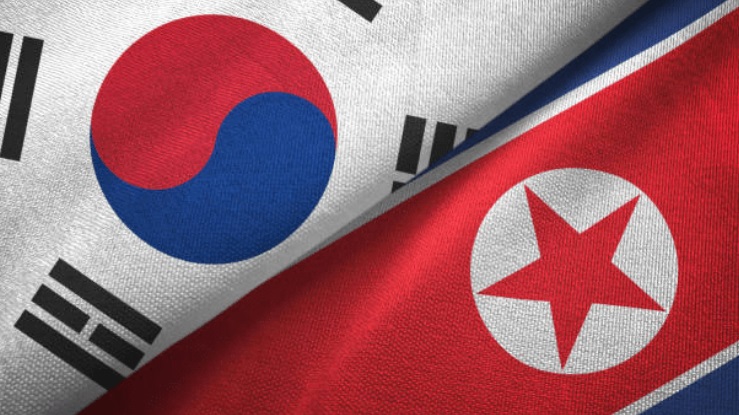
North Korea and South Korea are essentially one country. The North and South Koreans are one people. They share the same culture and a similar language. Both South Korea, as well as its Northern neighbour have realised that the sky is the limit if both the countries give up on their hostilities and carve a future for themselves together. This sentiment seems to have gripped Pyongyang, which is why the Kim Jong Un regime made an unusual and unexpected move on Friday.

North Korean state media on Friday reported the results of this week’s presidential election in South Korea. State-run Korea Central News Agency (KCNA) reported the following on Friday: “Yoon Suk Yeol, a candidate of the conservative opposition ‘People Power Party’, won by a narrow margin in the 20th ‘presidential election’ held in South Korea on March 9.”

Also Read

One Man, 14 Break-Ins: Anthropic’s Report on How AI Became a Weapon for Hire

The 1,000-Mile Kill Shot: America’s New Missile Plan Puts China in Its Sights

North Korea Readies More Soldiers for Russia, but Seoul Says Nothing Has Moved Yet

According to Radio Free Asia, a Korean version similarly emphasized the name of the party and the word “president.” The brief report did not mention Yoon’s 0.8 percent margin of victory or his opponent, Lee Jae-myung of the ruling Democratic Party.

According to sources from within North Korea quoted by RFA, “Authorities are usually reluctant to publicize information about South Korea’s democratic, free election system. Usually, when a conservative party candidate is elected, the name of the winner is not mentioned, or it is reported late. That is why today’s Rodong Sinmun report…is regarded as unusual.”

An Olive Branch by the North

This seemingly insignificant move can take relations between South and North Korea to a whole new level. North Korea would not have reported news of Yoon Suk Yeol becoming President of South Korea, had Pyongyang not been happy about the rise of Conservatism in Seoul.

You see, South Korean conservatives are focused on two areas – Korean revivalism and economic growth. Both, incidentally, are impossible to achieve unless North and South Korea resolve their disputes.

South Korean conservatives are very protective of their culture. They want to save Korean culture in the North as well, which stands at a risk of being exterminated by Kim’s Communist regime. Furthermore, conservatives want to focus on making South Korea an economic powerhouse to be reckoned with.

Read more: Beware China; South Korea is going nuclear

However, South Korea faces an intense human resource and labour crunch, despite it having significant capital. South Korea is an ageing society, which needs to allocate a big chunk of its resources for taking care of the older generation. With dropping fertility rates, the possibility of it gaining a labour force to sustain its economy is zero. The number of expected infants per South Korean woman fell to 0.84 in 2020, dropping further from the country’s previous record low of 0.92 in 2019.

While the North Korean population has been oblivious of any real development, it has created a large pool of low costs and an untapped labour force. South Korea, therefore, is looking to tap into the labour resource of its Northern partner.

It seems the unification of North and South Korea is not a mere dream any longer. Both the countries seem to want a merger. While North Korea can provide the workforce, South Korea can help develop the North. Together, these two countries can strengthen the Korean identity, while protecting the region’s unique culture.

The Chinese Communist Party, meanwhile, will be the biggest loser of such a merger, as it will lose North Korea as a client state.

 

Tags: ChinaElectionNorth KoreaSeoulSouth Korea
ShareTweetSend
Sanbeer Singh Ranhotra

Sanbeer Singh Ranhotra

।। Political Enthusiast ।।Compulsively Opinionated ।। Aspiring Journalist ।। ਮਨ ਨੀਵਾਂ ਮੱਤ ਉੱਚੀ ।।

Also Read

A US dollar bill breaking apart beside BRICS flags, a glowing globe, cargo ship and stacks of currencies, symbolising de-dollarisation and the shift toward a multipolar financial system.

BRICS De-Dollarisation: Is the World Leaving the Dollar?

September 13, 2026
BRICS emblem above an empty international summit table, with a global trade port, UN-style building, currency, justice scales and critical minerals symbolising geopolitics and multilateral cooperation

BRICS Declaration Backs South Africa’s G20 Seat and Criticises Tariffs, Without Naming any Country

September 13, 2026
“Cinematic depiction of China–Iran–US tensions, showing Xi Jinping and Donald Trump flanking a reconnaissance satellite surveying a military air base, with Iranian ballistic missiles launching in the background.”

Chinese Eyes, Iranian Missiles: Us Traces A Satellite Trail To The Attack iJordan

September 13, 2026
Indian Prime Minister Narendra Modi and Chinese President Xi Jinping shake hands during a formal diplomatic meeting, with the Indian and Chinese flags displayed behind them.

Modi and Xi Met for Under an Hour. Their Governments Told Two Different Stories

September 13, 2026
Kim Jong Un watches missiles launches as U.S., Japanese and South Korean warships patrol the sea, with Trump and Iran's leadership depicted amid a backdrop of military escalation and conflict.

North Korea Fires Missiles Into the Sea as Washington’s War on Iran Grinds On

September 13, 2026
Narendra Modi sits between Vladimir Putin and Xi Jinping at a BRICS summit table, with Iranian President Masoud Pezeshkian beside them and national flags in the background.

One Table, Two Wars: Modi Seats Putin and Xi as Delhi Opens BRICS

September 11, 2026
Youtube Twitter Facebook
TFIGlobalTFIGlobal
Right Arm. Round the World. FAST.
  • About Us
  • Contact Us
  • TFIPOST – English
  • TFIPOST हिन्दी
  • Careers
  • Brand Partnerships
  • Terms of use
  • Privacy Policy

©2026 - TFI MEDIA PRIVATE LIMITED

Welcome Back!

Login to your account below

Forgotten Password?

Retrieve your password

Please enter your username or email address to reset your password.

Log In

Add New Playlist

No Result
View All Result
  • Indo-Pacific
  • Americas
  • Canada
  • Indian Subcontinent
  • West Asia
  • Europe
  • Africa
  • The Caribbean
TFIPOST English
TFIPOST हिन्दी

©2026 - TFI MEDIA PRIVATE LIMITED

This website uses cookies. By continuing to use this website you are giving consent to cookies being used. View our Privacy and Cookie Policy.