TFIGlobal
TFIGlobal
TFIPOST English
TFIPOST हिन्दी
No Result
View All Result
  • Indo-Pacific
  • Americas
  • Canada
  • Indian Subcontinent
  • West Asia
  • Europe
  • Africa
  • The Caribbean
TFIGlobal
  • Indo-Pacific
  • Americas
  • Canada
  • Indian Subcontinent
  • West Asia
  • Europe
  • Africa
  • The Caribbean
No Result
View All Result
TFIGlobal
TFIGlobal
No Result
View All Result
  • Indo-Pacific
  • Americas
  • Canada
  • Indian Subcontinent
  • West Asia
  • Europe
  • Africa
  • The Caribbean

Thailand scraps its submarine deal with China because of faulty Chinese engines

Kanika Batra Arora by Kanika Batra Arora
April 13, 2022
in China, East Asia, Geopolitics
Thailand scraps its submarine deal with China because of faulty Chinese engines
Share on FacebookShare on X

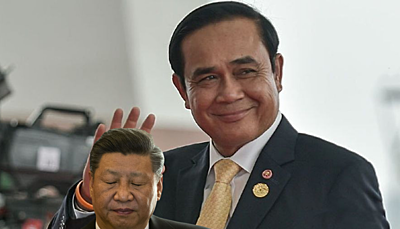
It seems no country can rely on Chinese defense equipment. The shared experiences of many countries give the opinion that these are extremely substandard quality equipment. Thailand recently canceled a submarine deal with China on the same grounds. The arrangement stipulated that the submarine’s engine must be manufactured in Germany. However, China was unable to import one since Germany’s rules prohibited it from supplying the engine to China.

In 2017, the Royal Thai Navy and China Shipbuilding & Offshore International Co., or CSOC, sealed a $402 million deal for the Yuan-class S26T submarine. As per the deal, the Submarine is to be fitted with three MTU396 diesel engines to be procured from Germany’s Motor and Turbine Union Company. However, according to a policy enacted by the European Union in 1989 in response to China’s Tiananmen Square crackdown, the EU is not permitted to export military-related technology to China. 

Also Read

“Crown jewels” for Riyadh? US clears $24.3bn F-35 sale despite China spying fears

One Man, 14 Break-Ins: Anthropic’s Report on How AI Became a Weapon for Hire

Turkey, Saudi Arabia and Pakistan Open First Defence Pact Talks as Saudi Refineries Burn

However, there is a loophole in the law: dual-use equipment that can be used for both military and civilian purposes is not prohibited under the EU embargo. According to numerous accounts, China takes advantage of this loophole by importing military-grade equipment under the pretense of civilian use.  

When word of the Thailand-China submarine deal broke, Germany realized that the exported engine would be utilized for military gear. As a result, China is currently having difficulty obtaining the submarine’s engine. Philipp Doert, Germany’s defense attaché to Thailand, confirmed his government’s decision to refuse China the engines in an open letter to The Bangkok Post in February.

Read more: Thailand’s tough ‘electric’ shock spoils the Xi Jinping’s Mekong dream

He wrote, “The export was refused because of its use for a Chinese military/defense industry item” “China did not ask/coordinate with Germany before signing the Thai-China contract, offering German MTU engines as part of their product.”

Wise Decision

In the midst of this, the Thai government canceled the contract because it wanted the submarine to be equipped with a German-made engine. The amusing element is that China is ready to provide Thailand with an alternative to the German engine. China is requesting that Thailand adopt Chinese engines or accept a secondhand submarine, similar to what China did with Myanmar last year.

However, Thailand has thus far declined the offer. A Thai navy spokesperson told Nikkei Asia, “China has not directly informed us of an alternative,” “We demand the delivery of a submarine equipped with a German engine as contracted.”

When China has a history of selling poor technology to its so-called defense partners, such aversion to Chinese engines is understandable. Though China has surged into fifth place as an exporter of weaponry, the quality of the arms delivered is low and inadequate. 

For instance, The Pakistan Army has purchased nine LY-80 LOMADS systems from China. The Pakistan Army had signed two different contracts for the AD System and IBIS-150 radar. In 2019, the delivery of all nine systems was finished. Due to defects in the direction vehicle and the firing vehicle, three out of nine systems are not operational. 

Other countries, such as Myanmar and Nepal, have also become dumping grounds for China’s old and sub-standard technology. In light of this, Thailand’s decision to cancel the submarine contract with China was a wise one.

Tags: ChinaGermanyPakistanSubmarine DealThailand
ShareTweetSend
Kanika Batra Arora

Kanika Batra Arora

Associate Editor at TFIGlobal. An artist by god's grace, geopolitics enthusiast, sapiophile.

Also Read

Donald Trump and Xi Jinping shake hands amid US-China flags, shipping containers, cargo ships, semiconductor chips and rare-earth minerals, symbolising trade tensions and fragile economic cooperation between the two countries.

Trump-Xi Trade Truce Extended to January, but 100% Tariff Threat Still Looms

September 24, 2026
US, Danish and Greenlandic leaders sign a security deal against a backdrop of Greenland's Arctic landscape and expanded US military infrastructure.

From Threats Of Seizure To A Signature: US Locks In A Permanent Grip On Greenland’s Defence With a New Deal

September 23, 2026
Xi Jinping flanked by two Chinese military generals in a dark, tense political-military scene, with the Chinese flag, PLA troops, a missile launcher and shadowy US-China imagery in the background, symbolising a leadership purge and allegations of nuclear espionage.

Xi Purges His Last Two Top Generals As Nuclear Leak Claims Return

September 22, 2026
“Kim Jong Un watches North Korean ballistic missiles launch as Donald Trump and Xi Jinping face off against a backdrop of the US Capitol, highlighting tensions over North Korea’s missile tests and US-China diplomacy.”

Two Missiles, Three Hours: North Korea Fires a Warning as Xi Flies to Washington

September 22, 2026
US, Danish and Greenland leaders shake hands during a security agreement signing, with Arctic glaciers, military facilities, naval vessels and national flags in the background.

From Threats of Force to a Handshake: Trump Claims ‘Permanent’ Control Over Greenland’s Security

September 19, 2026
Donald Trump signs a Russia sanctions law as oil tankers and refineries symbolise growing US pressure on Russian energy buyers India and China, with Putin, Modi and Xi depicted amid a tense global energy standoff.

Trump signs Russia sanctions law, hangs a 100 per cent tariff sword over India and China

September 19, 2026
Youtube Twitter Facebook
TFIGlobalTFIGlobal
Right Arm. Round the World. FAST.
  • About Us
  • Contact Us
  • TFIPOST – English
  • TFIPOST हिन्दी
  • Careers
  • Brand Partnerships
  • Terms of use
  • Privacy Policy

©2026 - TFI MEDIA PRIVATE LIMITED

Welcome Back!

Login to your account below

Forgotten Password?

Retrieve your password

Please enter your username or email address to reset your password.

Log In

Add New Playlist

No Result
View All Result
  • Indo-Pacific
  • Americas
  • Canada
  • Indian Subcontinent
  • West Asia
  • Europe
  • Africa
  • The Caribbean
TFIPOST English
TFIPOST हिन्दी

©2026 - TFI MEDIA PRIVATE LIMITED

This website uses cookies. By continuing to use this website you are giving consent to cookies being used. View our Privacy and Cookie Policy.