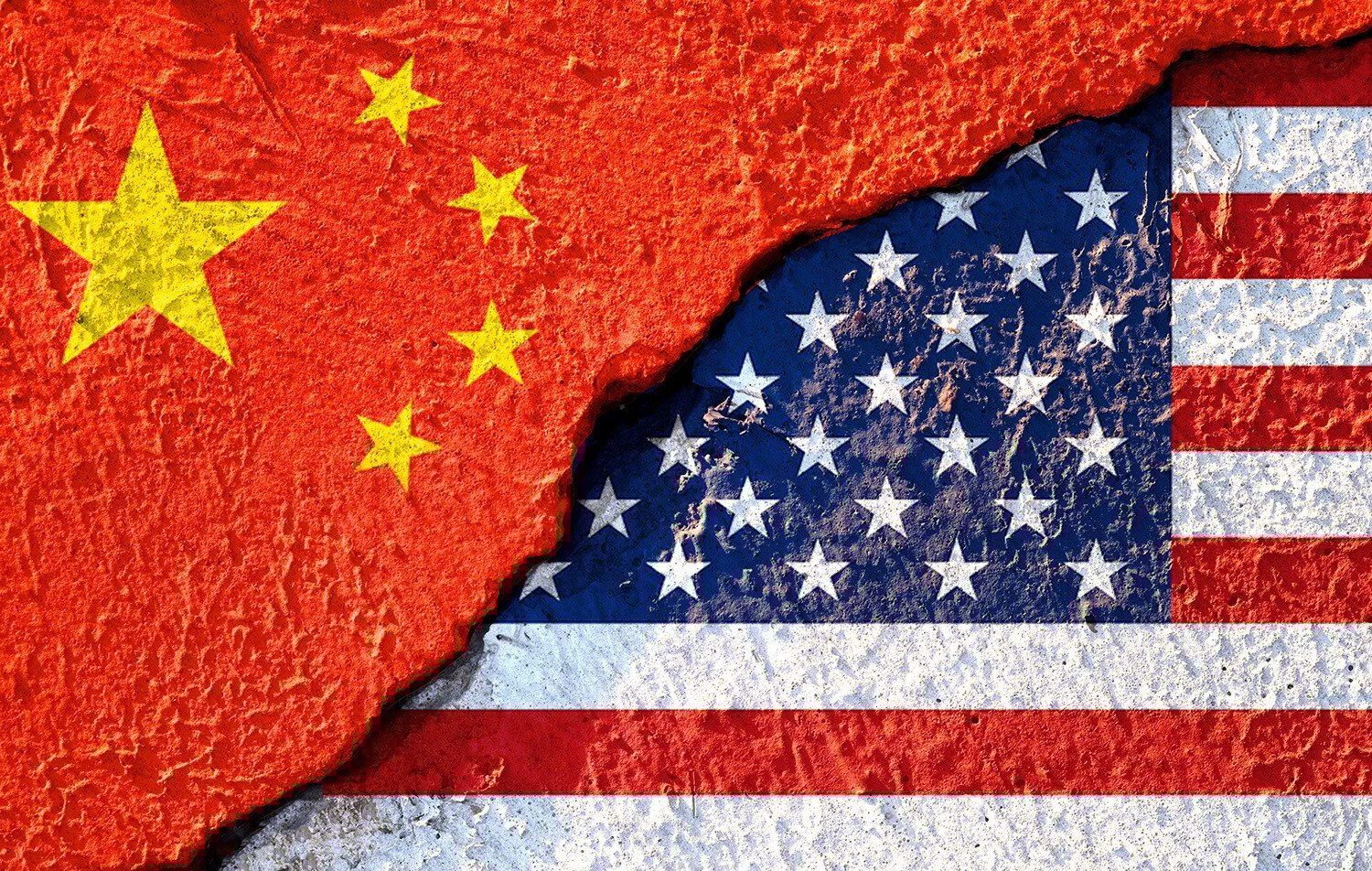
In the digital age, the rivalry between the United States and China has intensified, with data becoming a pivotal battleground in their global strategic competition. The United States, with tech giants such as Google, Microsoft, and Apple, maintains a significant edge in market dominance, particularly in software, cloud computing, and internet platforms. In contrast, China’s technological landscape is rapidly evolving, with companies like Huawei, Alibaba, and Tencent gaining ground and challenging U.S. dominance in various sectors.
The United States. invests heavily in research and development, leading to significant advancements in artificial intelligence and quantum computing. Meanwhile, China is committed to achieving technological self-sufficiency and global leadership, pouring substantial resources into domestic tech development.
The global influence of both nations is marked by their efforts to extend their digital infrastructures and technological standards. The United States leverages its existing infrastructure and international partnerships to promote a vision of a “free and open” internet. China, on the other hand, is building its digital infrastructure and expanding its technological footprint, notably through initiatives like the Belt and Road Initiative.
Looking forward, the data duel between the United States and China is set to further intensify. In fact it can lead to the US pushing China into digital darkness.
The United States exerts a significant influence over the global internet infrastructure, notably through its control and ownership of key components such as undersea cable landing stations. Marseille, France, serves as a pivotal hub in this network, with its strategic location enhancing connectivity between Europe, Africa, the Middle East, and Asia. As of February 2024, Marseille is home to at least 16 operational or confirmed undersea cable landing stations, highlighting its importance in the international data transmission landscape.
The seabed conditions around Marseille are favorable for undersea cable installation and maintenance, contributing to the city’s attractiveness as a landing point. In 2019, the Port of Marseille-Fos initiated a “Plug & Play” infrastructure project aimed at streamlining the landing process for multiple cables. This project, designed to accommodate up to six cables in its first phase with room for future expansion, offers a dedicated, efficient, and secure environment for international connectivity projects. The benefits include a simplified permitting process and a reliable interface for cable operators.
The presence of major U.S. companies such as Verizon, Interxion, Google, Microsoft, and AT&T, alongside European operators like Orange, underscores the international and particularly American influence in Marseille’s undersea cable infrastructure. Notable cables landing in Marseille include AAE-1, SMW5, PEACE, 2Africa (the first to utilize the new Plug & Play infrastructure), IMEWE (landed at Orange’s Bonneveine station), and SMW4 (landed at Verizon’s Saint-Mauront station).
The U.S.’s involvement in these critical components of the global internet underscores its capability to influence international data transmission and connectivity.
In contrast, China’s expansion in the undersea cable industry is marked by Huawei Marine’s prominent role, ranking among the top 5 global suppliers with a market share of 15-20% in 2023. The company has completed over 100 submarine cable projects, including PEACE and 2Africa, benefiting from competitive pricing, strong government support, and a focus on innovation. Beyond Huawei Marine, companies like Hengtong Marine and Fujitsu contribute to China’s increasing influence, supported by government initiatives and strategically focused on expanding connectivity with Africa and Southeast Asia. This aligns with China’s Belt and Road Initiative.
Both the United States and China are heavily investing in and controlling the undersea cable infrastructure as part of their strategic competition.
The governance of global undersea cable infrastructure faces significant challenges due to the absence of a dedicated global authority. This oversight framework is crucial for addressing various threats and ensuring the security and resilience of these critical assets. The United Nations Convention on the Law of the Sea (UNCLOS) serves as the primary international treaty governing the oceans, including aspects related to undersea cables. However, UNCLOS does not comprehensively address all contemporary challenges, particularly cyberattacks and intentional damage during peacetime, highlighting a gap in global governance.
Enforcement of existing treaties and regulations concerning undersea cables is another area of concern. The mechanisms currently in place lack the strength and reach needed to effectively manage violations, leaving cable security in a precarious position. This is exacerbated by the rapid pace of technological advancements, such as the development of underwater drones and autonomous underwater vehicles, which introduce new dimensions to cable security threats. These technologies can potentially be used for unauthorized surveillance, tampering, or damage to cable infrastructure, presenting challenges that current international laws are not fully equipped to handle.
Moreover, while individual states have the authority to regulate activities within their territorial waters, including those related to undersea cables, the lack of harmonization among these regulations across different jurisdictions creates uncertainty. This regulatory fragmentation can lead to potential friction among states and complicate the efforts of cable operators to maintain and protect their infrastructure. The absence of a globally coordinated approach to undersea cable governance thus leaves critical global communication infrastructure vulnerable to a range of emerging threats, underscoring the need for a more robust and unified regulatory framework.
The geopolitical rivalry between the United States and China has escalated, with submarine cables as a pivotal battleground for controlling global information and commerce flows. The United States has raised concerns about Chinese companies, notably Huawei Marine, contributing to the submarine cable infrastructure, citing espionage and surveillance risks. In response, the U.S. has taken measures to restrict Chinese firms from participating in new cable projects.
Simultaneously, U.S. technology giants such as Google, Meta, and Microsoft have ramped up investments in undersea cables, effectively diminishing the market share for Chinese companies. These investments not only secure American tech firms’ control over substantial portions of the global internet infrastructure but also reinforce the United States’ dominance in the digital realm.
The U.S. government has leveraged regulatory and legal frameworks to deter Chinese involvement in the submarine cable sector. Through initiatives like the Clean Network program, the administration seeks to safeguard critical infrastructure from Chinese technology, reinforcing these efforts with potential sanctions against Chinese enterprises.
Strategic routing of new undersea cables to circumvent areas of Chinese influence exemplifies another tactic in reducing China’s engagement in the global data network. Projects such as the Bifrost and Echo cables, deliberately planned to bypass contentious regions near China, manifest strategic security considerations influencing cable deployment decisions.
Furthermore, diplomatic maneuvers have solidified the U.S. stance against Chinese expansion in the undersea cable industry. An illustrative case is the World Bank-funded cable project intended to connect Pacific islands, which initially saw a Chinese company as a frontrunner. Following the project’s cancellation, a consortium involving the U.S., Japan, and Australia emerged to fund an alternative route, effectively sidelining Chinese participation and illustrating concerted efforts to curtail China’s influence in strategic communication links.
These concerted actions by the United States across regulatory, investment, strategic planning, and diplomatic channels signify a comprehensive approach to limit China’s access to and influence over global internet infrastructure. This strategic containment is reflective of the broader geopolitical contest between the two powers, underscoring the critical role of submarine cables in global connectivity and security dynamics.