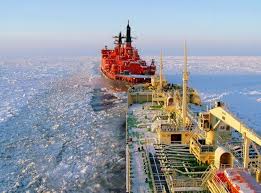
The Middle East is a hot mess right now, especially with Yemen’s Houthi militia causing chaos for Western shipping companies. Attacks on ships linked to Israel, America, and Britain have made the seas a bit too risky for comfort. According to some in the Western media, Russia’s Arctic Northern Sea Route could be the golden ticket for seamless transit as it’s shorter and safer than the alternatives. Despite the whole political tussle between the West and Russia, money talks. And right now, the money says this route could be a game-changer for trade between Europe and Asia.
US can dream about it, as at present, any notion of a credible challenge to Russia’s control over the Northern Sea Route can be disregarded.
During the 20th century, the USSR recognized the potential of the Northern Sea Route and heavily invested in its development. This involved the construction of a robust icebreaker fleet to navigate through the icy waters and the establishment of ports, navigation aids, and coastal settlements to support transportation and resource extraction. In the 21st century, the accelerating effects of climate change have led to increased melting of Arctic ice, making the Northern Sea Route a more viable shipping route. This renewed Russian interest is driven by the route’s shorter distance between Europe and Asia compared to traditional Suez Canal routes, its utility for transporting natural resources like oil, gas, and minerals extracted from the Arctic region, and its potential to attract international trade, thereby bolstering Russia’s position as a key energy supplier.
US media finds a silver lining in Russia’s Arctic Northern Sea Route amid the chaos in the Middle East, as Yemen’s Houthi militia keep targeting Israeli-affiliated vessels, causing a major slowdown in maritime traffic. With the Houthis linking their cessation demands to the Israeli-Gaza conflict and Netanyahu refusing a ceasefire until Hamas is obliterated, the US is scratching its head for solutions. The ongoing attacks are putting a financial squeeze on Israeli and Western shipping companies, facing skyrocketing insurance and operational expenses.
Foreign Policy magazine muses over whether Russia’s Arctic Northern Sea Route could offer relief to Western shippers, touting its shorter, faster, and supposedly safer path, for western shipments, despite Russian control. Amidst the turmoil, the need for alternative shipping routes becomes increasingly apparent, prompting a closer look at Russia’s Arctic Northern Sea Route. This sudden interest comes as Western shippers struggle to navigate the hazardous waters of the Middle East, seeking safer and more reliable alternatives.
Arctic expert Alexander Vorotnikov elucidates the multitude of factors contributing to the allure of the Northern Sea Route for Western nations, underscoring its considerable reduction in distance, which could feasibly slash travel times by half, contingent upon the destination. The allure of the route is further accentuated by the confluence of economic and political considerations propelling Western interest, against the backdrop of escalating tensions with Russia. Vorotnikov perceives the Northern Sea Route as an integral component of Russia’s strategic pivot eastward, heralding an avenue for expanded trade with burgeoning markets like China, India, and other regional allies. Nonetheless, Western countries face accusations of double standards, critiqued for engaging in commerce with Russia while concurrently imposing punitive sanctions for Ukraine war.
Russia perceives the Northern Sea Route not merely as a conduit for transit fees but as a pivotal instrument for advancing its eastward policy, fostering trade between Europe, Asia, and burgeoning economies. Despite mounting speculation regarding Western intentions to contest Russian dominion over the route, Vorotnikov rebuffs such conjecture as unfounded, accentuating the prevailing economic imperatives and the route’s strategic significance to Russia. He posits that the US will be ineffectual in altering the status quo, underlining Russia’s firm grip on the Arctic passage.
The sudden fascination of Western media with the Northern Sea Route stands in stark juxtaposition to their involvement in a proxy confrontation with Russia. Vorotnikov emphasizes Russia’s resolve to leverage the route for economic prosperity and strategic advantage. He censures Western discourse concerning Russian assets, highlighting the discord between political posturing and financial motivations.
As Western nations exhibit a gradual relaxation in their attitude towards Russian assets, juxtaposed with their vociferous condemnation of Russian policies, Vorotnikov brushes aside the notion of any credible challenge to Russian dominion over the Northern Sea Route. He holds firm to the conviction that the US, despite its endeavors, will inevitably falter in attempting to seize control of the Arctic passage, thereby spotlighting the inherent double standards embedded within their approach.