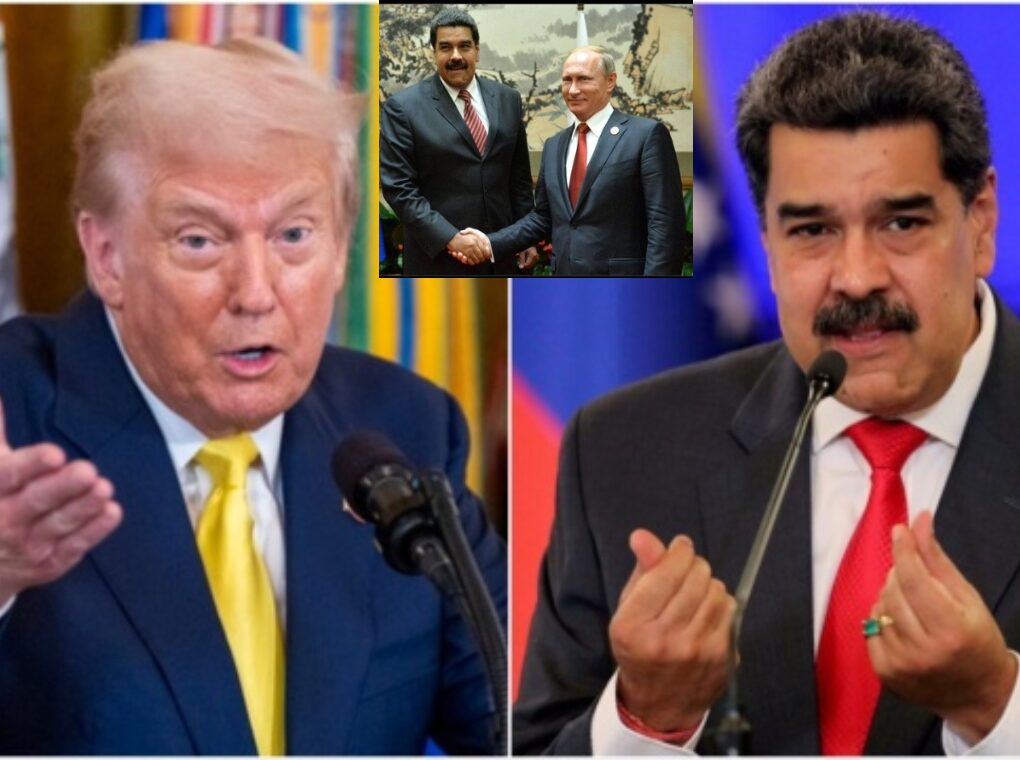
The Caribbean is once again at the heart of a geopolitical storm. The United States and Venezuela, long bitter adversaries, now stand at the brink of a confrontation whose ripples could destabilize the entire hemisphere. With U.S. President Donald Trump ratcheting up calls for the ouster of Venezuelan President Nicolás Maduro and Russian support for Caracas deepening, the clash of wills is taking on Cold War overtones.
Washington’s Warships and the Push for Regime Change
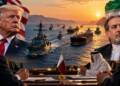
According to a recent New York Times report, top Trump administration officials, including Secretary of State Marco Rubio, are actively working with Venezuelan opposition figures to accelerate regime change. The U.S. Navy has escalated its presence in the southern Caribbean, deploying eight warships—including guided-missile destroyers and a nuclear-powered submarine—under the official banner of counter-narcotics operations.
The Pentagon insists these operations target the Venezuelan-linked Tren de Aragua gang, accused of controlling vast drug smuggling routes. Yet, analysts warn that the scale of the buildup suggests something more: preparation for direct intervention. Comparisons to the 1989 U.S. invasion of Panama—when Washington toppled strongman Manuel Noriega—are increasingly being drawn in policy circles.
That suspicion grew after U.S. strikes on suspected drug boats left at least 17 dead, actions the United Nations has already criticized as “extrajudicial killings.” The White House, however, is unflinching. “The Maduro regime is not legitimate, and we’re using every element of American power to stop the flood of drugs poisoning our streets,” said Press Secretary Karoline Leavitt. Trump himself dismissed Maduro as “a cartel kingpin hiding behind socialist slogans.”
Maduro’s Countermove: Emergency Powers and Militia Mobilization
Maduro, widely seen as clinging to power through a disputed 2024 election, wasted no time in countering U.S. pressure. In a fiery speech on Monday, he accused Washington of “imperialist aggression” and announced preparations for a national state of emergency.
“We are ready for the comprehensive defense of the nation, the active resistance of the people, and the permanent offensive of an entire country,” Maduro declared, flanked by generals and loyalist militias. Hours later, Vice President Delcy Rodríguez confirmed that Maduro had signed a decree granting him sweeping emergency powers—control over defense, borders, and even Venezuela’s vital oil industry.
His loyalist Bolivarian Militia, now boasting over 4 million volunteers, has begun urban warfare drills, raising the specter of a prolonged asymmetric conflict if U.S. forces intervene.
The Russian Factor: An Unbreakable Brotherhood
What elevates this crisis beyond a bilateral showdown is Venezuela’s deepening alignment with Russia. Just days before the emergency decree, Venezuela’s National Assembly ratified a sweeping 10-year strategic partnership with Moscow.
The agreement—negotiated in May and now awaiting Maduro’s final approval—covers energy, defense, and even space cooperation. Russia has pledged investments to revive PDVSA, Venezuela’s crippled oil giant, and will establish a GLONASS satellite station on Venezuelan soil, signaling strategic military implications.
“This is not just energy—it’s sovereignty,” proclaimed Assembly Speaker Jorge Rodríguez. “With Russia, Venezuela ensures independence from imperialist coercion.”
Russian Foreign Minister Sergei Lavrov was even more blunt, condemning U.S. naval deployments as “imperialist blackmail” and vowing that Moscow “will stand shoulder-to-shoulder with its Latin American ally.” For many, this alignment threatens to transform the Caribbean into a Cold War-style proxy battleground.
Regional Reactions: Allies Alarmed, Critics Outspoken
The escalation is rattling Venezuela’s neighbors. Colombia’s President Gustavo Petro, initially sympathetic to Venezuela, has sharply criticized U.S. strikes, calling for a UN-led investigation into Trump’s actions. Meanwhile, Brazil and other Latin American powers are urging de-escalation, fearing a migration catastrophe if war erupts.
At the United Nations, human rights experts have warned that the U.S. strikes may constitute violations of international law. European capitals, wary of Russian influence so close to U.S. shores, have called for restraint but stopped short of backing U.S. military moves.
A Nation Under Siege
For ordinary Venezuelans, the crisis compounds daily struggles. Years of hyperinflation, rolling blackouts, and food shortages have left citizens exhausted. Yet, amid sanctions and political deadlock, some see Russia as a lifeline. Others fear a dangerous swap of dependency: “We’ve survived Chávez’s dreams and Maduro’s nightmares,” said a Caracas shopkeeper. “But Russia? That’s trading one bear for another.”
Meanwhile, opposition leaders in exile are quietly coordinating with Washington on possible post-Maduro governance, fueling speculation that the U.S. sees regime change as not just possible, but imminent.
A Knife’s Edge in the Caribbean
With U.S. F-35 stealth fighters buzzing skies over Puerto Rico and Venezuelan F-16s shadowing American destroyers, the Caribbean is a theater of brinkmanship. Every maneuver carries the risk of miscalculation. Every provocation could ignite a regional conflagration.
The world has seen echoes of this before—Cuba in 1962, Panama in 1989. Today, the question looms: Is this crisis a bluff in a high-stakes geopolitical poker game, or the spark of a broader war that could draw in global powers?
As Maduro hovers over the emergency decree and Russian advisors prepare to expand their footprint, the Americas stand on the edge of a dangerous unknown. For now, the waves of the Caribbean hold their secrets. Whether they will carry the sound of diplomacy or the drumbeat of war is a question no one dares answer with certainty.