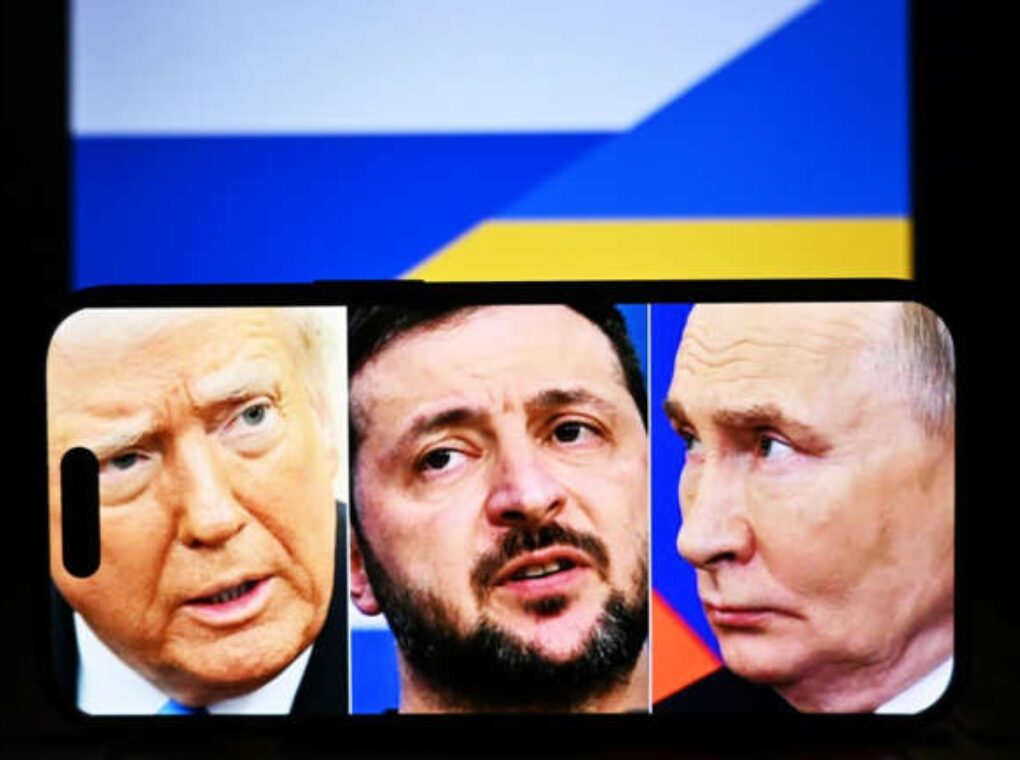
In a headline that has stirred both intrigue and skepticism, Ukrainian President Volodymyr Zelenskyy was quoted as saying, “If Trump gives us Tomahawks, we’ll lobby for Nobel Peace Prize.” Whether intended as a sharp diplomatic message or political irony, the remark captures the complexity of modern geopolitics — where military aid and the rhetoric of peace are often intertwined.
The statement, hypothetical as it may be, underscores two key dynamics shaping global politics today: Ukraine’s continued dependence on U.S. military support and the increasingly transactional tone of international diplomacy in the Trump era.
The Context: A Changing U.S. Posture
During Donald Trump’s presidency (2017–2021), U.S. policy toward Ukraine was a mix of unpredictability and strategic caution. Trump approved lethal aid to Kyiv, including Javelin anti-tank missiles, but also expressed skepticism about NATO’s role and openly questioned the value of America’s support for Ukraine. His “America First” foreign policy meant that Washington’s commitments were often framed through a cost-benefit lens — a sharp departure from the traditional bipartisan consensus on transatlantic security.
Now, with Trump signaling a potential return to power, Zelenskyy’s supposed remark can be read as both anticipation and apprehension. The Ukrainian leader knows that the survival of his nation depends largely on U.S. weapons, logistics, and financial aid. By referencing “Tomahawks” — long-range cruise missiles symbolic of American military might — Zelenskyy appears to be acknowledging that Ukraine’s defense and diplomacy are deeply intertwined with U.S. decisions.
Irony and Realpolitik
There is an unmistakable irony in the idea of linking the supply of Tomahawk missiles — instruments of war — with the Nobel Peace Prize, a symbol of global harmony. But this irony also reveals a deeper truth about the post-2022 international order: peace is increasingly seen not as the absence of war, but as the management of it.
In this sense, Zelenskyy’s statement can be read as an attempt to redefine “peace” through deterrence. The logic is straightforward — if Ukraine is sufficiently armed, it can prevent further Russian aggression, forcing Moscow to negotiate. Peace, therefore, would emerge not from compromise, but from strength. This doctrine of “armed peace” mirrors Cold War logic, where deterrence through superior firepower maintained a fragile global equilibrium.
A Message to Washington
Beyond rhetoric, the statement sends a subtle message to Washington’s policymakers. Ukraine’s leadership is acutely aware that U.S. domestic politics could reshape its war effort. A second Trump administration might reconsider aid levels or press for a “deal” with Russia that prioritizes American interests over Ukrainian sovereignty. By invoking a symbolic reward like the Nobel Peace Prize, Zelenskyy is appealing to Trump’s well-known desire for global recognition and legacy. It’s a strategic move — offering flattery while emphasizing that continued U.S. support could deliver “peace,” at least in geopolitical terms.
The Broader Implications
At a deeper level, the episode illustrates how the language of peace has become politicized. Nations no longer speak of peace as a moral idealism, but as a strategic necessity. In the case of Ukraine, survival requires not pacifism, but persistence — and that persistence is powered by Western arms. The paradox is striking: the very tools of war are being framed as the instruments of peace.
Meanwhile, critics argue that such framing risks normalizing perpetual militarization. If peace becomes synonymous with weapons transfers, the world drifts further from diplomacy and closer to a permanent state of armed competition. Supporters, however, counter that deterrence remains the only viable path in an era where authoritarian states — from Moscow to Beijing — test the resolve of democratic alliances.
Zelenskyy’s remark, whether literal or symbolic, encapsulates the contradictions of 21st-century geopolitics. In a world where moral clarity often yields to strategic necessity, nations must navigate between ideals and realities. For Ukraine, that means seeking peace through strength. For the United States, it means deciding whether to remain the arsenal of democracy — or retreat into isolationist pragmatism.
The “Tomahawks for Peace” paradox may sound absurd, but it reflects a harsh truth: in today’s global order, the road to peace still runs through the corridors of power, diplomacy, and, yes — weaponry.