
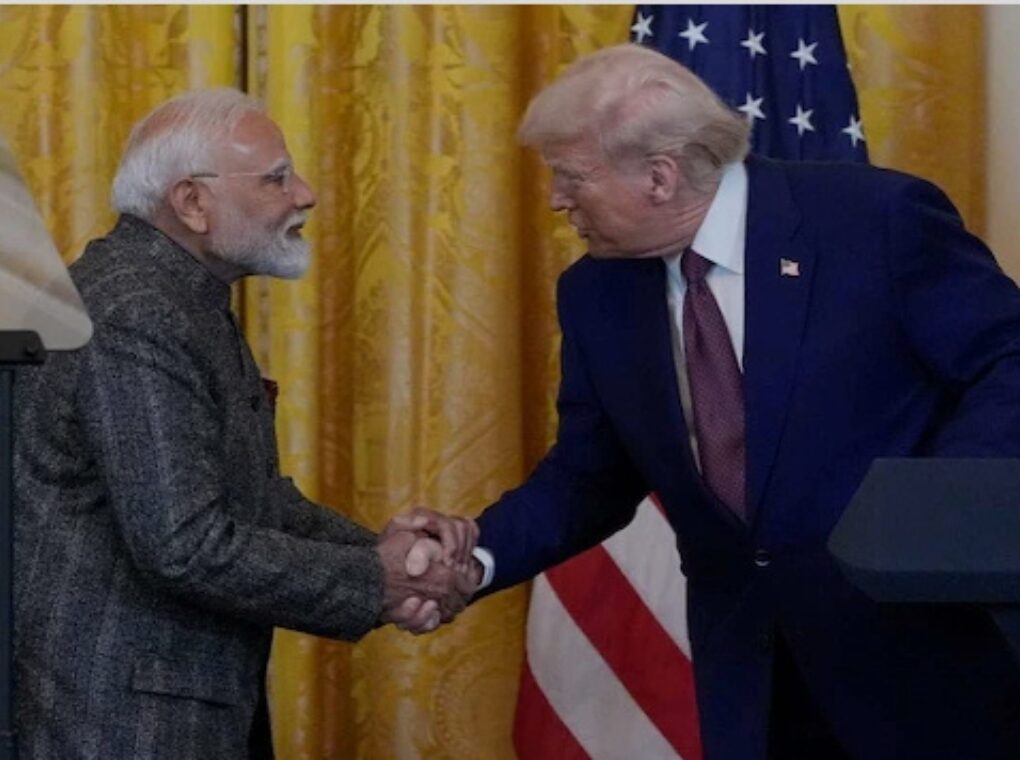
In a significant development for global trade and geopolitics, U.S. President Donald Trump has announced a new trade agreement between the United States and India following a phone conversation with Prime Minister Narendra Modi. The deal includes an immediate reduction in U.S. reciprocal tariffs on Indian goods from 25 percent to 18 percent, signaling a reset in economic ties after a period of trade friction between the two countries.
The announcement marks a turning point in relations between the world’s two largest democracies, whose economic partnership had been strained in recent years by tariff disputes and disagreements over energy purchases. The new framework aims to expand bilateral trade, remove barriers, and deepen strategic cooperation across key sectors.
Tariff Relief for Indian Exports
Under the agreement, the United States will lower tariffs on Indian imports, offering relief to Indian exporters who have faced steep duties over the past year. Industries such as pharmaceuticals, textiles, automotive components, engineering goods, and jewelry are expected to benefit from improved access to the American market.
Lower tariffs could enhance the competitiveness of Indian products in the U.S., potentially boosting export volumes and supporting manufacturing jobs back home. For India, which has been working to strengthen its position as a global manufacturing and export hub, the tariff reduction provides a timely economic lift.
In return, India is expected to move toward reducing its own tariffs and non-tariff barriers on American goods, with discussions reportedly focused on expanding market access for U.S. agricultural products, technology, energy equipment, and industrial goods.
Massive Purchase Commitment from the U.S.
One of the most striking elements of the deal is India’s reported commitment to purchase more than $500 billion worth of U.S. goods over time. These purchases are expected to span energy supplies, advanced technology, agricultural commodities, and other industrial products.
Such a large-scale import plan would significantly expand U.S. exports to India and help narrow the trade imbalance that has long concerned Washington. It also aligns with India’s need for reliable energy sources, high-end technology, and raw materials to sustain its fast-growing economy.
Shift Away from Russian Oil
A major geopolitical component of the agreement involves energy trade. President Trump stated that India has agreed to stop buying Russian oil and instead increase purchases from the United States and potentially other alternative suppliers.
India has been one of the largest buyers of discounted Russian crude in recent years, a move driven largely by energy security and cost considerations. However, this stance has drawn criticism from Western nations seeking to economically isolate Moscow. A shift in India’s energy sourcing would represent a substantial strategic adjustment and could have ripple effects across global oil markets.
Increased U.S. energy exports to India could strengthen long-term energy ties between the two nations while reshaping global supply chains. However, energy transitions of this scale typically require logistical adjustments, pricing negotiations, and infrastructure readiness.
Strategic and Political Significance
Beyond trade numbers, the agreement carries considerable diplomatic weight. Both leaders emphasized their strong personal rapport and framed the deal as a reflection of mutual trust and shared global objectives. The move is being presented as part of a broader effort to strengthen strategic alignment between Washington and New Delhi.
Closer economic integration may also enhance cooperation in areas such as defense, critical technologies, and supply chain resilience. As global competition intensifies, the U.S. views India as a key partner in maintaining stability and balance in the Indo-Pacific region.
For India, deeper ties with the United States can bring investment, technology transfer, and greater access to global markets, while still balancing its relationships with other major powers.
Implementation Will Be Key
While the announcement has generated optimism, the success of the agreement will depend on how quickly and effectively the commitments are implemented. Trade deals of this scale often require detailed negotiations, regulatory changes, and phased execution.
Questions also remain about how India will manage the transition away from Russian oil and how domestic industries in both countries will respond to increased competition and new opportunities.
Still, the deal signals a renewed push to elevate India–U.S. economic relations to a new level. If carried through as outlined, it could become one of the most consequential bilateral trade arrangements in recent years — reshaping not only commerce between the two nations, but also broader geopolitical and energy dynamics.