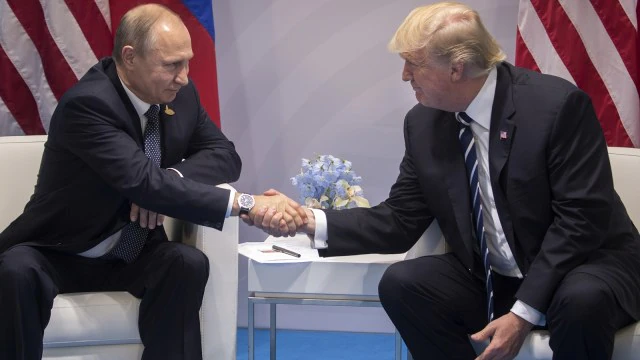
As European leaders gathered for an informal retreat ahead of the Munich Security Conference, an unexpected development shifted the geopolitical conversation. Russian officials reportedly drafted and “leaked” a seven-point memo proposing a re-convergence of interests between Moscow and Washington — a move that, if serious, could reshape global alignments.
The proposal included cooperation on critical raw materials and energy, preferential conditions for US companies to return to the Russian market, and even the possibility of Russia re-engaging with the US dollar settlement system. The timing was striking. As the European Union debated its economic future and internal cohesion, Moscow appeared to signal that it was open to recalibrating relations with the United States.
Whether the initiative was a genuine diplomatic outreach or a calculated geopolitical maneuver remains unclear. But its strategic implications are undeniable.
A Message Sent at a Delicate Moment
The memo surfaced while EU leaders were discussing reforms aimed at strengthening the bloc’s competitiveness. At the center of those talks was Ursula von der Leyen, who promised to present a “One Europe, One Market” roadmap at the next formal summit in March.
Yet behind the unifying language lies a growing reality: the European Union is increasingly operating at multiple speeds.
Both von der Leyen and European Council President António Costa expressed a preference for maintaining unity among all 27 member states. However, they acknowledged that consensus decision-making often slows progress. As a result, the mechanism of “enhanced cooperation” — first introduced under the 1999 Treaty of Amsterdam — is being considered more seriously.
This tool allows at least nine member states to move forward on policy initiatives even if others opt out temporarily. It has been used several times, including to establish new financing mechanisms for Ukraine. Now, it may become central to deeper integration efforts such as harmonized corporate legislation or elements of a Savings and Investment Union.
But these developments underscore a key tension: in seeking unity, Europe may be institutionalizing divergence.
Eurobonds and Fiscal Fault Lines
Another contentious issue resurfacing in Brussels is the question of Eurobonds — jointly issued EU debt instruments designed to finance large-scale investments. Several member states support the idea as a means to boost strategic autonomy and industrial competitiveness.
However, Germany remains firmly opposed. The debate touches on sensitive questions of fiscal sovereignty and financial risk-sharing. Italian Prime Minister Giorgia Meloni has described Eurobonds as “very divisive,” and analysts argue that such instruments may not be well suited for “enhanced cooperation” because their implications extend beyond participating states.
The broader picture is clear: the EU is searching for mechanisms to move faster, but internal divisions persist.
Energy Costs and Competitive Pressure
Europe’s competitiveness concerns extend well beyond governance structures. High energy costs remain a persistent burden on European industry.
Although commodity prices have eased from their peak levels, European producers still face significantly higher energy expenses than counterparts in the United States and China. Carbon prices under the EU Emissions Trading System (ETS) recently climbed to around €90 per metric ton — well above earlier projections made by the European Commission.
Several EU leaders have called for a comprehensive review of the ETS, arguing that volatility and speculative dynamics are undermining affordability.
At the same time, US climate policy appears to be shifting. The repeal of the 2009 EPA “endangerment finding,” which served as the legal foundation for federal greenhouse gas regulation, signals a potential recalibration of American environmental policy. Supporters argue that this could lower compliance costs and boost domestic manufacturing competitiveness.
For Europe, the growing policy divergence raises difficult questions about maintaining ambitious climate goals while preserving industrial strength.
The Dollar Question
Perhaps the most provocative element of Russia’s memo was the suggestion that Moscow could re-engage with dollar-based settlements.
Since the imposition of Western sanctions, Russia has actively pursued de-dollarization strategies, expanding trade in alternative currencies and strengthening financial ties within BRICS frameworks. Why, then, signal openness to returning to the dollar system?
One interpretation is tactical flexibility. By indicating that economic normalization with the United States remains possible, Moscow introduces uncertainty into Western strategic calculations. If American firms were to regain preferential access to Russian markets, European companies could find themselves at a disadvantage.
Even if no concrete negotiations are underway, the mere possibility reshapes perceptions. It positions Russia not as permanently isolated, but as a potential partner under different political circumstances.
A Fragmenting Global Landscape
The broader geopolitical environment adds further complexity. Artificial intelligence disruption is reshaping industries at a rapid pace, unsettling investor sentiment. Markets have shown sensitivity to AI-driven fears of automation across white-collar sectors.
Meanwhile, tensions in Asia continue to simmer. Trade agreements, tariff negotiations, and maritime disputes underscore the volatility of the global system.
In such a fragmented environment, strategic signaling carries amplified weight. Russia’s proposal — whether genuine or performative — was delivered at a moment when Europe is grappling with structural reform, economic pressure, and strategic uncertainty.
Strategic Signaling or Serious Diplomacy?
It remains unclear whether the seven-point proposal was formally presented to US policymakers or primarily intended to provoke debate within Europe. However, the timing suggests deliberate messaging.
By floating the idea of US-Russia re-convergence during an EU summit, Moscow effectively reframed the narrative. Instead of appearing isolated, Russia positioned itself as adaptable. Instead of reinforcing transatlantic unity, the memo subtly highlighted European vulnerabilities.
For the European Union, the episode reinforces the urgency of reform. Whether through enhanced cooperation, fiscal integration, or energy market adjustments, leaders face mounting pressure to act decisively.
The coming formal summit in March may provide clearer signals about whether Europe can translate rhetoric into action.
In geopolitics, perception often shapes reality. By introducing the possibility of renewed US engagement, Moscow has shifted the conversation — and placed Europe at the center of a new strategic dilemma.