
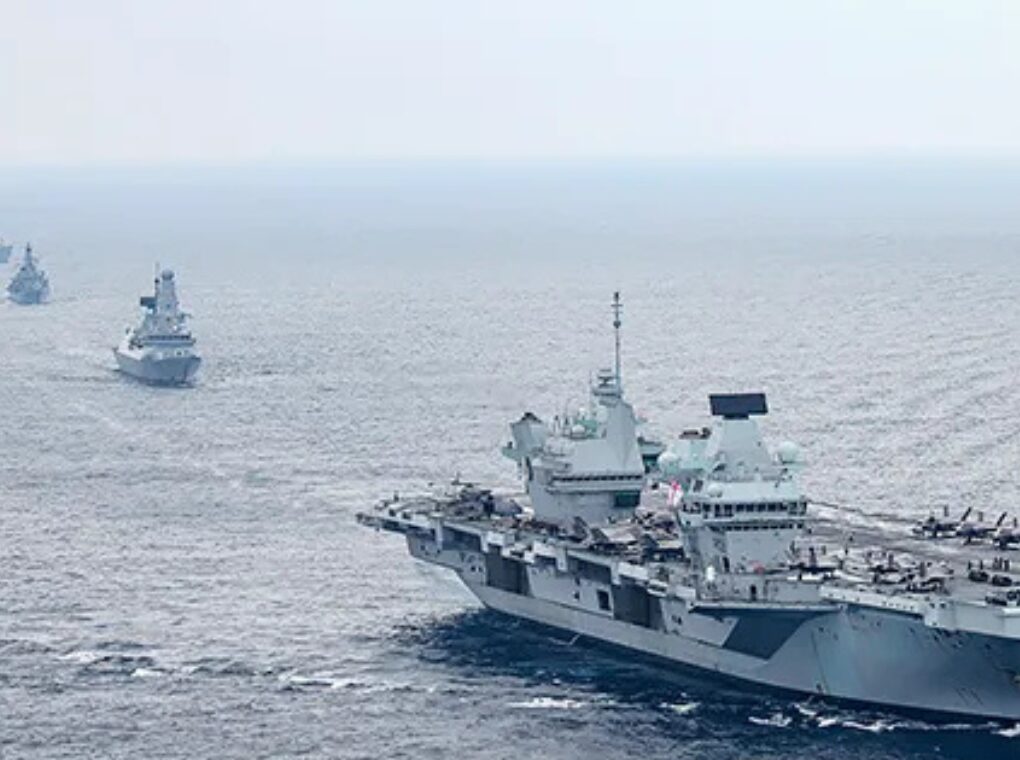
In a significant development for European security, the United Kingdom and nine Northern European nations have agreed to form a new joint naval force aimed at strengthening maritime defense across the North Atlantic, Baltic Sea, and Arctic regions. The initiative, announced by senior British naval officials, is being framed as a response to what Western leaders describe as growing security concerns posed by Russia.
The multinational force will operate under the framework of the Joint Expeditionary Force (JEF), a UK-led defense grouping that includes Denmark, Estonia, Latvia, Lithuania, the Netherlands, Norway, Finland, Iceland, and Sweden. Officials say the new structure is designed to enhance coordination, interoperability, and rapid deployment capabilities among member states.
A “Complement” to NATO
According to British naval leadership, the proposed maritime force is intended to function as a supplement to the broader efforts of NATO, rather than a replacement. The alliance will focus on joint training exercises, shared logistics, and integrated command systems, enabling participating countries to respond more swiftly to emerging threats in Northern Europe.
The command center for the force is expected to be based in Northwood, London, a key hub for UK military operations. Officials have emphasized that the initiative will allow member navies to pool resources, including equipment, personnel, and intelligence, thereby improving operational efficiency.
Despite being closely aligned with NATO objectives, the absence of the United States from the alliance has drawn attention. Analysts suggest this may reflect evolving strategic dynamics within the transatlantic partnership, as European nations explore more autonomous defense arrangements.
Russia Raises Concerns
The announcement has prompted a strong reaction from Moscow. Russian officials, including Deputy Foreign Minister Alexander Grushko, have expressed concern over what they perceive as increasing militarization near Russia’s borders.
Grushko has previously claimed that Western military exercises in the region have included scenarios involving a potential naval blockade of Russia and even operations targeting Kaliningrad—a strategically important Russian territory located between Poland and Lithuania.
While Western officials have not confirmed such specific scenarios, Russia views the growing military cooperation among Northern European states as part of a broader pattern of strategic pressure.
Strategic Importance of the Region
The Baltic Sea and Arctic regions have become focal points of geopolitical competition in recent years. The expansion of NATO, particularly following the inclusion of Finland and Sweden, has significantly altered the security landscape in Northern Europe.
For Russia, Kaliningrad serves as a critical military outpost, hosting advanced missile systems and naval assets. Any perceived threat to the region is likely to be treated with utmost seriousness by Moscow.
Meanwhile, Western nations argue that increased cooperation is necessary to safeguard vital shipping routes, energy infrastructure, and undersea communication networks in the North Atlantic and Arctic.
Why Germany and France Are Absent
Notably, major European powers such as Germany and France are not part of the new naval initiative. Experts suggest several reasons for their absence.
Germany has been focusing on strengthening its own military capabilities, including plans to expand the Bundeswehr into one of Europe’s most capable armed forces. France, on the other hand, has been advocating for a broader European defense framework and has emphasized its role as a nuclear power capable of extending strategic deterrence across the continent.
Additionally, longstanding strategic differences and competing leadership ambitions within Europe may also play a role in shaping participation in such initiatives.
A Shift Toward Regional Defense Models?
The formation of this Northern naval alliance reflects a broader trend toward regional defense cooperation within Europe. With uncertainties surrounding long-term U.S. involvement in European security and ongoing budget constraints, smaller coalitions like the JEF are increasingly being seen as flexible and effective alternatives for addressing localized threats.
Security analysts note that such arrangements allow for faster decision-making and more targeted responses compared to larger, consensus-driven organizations like NATO.
Risks and Implications
While the alliance is officially described as a defensive measure, its creation comes at a time of heightened tensions between Russia and the West. Increased military activity in close proximity raises the risk of miscalculation, particularly in contested areas such as the Baltic Sea.
A naval buildup, combined with frequent military exercises, could lead to unintended incidents or escalations. Both sides have repeatedly accused each other of provocative actions, underscoring the fragile nature of the current security environment.
The establishment of a UK-led Northern naval alliance marks a significant step in the evolution of Europe’s security architecture. By enhancing coordination among Northern European nations, the initiative aims to address emerging challenges in a strategically vital region.
However, the move also highlights deepening divisions between Russia and Western countries, as well as shifting dynamics within the NATO alliance itself. As geopolitical competition intensifies, the effectiveness and consequences of such regional defense initiatives will likely play a crucial role in shaping the future stability of Europe.