TFIGlobal
TFIGlobal
TFIPOST English
TFIPOST हिन्दी
No Result
View All Result
  • Indo-Pacific
  • Americas
  • Canada
  • Indian Subcontinent
  • West Asia
  • Europe
  • Africa
  • The Caribbean
TFIGlobal
  • Indo-Pacific
  • Americas
  • Canada
  • Indian Subcontinent
  • West Asia
  • Europe
  • Africa
  • The Caribbean
No Result
View All Result
TFIGlobal
TFIGlobal
No Result
View All Result
  • Indo-Pacific
  • Americas
  • Canada
  • Indian Subcontinent
  • West Asia
  • Europe
  • Africa
  • The Caribbean

As Russia and China contest for the Arctic region, the Indian Navy ups its ante with a deadly submarine plan

Akshay Narang by Akshay Narang
May 10, 2021
in Geopolitics
Russia, China, India, Arctic, nuclear submarine, Indian Navy

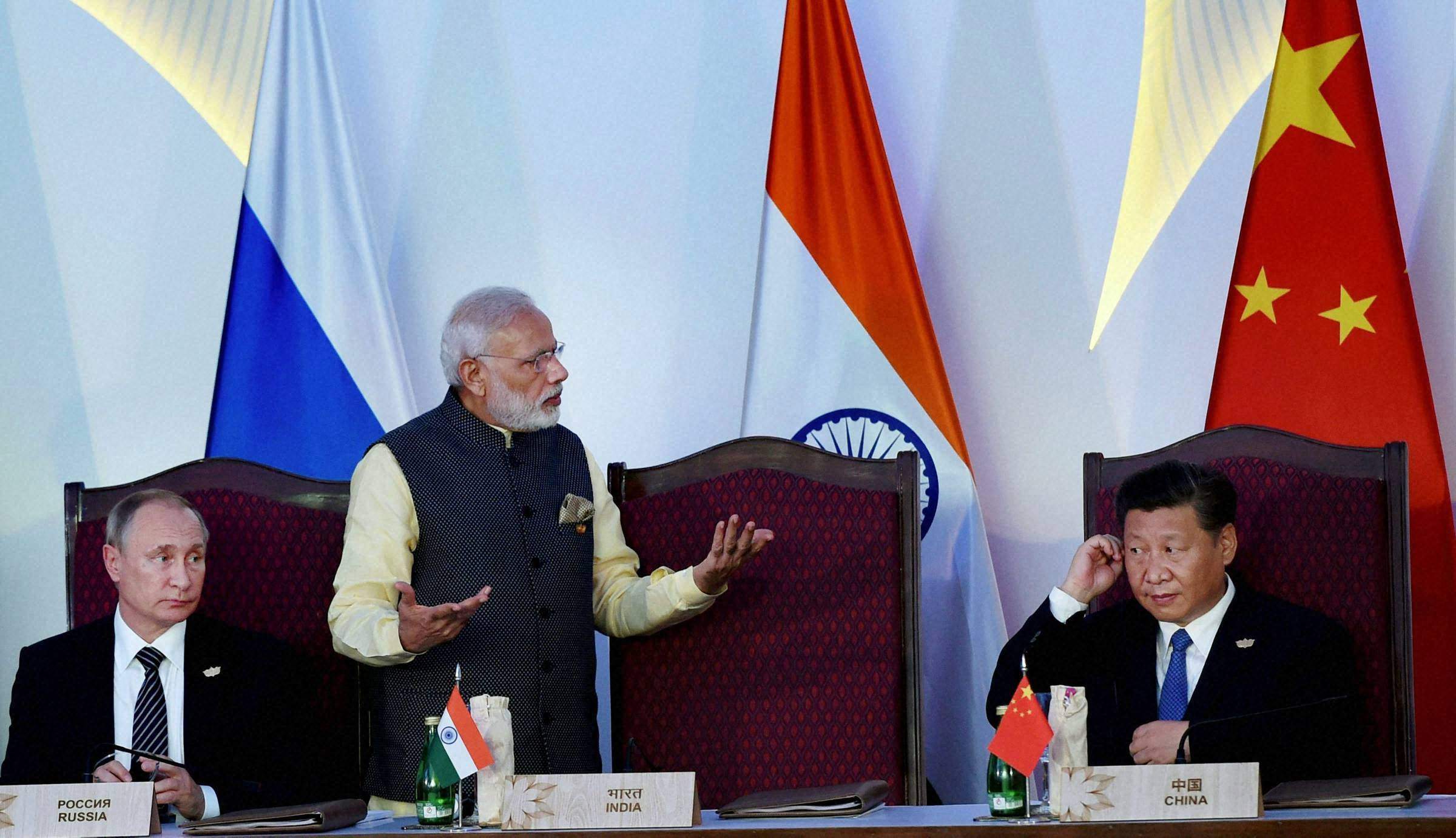
[PC:TheWire]

Share on FacebookShare on X

If human history gives geopolitical planners one big lesson, it is that the world keeps changing. 30 years ago, the Atlantic was the most prominent part of the world. Today, the Indo-Pacific occupies that central role. Yet, a few decades down the line, the Indo-Pacific too would give way to a new region- the Arctic, where the melting snowfields are opening up a potential trade route and a Sino-Russia contest.

The Indian military planners and the Indian Navy, in particular, is ready to embrace the future. Presently, the Indian Navy’s proposal to build six new nuclear attack submarines (SSNs) is making headlines. It is being reported that the latest proposal is a part of India’s push to become an enviable Indo-Pacific. Yet, an HT report reveals a possible Arctic angle behind the latest submarines proposal.

Also Read

U.S. Space Command war-games a Russian nuclear ASAT attack in Apollo Insight drill, highlighting risks of satellite destruction, EMP fallout, and a potential global space blackout

Saudi State Media Claims Iran Giving Up Its Enriched Uranium to Russia Amid US Opposition and War Risk Rise

Zelensky Claims Ukraine Captured Russian Position Using Only Drones and Robots — A Turning Point in Modern Warfare?

“The future not only lies in the Indo-Pacific but also the arctic route that will open up due to receding snowfields,” HT quoted a serving admiral as saying.

Russia, China, India, Arctic, nuclear submarine, Indian Navy
[PC:IndianFolks]
What the serving Admiral reportedly said makes sense. And it also puts India’s deadly submarine programme into context. Presently, India operates two nuclear-powered submarines- one Akula class SSN on lease from Russia, and one indigenously built ballistic missile submarine (SSBN), INS Arihant, that entered service in 2016. A second Arihant-class SSBN, called INS Arighat is expected to join service this year.

The six new nuclear-powered submarines, if and when built, would give the Indian Navy ample firepower in the submarines sector. With nine such naval assets, the Indian Navy leadership would be able to look beyond the Indo-Pacific. This is where the Arctic comes into the picture.

This is certainly not the first time that an Indian person in authority has spoken about the Arctic. Last week, India’s Earth Sciences Minister Harsh Vardhan too spoke about plans to contribute observing systems in the Arctic, both in-situ and by remote sensing.

He said, “India would continue to play a positive role in deepening shared understanding of the Arctic through observation, research, capacity building, as well in promoting sustainable development of the region through international cooperation”.

New Delhi is, thus, making its future Arctic plans very clear. As a responsible military and economic power, India has a moral responsibility to ensure that the Arctic region develops in the spirit of international peace and cooperation. And then, there are diplomatic and geopolitical issues to be addressed as well.

Till now, the Arctic has remained a matter of concern between Moscow and Beijing. While Russia, an Arctic State, professes the primacy of Arctic nations in the fast-melting region, China calls itself a near-Arctic State. Geographically, China is nowhere near the Atlantic but when the polar region opens up for trade and resource exploration, Beijing would want to exploit it for personal gains.

By 2044, the Arctic Ocean could be completely ice-free for at least a part of the year. Meanwhile, China and Russia are both hustling to gain maximum possible influence in the region by the time the Arctic opens up a booming trade route and offers a whole new array of natural resources.

Read More: ‘Let’s exploit the Suez Canal crisis’, As China promotes its BRI quietly, Russia comes up with its Arctic card

Russia, in fact, runs the Northern Sea Route (NSR) in the Arctic in a bid to assert its influence over the trade route. However, China has also conceived the polar silk road, rivalling the NSR.

Last year, the Sino-Russian rivalry again came to the surface after reports of Chinese plans to launch an imaging satellite for monitoring the Arctic shipping routes. Russia responded by re-opening a Soviet-era laboratory with the purpose of testing weapons in extreme Arctic conditions.

So, where does India come into the picture? What role can India play in the Arctic in the context of the growing Sino-Russian rivalry? Make no mistake, a few decades down the line Chinese intrusions into the Arctic could actually force a deadly Sino-Russian conflict and therefore India’s presence becomes crucial.

At the end of the day, India remains a Russian ally. So, expect New Delhi to support Moscow against Chinese expansionism in the region. As such, India’s support for Russia will not be unsolicited either.

Read More: If we go by the massive arms buildup, Arctic is about to turn into the biggest War Theatre in the coming years

As such Moscow needs New Delhi’s cooperation in the maritime sector. If Russia has to safeguard the Arctic, it will have to ramp up its naval power with India’s support which has declined continuously after the Soviet collapse that left Russia in a difficult geography devoid of sufficient warm-water ports and bases.

Ultimately, India’s future Arctic plans also give it ample geopolitical leverage in the present world order. As such, India can give a simple message to Moscow- you help us tame the paper Dragon in the Indo-Pacific today, and we will help you to kick it out of the Arctic tomorrow.

Moreover, Russia and India have been longtime defence partners, which also helps in the form of greater trust and interoperability in military forces. India’s perceived Arctic shift matters, as it ensures that the paper Dragon is not able to flex its muscles in an entirely unexplored part of the world when it opens up for the human activity.

Tags: ArcticChinaExhaustive ReadsIndiaIndian Navynuclear submarineRussia
ShareTweetSend
Akshay Narang

Akshay Narang

Patriot, Political Analyst, International Relations expert

Also Read

U.S. Space Command war-games a Russian nuclear ASAT attack in Apollo Insight drill, highlighting risks of satellite destruction, EMP fallout, and a potential global space blackout.

U.S. Space Command war-games a Russian nuclear ASAT attack in Apollo Insight drill, highlighting risks of satellite destruction, EMP fallout, and a potential global space blackout

April 15, 2026
Select Saudi State Media Claims Iran Giving Up Its Enriched Uranium to Russia Amid US Opposition and War Risk Rise Saudi State Media Claims Iran Giving Up Its Enriched Uranium to Russia Amid US Opposition and War Risk Rise

Saudi State Media Claims Iran Giving Up Its Enriched Uranium to Russia Amid US Opposition and War Risk Rise

April 15, 2026
America's global energy power game: US-Indonesia defence pact strengthens chokehold on China’s lifeline, Straits of Malacca, as Hormuz naval blockade tensions rise and Pakistan deploys forces to Saudi Arabia! 

America’s global energy power game: US-Indonesia defence pact strengthens chokehold on China’s lifeline, Straits of Malacca, as Hormuz naval blockade tensions rise &Pakistan deploys forces to Saudi Arabia! 

April 14, 2026
Netanyahu Reveals JD Vance Call After Iran Talks Collapse; Trump’s Strait of Hormuz Blockade Raises War Fears

Netanyahu Reveals JD Vance Call After Iran Talks Collapse; Trump’s Strait of Hormuz Blockade Warns of Return of War 

April 13, 2026
From ‘Fight Till Victory’ to Mass Escape: Ukraine Faces Explosive Mobilization Revolt”

From ‘Fight Till Victory’ to Mass Escape: Ukraine Faces Explosive Mobilization Revolt

April 13, 2026
Pakistan’s ‘Mind Game’ Diplomacy: How Saudi Defence Pact Threat Forced Islamabad to Bring Iran back to US Talks

Pakistan’s ‘Mind Game’ Diplomacy: How a Saudi Defence Pact Warning Pulled Iran Back to US Talks in Islamabad

April 11, 2026
Youtube Twitter Facebook
TFIGlobalTFIGlobal
Right Arm. Round the World. FAST.
  • About Us
  • Contact Us
  • TFIPOST – English
  • TFIPOST हिन्दी
  • Careers
  • Brand Partnerships
  • Terms of use
  • Privacy Policy

©2026 - TFI MEDIA PRIVATE LIMITED

Welcome Back!

Login to your account below

Forgotten Password?

Retrieve your password

Please enter your username or email address to reset your password.

Log In

Add New Playlist

No Result
View All Result
  • Indo-Pacific
  • Americas
  • Canada
  • Indian Subcontinent
  • West Asia
  • Europe
  • Africa
  • The Caribbean
TFIPOST English
TFIPOST हिन्दी

©2026 - TFI MEDIA PRIVATE LIMITED

This website uses cookies. By continuing to use this website you are giving consent to cookies being used. View our Privacy and Cookie Policy.