TFIGlobal
TFIGlobal
TFIPOST English
TFIPOST हिन्दी
No Result
View All Result
  • Indo-Pacific
  • Americas
  • Canada
  • Indian Subcontinent
  • West Asia
  • Europe
  • Africa
  • The Caribbean
TFIGlobal
  • Indo-Pacific
  • Americas
  • Canada
  • Indian Subcontinent
  • West Asia
  • Europe
  • Africa
  • The Caribbean
No Result
View All Result
TFIGlobal
TFIGlobal
No Result
View All Result
  • Indo-Pacific
  • Americas
  • Canada
  • Indian Subcontinent
  • West Asia
  • Europe
  • Africa
  • The Caribbean

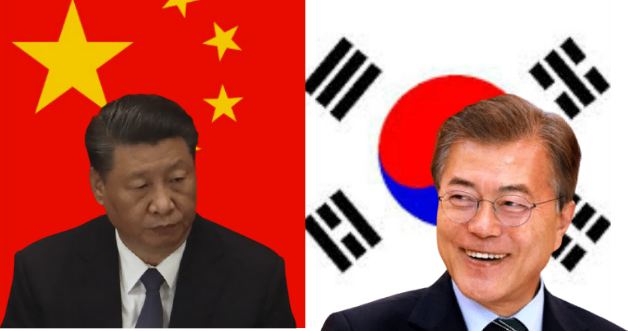
South Korea begins replacing China in the Middle East, one region at a time

Akshay Narang by Akshay Narang
January 20, 2022
in Geopolitics
south korea, china, saudi arabia, middle east
Share on FacebookShare on X

Till only recently, China seemed invincible in the Middle East. The country managed to get involved in Riyadh’s ballistic missiles development program, amidst deteriorating US-Saudi ties. And the country has also managed to come close to Iran with a $400 billion agreement that would allow China to access a secure supply of oil from the Shi’ite country. 

Read more: Alienated by the US, Saudi Arabia is developing ballistic missiles with China

Also Read

Stealth Secrets in Beijing’s Grip: China Holds F-35 Parts After Mystery Hong Kong Detour

“Crown jewels” for Riyadh? US clears $24.3bn F-35 sale despite China spying fears

Houthi missiles hit a Saudi base — and a shut pipeline hands Tehran its strongest card against Washington

You would think that you have won over the Middle East if you have managed to woo both Tehran and Riyadh, because these two rival powers wield considerable influence in the region. But China is now getting replaced in the region by one of its old enemies- South Korea. 

South Korea and China- an old hate story

South Korea is one of the biggest enemies of China. For decades, Beijing has been blackmailing Seoul with its client state- North Korea. China has used Pyongyang as an indirect nuclear threat against South Korea. 

Read more: After turning Russia-Ukraine border into a warzone, Biden brings Korean Peninsula at the brink of a big war

And then, China also stakes a claim on Seoul’s Exclusive Economic Zone (EEZ) in the Yellow Sea. So, it makes a lot of sense for Seoul to replace China in the Middle East and settle scores.  

South Korea starts talking to Gulf powers

With an eye on China, Seoul will resume free trade agreement talks with the Gulf Cooperation Council (GCC) in the first quarter of this year. Nearly 12 years ago, the talks between South Korea and the GCC, an alliance of six Middle East nations, were halted.

On the occasion of South Korean President Moon Jae-in’s visit to Saudi Arabia, the two countries agreed to resume free trade agreement talks. The decision was announced by Korea’s Minister for Trade Yeo Han-Koo and GCC Secretary-General Nayef Falah M. Al-Hajraf.

Seoul is starting its Middle East outreach with the six-nation alliance that remains its key trading partner in the Middle East. GCC-South Korea trade stood at $46.6 billion in 2020, and accounted for 78 percent of the country’s trade with the region.

Seoul to pull the Middle East out of Beijing’s clutches

Moon knows that China wants to monopolise the Middle East economy, by grabbing a lion’s share in its oil exports industry. Moon, therefore, noted efforts by GCC nations to diversify their oil-dominated industrial portfolio.

The South Korean President is the promising establishment of future-oriented businesses in the region and access to Seoul’s next-gen tech capabilities that would help change the fundamental character of GCC nations’ oil-dominated economy. Seoul can help Middle East nations gain access to a diversity of sectors like hydrogen, renewable energy and healthcare.

LG to establish regional headquarters in Riyadh

South Korea and GCC have just started talking about a free trade agreement. A deal hasn’t been struck till now. But Korean businesses are already looking to establish a presence in the region. 

South Korea’s LG Corp is planning to establish its regional headquarter in Riyadh. With the electronics giant establishing itself in Riyadh, South Korea is trying to improve its ties with the world’s top oil exporter and the kind of the Arab world- Saudi Arabia.

Riyadh was getting somewhat restless with the emergence of its long-time ally, the United Arab Emirates, as a regional business hub. Saudi Arabia felt that it was lagging behind in the region and therefore it had also issued an ultimatum to global corporate giants- establish headquarters in Saudi Arabia by 2023 or risk losing out on government projects. 

Seoul grabbed the opportunity and with LG establishing headquarters in Riyadh, South Korea can tell Saudi Arabia that it actually wants to help the Arab Kingdom develop into a diversified economy. 

Tags: ChinaSaudi ArabiaShort takesSouth Korea
ShareTweetSend
Akshay Narang

Akshay Narang

Patriot, Political Analyst, International Relations expert

Also Read

Israeli Prime Minister Benjamin Netanyahu speaks at the UN General Assembly as delegates walk out of the chamber, with some remaining delegates applauding.

Netanyahu Defends Iran and Gaza Wars in UN Speech as Delegates Walk Out

September 25, 2026
Donald Trump and Xi Jinping shake hands amid US-China flags, shipping containers, cargo ships, semiconductor chips and rare-earth minerals, symbolising trade tensions and fragile economic cooperation between the two countries.

Trump-Xi Trade Truce Extended to January, but 100% Tariff Threat Still Looms

September 24, 2026
US, Danish and Greenlandic leaders sign a security deal against a backdrop of Greenland's Arctic landscape and expanded US military infrastructure.

From Threats Of Seizure To A Signature: US Locks In A Permanent Grip On Greenland’s Defence With a New Deal

September 23, 2026
“Kim Jong Un watches North Korean ballistic missiles launch as Donald Trump and Xi Jinping face off against a backdrop of the US Capitol, highlighting tensions over North Korea’s missile tests and US-China diplomacy.”

Two Missiles, Three Hours: North Korea Fires a Warning as Xi Flies to Washington

September 22, 2026
US, Danish and Greenland leaders shake hands during a security agreement signing, with Arctic glaciers, military facilities, naval vessels and national flags in the background.

From Threats of Force to a Handshake: Trump Claims ‘Permanent’ Control Over Greenland’s Security

September 19, 2026
Donald Trump signs a Russia sanctions law as oil tankers and refineries symbolise growing US pressure on Russian energy buyers India and China, with Putin, Modi and Xi depicted amid a tense global energy standoff.

Trump signs Russia sanctions law, hangs a 100 per cent tariff sword over India and China

September 19, 2026
Youtube Twitter Facebook
TFIGlobalTFIGlobal
Right Arm. Round the World. FAST.
  • About Us
  • Contact Us
  • TFIPOST – English
  • TFIPOST हिन्दी
  • Careers
  • Brand Partnerships
  • Terms of use
  • Privacy Policy

©2026 - TFI MEDIA PRIVATE LIMITED

Welcome Back!

Login to your account below

Forgotten Password?

Retrieve your password

Please enter your username or email address to reset your password.

Log In

Add New Playlist

No Result
View All Result
  • Indo-Pacific
  • Americas
  • Canada
  • Indian Subcontinent
  • West Asia
  • Europe
  • Africa
  • The Caribbean
TFIPOST English
TFIPOST हिन्दी

©2026 - TFI MEDIA PRIVATE LIMITED

This website uses cookies. By continuing to use this website you are giving consent to cookies being used. View our Privacy and Cookie Policy.