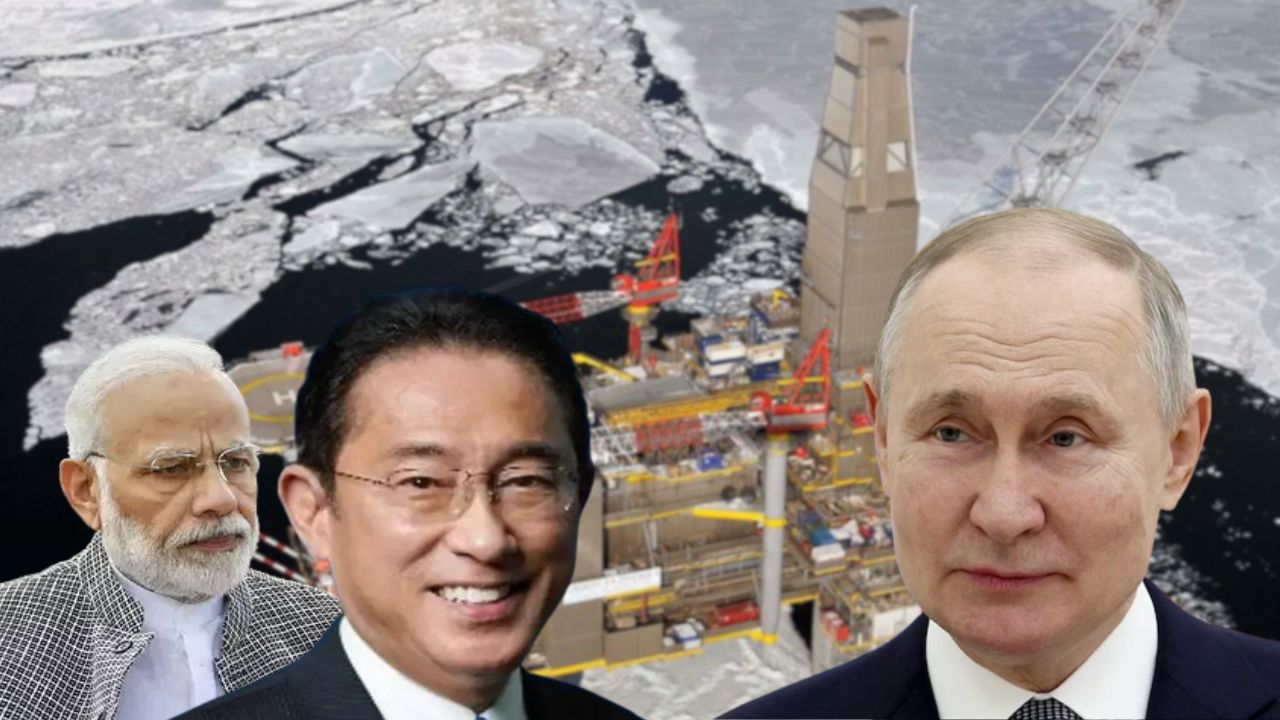
Sakhalin projects: Japan has decided to purchase Russian crude oil above the $60-a-barrel cap, breaking away from the US-led efforts to impose a global cap on purchases of Russian oil. The country claims that it needs to ensure access to energy from Moscow.
According to a report by The Wall Street Journal, Tokyo, which is one of Washington’s closest allies in Asia, managed to obtain an exception from the US. This move marks a significant shift in Japan’s foreign policy regarding energy and Russia. Most European nations stopped purchasing Russian oil in response to the invasion of Ukraine in February last year. In contrast, Japan has chosen to continue its imports from Russia, highlighting the country’s reliance on Russian energy.
In 2022, the G7 nations, including Japan, the European Union, and Australia, agreed to impose a $60-per-barrel price cap on Russian seaborne crude oil. The objective was to reduce Russia’s income from selling oil while preventing a surge in global prices. While the price cap allowed non-EU nations to continue importing Russian crude oil, it restricted shipping, insurance, and re-insurance companies from handling cargoes of Russian crude around the globe, unless it is sold for below $60 a barrel.
Japan managed to obtain the exception by convincing the US that it needed access to Russian energy. This concession highlights Japan’s reliance on Russia for fossil fuels, which has contributed to Tokyo’s reluctance to fully support Ukraine in its conflict with Russia, according to analysts.
Unlike many European countries that have reduced their dependence on Russian energy supplies, Japan has increased its purchases of Russian natural gas over the past year. Being one of the largest economies globally, Japan has significant energy demands. The country lacks domestic energy resources, which forces it to rely heavily on imports, including oil and gas from Russia. The Sakhalin projects, which involve the exploration and extraction of oil and natural gas off the coast of Sakhalin Island, have become an essential source of energy for Japan.
Read More: France, Japan, UK, and India: All of the USA’s allies are rejecting it under Biden
Japan is the only Group of Seven nation that does not supply lethal weapons to Ukraine. In addition, Prime Minister Fumio Kishida was the last G-7 leader to visit Ukraine after Russia’s invasion. These factors illustrate Japan’s cautious approach to the conflict, likely due to its energy reliance on Russia.
History of Japan’s Reliance on Russian Energy Resources
Japan’s reliance on foreign energy resources dates back to the 1960s when the country started importing oil to meet its increasing energy demands. Initially, Japan sourced most of its oil from the Middle East, but concerns over supply security due to political instability prompted Japan to diversify its sources of oil and gas. As a result, Russia emerged as a significant supplier in the 1990s.
Read More: Japan blows up its own energy, EV, and paper industry to harm Russia
The first Sakhalin project, Sakhalin-1, was launched in 1996, involving the development of the Chayvo oil field off the northeast coast of Sakhalin Island. A joint venture between ExxonMobil, Rosneft, and several other companies, Sakhalin-1 has become a crucial source of oil and gas for Japan, with most of its output being exported to the country.

The second Sakhalin project, Sakhalin-2, commenced production in 2009, involving the development of the Piltun-Astokhskoye and Lunskoye oil and gas fields off the northeast coast of Sakhalin Island. The project was a joint venture between Shell, Gazprom, and several other companies. Similar to Sakhalin-1, Sakhalin-2 has also become an important source of energy for Japan, with most of its output being exported to the country.
The Importance of Sakhalin Projects for Japan
Japan is the world’s third-largest economy and has significant energy demand. The country’s energy consumption is driven by its manufacturing sector, transportation industry, and residential and commercial buildings. Moreover, Japan is heavily reliant on imported energy, with over 90 % of its oil and gas requirements sourced from abroad.

Russia is a primary supplier of oil and gas to Japan, and the Sakhalin projects have become an essential energy source for the country. In 2020, Japan imported 26.2 million tons of crude oil from Russia, making it the second-largest supplier after Saudi Arabia. Most of this oil came from the Sakhalin projects, accounting for approximately 15% of Japan’s total crude oil imports.
Along with crude oil, Japan imports liquefied natural gas (LNG) from Russia. The Sakhalin projects are a significant source of LNG for Japan, with around 20% of the country’s LNG imports coming from the projects. The proximity of Sakhalin Island to Japan makes it an attractive energy source, as it reduces transportation costs and enhances supply security.
Read More: Japan makes it clear that it will not compromise with its “ASSETS” in Russia
However, the geopolitical tension between Japan and Russia has the potential to disrupt the supply of energy from the Sakhalin projects. In the past, Russia has threatened to cut off energy supplies to Japan as a political tool. Therefore, Kishida’s decision to prioritize his country’s interests over Western dictates was sensible.
Inspiration from India?
Recently, Japanese Prime Minister Fumio Kishida visited India to explore ways to enhance bilateral ties in various areas, including defense and security, trade and investment, and high technologies.
During his two-day visit, Kishida invited Modi to attend the G-7 summit to be held in Japan’s western city of Hiroshima. Kishida and Modi also held delegation-level talks aimed at deepening cooperation between Tokyo and New Delhi. They also discussed issues related to food security and development financing.
In his media statement, Kishida mentioned that he hopes to address the challenges faced by the global community from the perspective of upholding the rules-based international order and strengthening partnerships with the international community beyond G-7, including the Global South, at the upcoming G-7 summit.

As you may already be aware, India has shown sharp prudence amidst the Russo-Ukrainian war and has been purchasing Russian oil at a steep discount since Western powers imposed sanctions on the Kremlin, attempting to reduce its ability to raise funds for its war against Ukraine. It may well be the case that the Japanese PM was inspired by India’s strategic procurement of oil and energy resources from Russia and has followed suit.
Read More: Biden puts US in hot water by ruining India’s efforts to normalize ties between Japan and Russia
All in all, Fumio Kishida should be applauded for his sound leadership. Blindly kowtowing to Western demands could have spelled doom for Japan’s energy sources and subsequently for the Japanese populace.